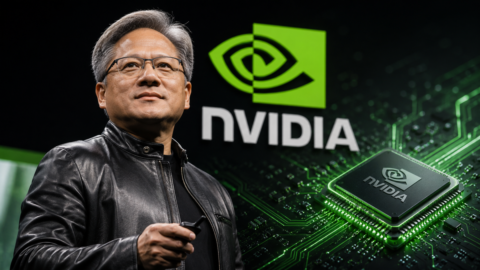
Nvidia he made aalliance with some of the biggest names in Wall Street to create platforms capable of mobilizing more than 500 billion dollars of third-party capital to be allocated to the development of infrastructure necessary for the new AI economy. It started as a rumor of the Financial Times, but the news was later confirmed: the operation involves Apollo Global Management, BlackRock, Blackstone, Brookfield Asset Management, Goldman Sachs e kkr, which will collaborate with Nvidia to facilitate the financing of data centers, computing systems and hardware to support the growing demand for computing power.
However, this does not include the $500 billion already raised. Nvidia claims it can raise more than this amount through new financing platforms. Furthermore, the company has not yet disclosed the financial terms of the operations, the commitments of individual institutions, or the expected timeframe for deploying the capital.
Nvidia and Wall Street Form a New AI Alliance
The partnership comes at a time when building the infrastructure needed for AI requires unprecedented investment. Big Tech, cloud providers, startups, and research labs are spending enormous amounts of money to build increasingly powerful data centers, essential for both training and operating new models. Hence the need to find new sources of fundingNvidia's goal is to expand access to computing power for advanced AI developers, enterprises, governments, and cloud providers, while opening up a market for large investors in digital infrastructure capable, at least in Nvidia's view, of generating long-term revenue.
Jensen Huang, CEO of Nvidia, defined these structures as real “AI factories”: productive infrastructures designed to fuel the digital economy in various sectors and countries.
The problem, however, is not just about chips. New data centers require enormous amounts of energyAccording to Huang, building a data center requires approximately 50-60 billion dollars for every gigawatt of energy consumption. Larry Fink, CEO of BlackRock, also estimates that the United States will need over 70 gigawatts of capacity for data centers dedicated to artificial intelligence.
Huang: “Chips have become an investable asset”
This is where the real novelty of the operation lies. Nvidia aims to transform GPU, computing power and AI infrastructure in one new class of financial assets. “This is really the first time that tech chips have become an investable asset class,” Huang told Cnbc.
According to Nvidia's CEO, GPUs are no longer mere technological components destined to rapidly lose value. Instead, they are productive assets capable of generating revenue, with a significant useful life and a variety of potential uses. The principle is similar to that applied to other infrastructure: if a GPU enables the production of computing services and therefore revenue, its production capacity can become the basis of a financial transaction.
An important element also concerns Nvidia's direct role. Huang explained that the company could support or guarantee up to 25% of potential operations, equal to a maximum of 125 billion of dollars.
AI spending surpasses $730 billion
The project comes as the spending on artificial intelligence continues to grow at a dizzying rate. According to Reuters, overall investments by large tech companies in AI are set to exceed $730 billion in 2026A figure that measures the capital needed to build data centers, purchase chips, and develop the computing power required by new models.
For large technology operators, the challenge is also financial: how can they sustain investments of this size without excessively burdening their balance sheets?
This is where institutional investors, private capital and credit come in. The new model aims to create capital pool dedicated to AI infrastructure, allowing Nvidia customers to more easily finance hardware purchases and facility construction.
BlackRock and Blackstone see a new asset class
The idea is finding fertile ground among major financial operators. Larry Fink, CEO of BlackRock, called the project the beginning of a new phase of “financial engineering”. Jon GrayBlackstone's chairman, however, considers computing power a potential "financiable asset class." Apollo also considers modern computing a scarce and strategic asset, capable of supporting economic growth and productivity. The company manages over $1.000 trillion in assets. David Solomon, CEO of Goldman Sachs, however, stressed that there will be winners and losers in the AI race, drawing attention to the risks of such a massive investment phase.
Furthermore, the model is not completely new. BlackRock has already concluded a separate agreement with Meta to finance and acquire a majority stake in a data center in Texas, illustrating how institutional capital is already directly entering the AI infrastructure market.
The paradox: Nvidia finances the ecosystem that buys its chips.
However, the operation also raises questionsNvidia doesn't just sell the chips that power AI: through investments and financial instruments, it helps create the infrastructure and conditions that allow customers to purchase them. This is known as "circular financing": the manufacturer contributes, directly or indirectly, to financing companies and infrastructure that then purchase its products. Nvidia has already raised $25 billion with a bond issue in June, its first since 2021. The risk is that part of the demand for GPUs will be supported by the very capital that Nvidia helps to circulate, making it more difficult to distinguish real demand from that fueled by finance.
The theme can help explain the Wall Street reaction: title Nvidia lost nearly 3% on Monday, despite the announcement of the deal. The market seems to be questioning not so much the demand for AI infrastructure, but its financial sustainabilityThe question is whether growth will be supported by truly profitable investments or by an increasingly complex web of financing between producers, customers, and investors.
Chips, data centers, and energy: a new infrastructure is born
The move therefore marks a significant step for Nvidia. The group no longer simply supplies the chips that power artificial intelligence, but aims to contribute to building the financial and infrastructure ecosystem needed to purchase and use them. Data centers, GPUs, computing systems, and energy are thus becoming increasingly intertwined. Computing capacity could transform from a simple technology into a true economic infrastructure.
However, i remain risksThe very rapid evolution of GPUs could reduce economic value of the previous hardware, while it remains to be demonstrated that the huge investments in computing power they will be able to generate revenue and returns sufficient in the long term.
Nvidia and Wall Street's gamble is therefore enormous: to transform the demand for artificial intelligence into a financial market capable of mobilizing hundreds of billions of dollars.