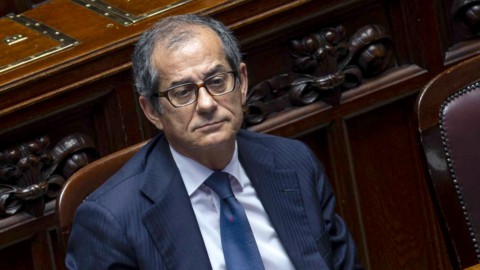
The introduction of the flat tax will happen “second a schedule gradually” and it will start “with the next budget law”. This was announced by the Minister of the Treasury, Giovanni Tria, during the question time to the Chamber.
The tax reform, he added, “is part of the broader objective of economic policy action, aimed at improving the growth and competitiveness of the country, of consumption and of families. There flat tax it is one of the tools to achieve this goal, it is part of a priority maneuver that will work as a whole and not in individual parts".
According to the Economy Minister, an overall reform "is necessary to simplify procedures, improve the spontaneous compliance of taxpayers, reduce the tax burden on households and businesses". To this end, Tria recalled, "a task force has been set up that will examine the revenue and distribution profiles, so as to design a reform that guarantees equity and progressivity".
TAX PEACE
On the side flat tax, therefore, the number one in Via XX Settembre seems in line with the announcements of the Deputy Prime Minister and Minister of the Interior, Matteo Salvini. But the reform project risks being compromised by the "fiscal peace", measure decisive precisely to finance a large part of the flat tax (in recent months there was talk of around 30 billion out of 50 to be covered in the first year alone).
In Parliament, Tria said that "the amount of the sums potentially subject to recovery with the fiscal peace is very high: 800 billion euros". However, the minister specified, it is estimated that “the amount on which the recovery action can be concentrated is much more limited, equal to 50 billion".
A statement that clearly contradicts the numbers provided so far by the League, which even before signing the government contract had included fiscal peace in its programme, putting in writing that the attackable sum would be equal to 650 billion. An estimate though disputed a few weeks ago by the former commissioner for the Spending Review, Carlo Cottarelli, according to which the amount of roles that can actually be pardoned does not exceed 51 billion. The same number referred to by the Minister of Economy.
If Cottarelli and Tria are right, the proceeds of the amnesty will be far lower than initially forecast and this will greatly limit the resources available for the flat tax, which therefore, at least at the outset, will have a much lower scope than that announced during the electoral campaign.
BUDGET LIMITS
Moreover, the Minister of the Treasury reiterated once again, "the government intends to carry out its action within a budgetary policy aimed at reducing debt and ensuring the non-deterioration of the structural balance. These objectives are obviously largely consistent with the compliance with the 3% limit. A dialogue has been initiated with Europe in these terms, to fix a programmatic deficit consistent with the government's objective and in compliance with budget objectives, but also to counteract the slowdown in the economy”.
In other words, the deficit will be revised upwards compared to what was foreseen by the previous government, but not in a drastic way and above all by avoiding the clash with Brussels.
THE CLUTCHES IN THE GOVERNMENT
This explains the contrast between the Treasury minister and the two deputy premiers, who can't stand the prudence used by Tria in all of his public outings, which has the advantage of reassuring the markets but the defect of not marking a distance with respect to the past. According to reports today The print, in an interview with an undersecretary in the corridors of the Chamber, Tria allegedly admitted that “with Di Maio and Salvini there is no communication".