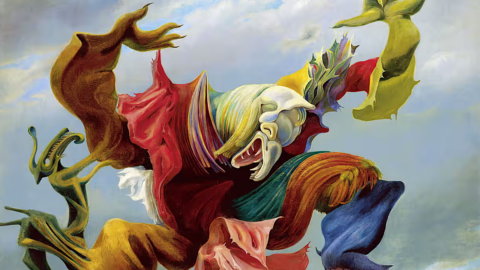
The exhibition is conceived as a labyrinth, which radiates around a central "drum" which houses the original manuscript of the Manifesto, an exceptional loan from the Bibliothèque nationale de France. A multimedia projection accompanies the discovery of this unique document, providing insights into its creation and meaning. The exhibition is organized both chronologically and thematically, structured into 14 sections that evoke literary figures that inspired the movement (Lautréamont, Lewis Carroll, Sade, etc.) and the poetic principles that structured its imagery (the artist as a medium, dreams, the philosopher's stone, the forest, etc.).
In line with the multidisciplinary principle of the Center Pompidou exhibitions, “Surrealism. The centenary exhibition” combines paintings, drawings, films, photographs and literary documents
The exhibition presents the movement's iconic works from the main international public and private collections: The Great Masturbator by Salvador Dalí (Museo Reina Sofía), Personal Values by René Magritte (Museum of Modern Art of San Francisco), The Brain of the Child ( Moderna Museet, Stockholm) and The Song of Love (MoMA, New York) by Giorgio de Chirico, The Great Forest by Max Ernst (Kunstmuseum Basel), Dog Barking at the Moon by Joan Miró (Philadelphia Museum of Art) and more .
These works are presented alongside works by female Surrealists, such as Leonora Carrington, Remedios Varo, Ithell Colquhoun, Dora Maar and Dorothea Tanning, as well as international artists who joined the movement, including Tatsuo Ikeda (Japan), Helen Lundeberg (U.S. ). , Wilhelm Freddie (Denmark) and Rufino Tamayo (Mexico). The official dissolution of the movement did not mark the end of its influence on art and society.
Surrealism has continued to inspire contemporary art biennials, film productions, fashion, comics and more
His questioning of a model of civilization based on technical rationality, his interest in cultures that have been able to preserve the principle of a unified world (such as the Tarahumara in Mexico, discovered by Antonin Artaud, or the Hopi Native Americans, studied by André Breton), and his new interpretation of the great feeling of Nature inherited from German Romanticism, attest to its modernity.
"Surrealism. The Centenary Exhibition” will inaugurate a new type of traveling exhibition, reinterpreted according to the cultural and historical context of the places he visits: the Royal Museums of Fine Arts of Belgium in Brussels, the Fundación MAPFRE in Madrid, Spain, the Kunsthalle in Hamburg, Germany and the Philadelphia Museum of Art in the United States. Brussels is the first stop of the traveling exhibition and will place the emphasis on it
on the connections between Surrealism and Symbolism. In Madrid, special attention will be paid to Spanish artists, such as Salvador Dalí, Joan Miró, Julio González and Luis Buñuel. In Hamburg the links between Surrealism and German Romanticism will be highlighted, while in Philadelphia the exhibition will present expressions of Surrealism in Latin America.
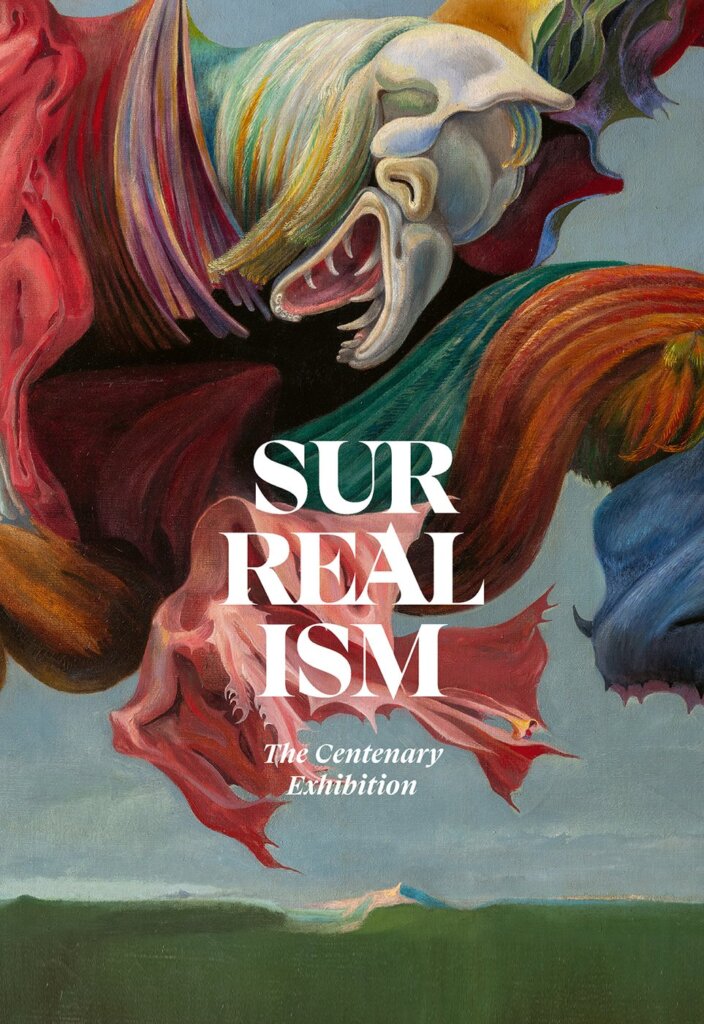
The traveling programme, dates and places
February 4 – May 11, 2025
MAPFRE Foundation in Madrid, Spain
Curator: Estrella de Diego
12 June – 12 October 2025
Kunsthalle Hamburg, Germany
Editor: Annabelle Görgen-Lammers
End 2025 – Early 2026
Philadelphia Museum of Art, Philadelphia, USA
Editor: Matthew Afron