They are in South America all crazy about cashback. The formula for repaying part of the taxes went throughor bonuses for families less well-off is making more and more inroads into a continent still marked by poverty and above all by inequalities. More and more countries are therefore looking for a way to give something back to those who are disadvantaged, without however distorting the tax system or penalizing the richest citizens by taxing them excessively. In many cases, it is a question above all of containing the effects of inflation for basic necessities, the so-called “basic basket” as they say in Brazil. But does it really work? Let's see what the data tells us.
South America: over 70% of the population in vulnerable conditions
on the Latin American continent over 70% of the population lives in vulnerable conditions, with differences from country to country: they range from 95% of poor people in Venezuela to 40% in Argentina, which was once the largest economy in the area, with a GDP higher than that of France and Germany. just theArgentina this year it reached an all-time inflation record, with +114% recorded in May on an annual basis, which means a cost of living that is now out of control for the majority of the population. It's not doing any better Brazil: if it is true that in the country governed by Lula inflation is just over 5%, with a downward trend, it is also true that last year, still under the presidency of Bolsonaro, Brazil returned to the World Hunger Map UN. According to the international organization, 33 million Brazilians do not have guaranteed access to food.
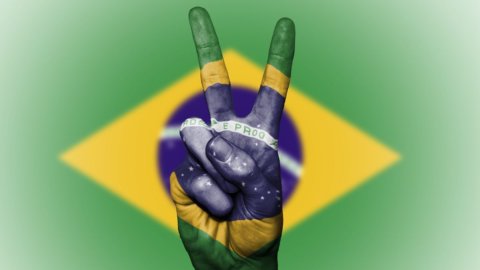
Cashback arrives in Brazil
Just Brazil is the last country in chronological order that is about to approve a tax reform that it provides cashback bonus, along the lines of what has already been done by Argentina, Uruguay, Bolivia, Ecuador and also by the Brazilian state of Rio Grande do Sul itself, where reimbursement of part of the expenses in food, health and education is foreseen. The most interesting case and on a larger scale, however, is that of Colombia, where as many as 2 million families in poverty are reached through advance transfers to bank accounts or through lottery offices for those who do not have an account: every two months, beneficiaries receive around 15 euros in advance, a rather substantial amount in relation to the cost of local life.
In Brazil the goal is reach at least 72 million people. According to calculations, the new cashback will return 60% of taxes to the poorest 50%. of the population, helping to reduce inequalities even in the case of a 10% increase in the cost of essential goods.
The current system, on the other hand, provided only for thetax exemption for basic products but for the whole population, thus ending up benefiting the rich more than the poor. In truth, even today, the Ministry of the Economy is considering raising the budget of the reform to reach 100% of the population in any case through a fixed discount, which would therefore be a total exemption for those who spend less and partial for the more affluent.
A vision which, however, should be overcome, given that the Inter-American Development Bank has already had the opportunity to calculate that up to now the various systems tested have product not a few distortions: in Latin America, for every dollar returned to the poorest 20% of the population, they were returned $5 to the richest 20%. And this distortion is not indifferent to public finances: the new cashback system, according to the Pra Ser Justo association (“To be fair”), would cost exactly half as much as the current mechanism.