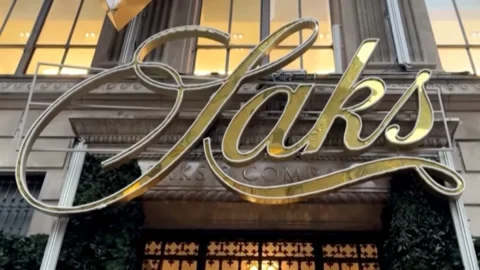
Saks Global, the American group that owns the famous luxury department stores Saks Fifth Avenue, Neiman Marcus e Bergdorf Goodman, has filed an application for failure volunteer according to the procedure of the Chapter 11 at the Southern District Court of Texas. The decision comes at a time of intense financial pressure, with a debt approaching five billion of dollars and an annual turnover of less than six billion. Among the creditors important international brands such as Chanel, Kering e lvmh, but also renowned Italian fashion houses such as Ermenegildo Zegna, BRUNELLO CUCINELLI, Giorgio Armani, Dolce & Gabbana e Roberto Coin.
The event could have repercussions for the entire luxury sector in the United States, where historic department stores are losing ground to direct brand sales and growing online competition.
Saks: The Merger with Neiman Marcus and the Roots of the Crisis
Saks Global's difficulties are closely linked to theacquisition of Neiman Marcus, closed in 2024 for 2,65 billion dollars, a transaction that gave birth to the new conglomerate. The acquisition, led by Richard Baker, then president of the Hudson's Bay Company, burdened the balance sheet with more than $2 billion in new debt.
The combination of this financial burden, the slowdown in luxury sales And the change in supplier strategies, many of which withheld supplies due to missed payments, exacerbated liquidity problems. Saks failed to honor a $100 million payment due on December 30, 2025, resulting in reduced store inventory.
Cash Flow, Resignations, and Leadership
In the final months of 2025, Saks had extended its payment terms to suppliers from 60 to 90 days, providing for the settlement of outstanding debts in 12 installments starting in July. The then CEO Marc Metrick had openly acknowledged the criticality of cash flows and had discharged at the beginning of January 2026, handing over the leadership to Richard Baker, who left office a few days later.
Leadership has passed to Geoffroy van Raemdonck, former CEO of Neiman Marcus from 2018 to 2024 and currently a member of the board of MonclerVan Raemdonck said he “looks forward to assuming the role of CEO and continuing the company’s transformation so that Saks Global continues to play a central role in the future of luxury retail.”
The new CEO will be supported by CFO Brandy Richardson and other figures with proven experience in luxury and retail, with the aim of strengthening stability and creating long-term value, as confirmed by Paul Aronzon, member of the board.
Declining sales and recovery attempts
The data confirm a difficult operating picture: in second quarter 2025, the sales of the group are dropped by 11,1% compared to the previous year, reaching 1,6 billion dollars, while the Prevention operating revenues reached $288 million.
In an attempt to reduce the pressure on the budgetIn June 2025, Saks persuaded creditors to restructure part of its debt, creating new hierarchies among bondholders. However, the bonds rapidly lost value, a sign of growing investor pessimism. In August, an attempt was made to $600 million refinancing, and the sale of 49% of Bergdorf Goodman had been evaluated, a measure that was then not implemented.
The strategic choice not to focus on "slightly accessible" luxury segments, unlike competitors such as Bloomingdale's or Nordstrom, has limited growth opportunities. Furthermore, the group has undertaken real estate transactions aimed at freeing up liquidity, including the Neiman Marcus Beverly Hills property sold, figure not disclosed.
Real estate assets and value for creditors
Despite operational challenges, Saks Global owns approximately 1,2 million square meters of commercial space strategically located, including Saks Fifth Avenue, Saks Off 5th, Bergdorf Goodman, and Neiman Marcus. Historic leases keep rents below market, and reciprocal easement agreements allow tenants to have a say in mall redevelopments. This asset represents tangible value to creditors, who could gain control of the company in the event of bankruptcy.
Saks in crisis: creditors and brands involved
Major unsecured creditors include: Chanel ($ 136 million), Kering (60 million), Capri Holdings (33 million), Mayhoola, the fund that controls Valentino (33 million). Several Italian fashion houses are also on display: Ermenegildo Zegna (26 million), BRUNELLO CUCINELLI (21 million), Giorgio Armani (10,8 million), Roberto Coin, Sisley (Benetton) and Dolce & Gabbana (9 million each).
In total, Saks Global estimates it has between 10.001 and 25.000 creditors, with assets and liabilities ranging from $1 billion to $10 billion. The crisis could impact sales at Saks and Neiman Marcus stores, which continue to carry these brands.
Emergency loans and recovery plan
To ensure business continuity, Saks Global has secured a overall financing package of 1,75 billion of dollars, including $1,5 billion from senior secured bondholders, approximately $240 million from asset-based lenders and a $1 billion debtor-in-possession loan. A further commitment of 500 million of dollars from the bondholders to support the exit from Chapter 11, expected in 2026.
I physical stores and ecommerce platforms of Saks Fifth Avenue, Neiman Marcus, Bergdorf Goodman, Saks Off 5th, Last Call and Horchow will remain open and fully operational. The company has filed the usual "first day" court filings to ensure day-to-day operations, supplier payments, and the continuity of employee wages and benefits.
The transformation plan led by Van Raemdonck aims to restore the financial structure, revive sales and consolidate Saks Global's position in the luxury department store market, maintaining a constant focus on customer service and relationships with luxury brands.