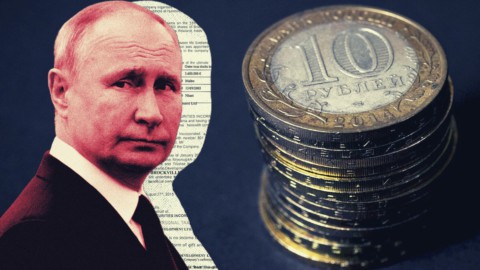
The ruble collapses , Russia's central bank raises interest rates. The institution led by Elvira Nabiullina raised rates by 350 basis points to 12% - previously it was at 8,5% - in an emergency meeting called for today Tuesday, August 15, trying to halt the rapid depreciation of the Russian currency. “This decision has been taken to limit risks to price stability,” the central bank said in a statement. The extraordinary meeting on rates took place after the ruble broke through 100 against the dollar and 110 against the euro yesterday, dragged down by the impact of Western sanctions on the Russian trade balance and by the increase in military spending.
But the news was already in the air. Indeed, in the early hours of today, the ruble strengthened, as investors bet on a significant tightening of monetary policy by the BC, and was trading just below $96 just before 9am (Italian time).
Russia: Western sanctions are making themselves felt
Russian government representatives have been arguing for months that sanctions against Moscow are not working. Even the International Monetary Fund recently raised its growth forecast for the country in 2023 to 1,5%, more than Germany, France and the United Kingdom. But the fall of the ruble seems to tell a different story: Western sanctions are making themselves felt on the Russian economy, which is increasingly devoted only to fueling the war effort.
In the last few hours the rate - before recovering slightly - has in fact almost halved in the last year. Certainly in the first half of last year the currency had recovered from the first collapse at the beginning of the war, thanks to the high prices of exported crude oil and the strong independence of methane from Europe. But since then the Petroleum it costs less and most European countries have started a path to replace supplies of gas Russian.
To weigh on the shoulders of the Kremlin too military spending which now represents more than a third of the entire public budget. Already last year it had grown by almost 10% compared to 2021, but this year it has already recorded in the first half of the year a level of spending not much lower than that of the whole of 2022. All obviously financed in deficit, with a deficit expected at 3,7% of gross product this year: not excessive for Moscow, but still high for a country that has lost access to Western financial markets and must force its banks to buy public debt.
In the long run, the attrition of the Russian economy, lost exports and the grain crisis could push the country towards default. We'll see.