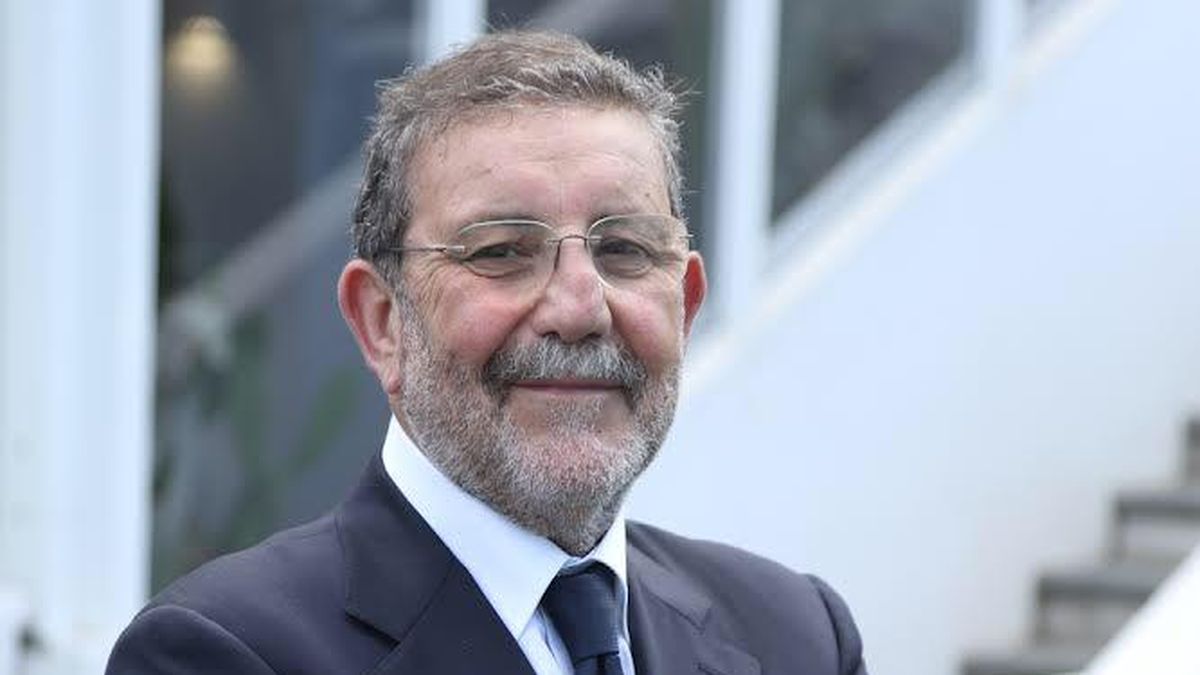
The work of the PNRR-PNIEC Technical Commission of the Ministry of Ecological Transition starts on Tuesday 18 January, which will evaluate all environmental projects for the next few years, starting with those linked to renewables. The new body will have to analyze the proposals contained in the PNRR and all the others financed by the Complementary Fund and by the Integrated National Plan for Energy and Climate (NECP). The structure is chaired by Massimiliano Atelli, who has also been at the top of the Technical Commission for verifying environmental impact for a year.
The government has never lingered on the governance of the initiatives for the ecological transition. To make sense of the multi-year work on energy efficiency and the thousand connections, the Commission has the task of make everything easier. Given the complexity and territorial articulation of the projects, to be completed within a maximum of 5 years, Draghi and Cingolani have established with Mayors and Presidents of the Region of do not burden the state machine with impossible requests. "The Commission represents a fundamental step forward for the implementation of the PNRR and gives further acceleration in particular in the construction of energy production plants from renewable sources, essential for the completion of the ecological transition", he said Roberto Cingolani, who will take part in the settlement on Tuesday.
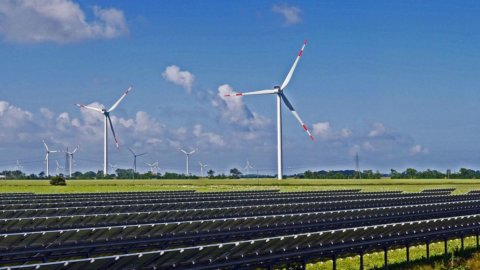
Among the main points to be resolved is the compatibility of projects with territorial impacts, an intricate knot for the continuous observations raised by local committees and bodies. What is certain is that i 70 billion eurosor only from the PNRR they will not be able to drown in the sea of authorizations and bureaucracy. In fact, we are in the first real year of implementation of the green transition plan dozens of jobs stopped. At the end of 2021 Puglia had the record for frozen industrial initiatives. The Commission will be made up of a maximum of forty experts chosen from among the staff of the state and regional administrations, universities, the CNR, the National System for the Protection of the Environment, ENEA and the Higher Institute of Health (ISS). The highly anticipated operational contribution from companies concerns the roadmap towards i 70 gigawatts of energy from clean sources to be installed by 2030.
Il MANIFESTO drawn up at the end of November 2021 by Confindustria and CGIL, Cis, UIL asked the government to "pursue all available solutions in a synergistic and complementary way, without following ideological paths" which in many cases become a block on investments. The Simplifications decree has stirred things up a bit but the political forces, and most recently Legambiente, are thinking of a Consolidated Text that defines the roles and responsibilities of the various state bodies. There isn't much time available.