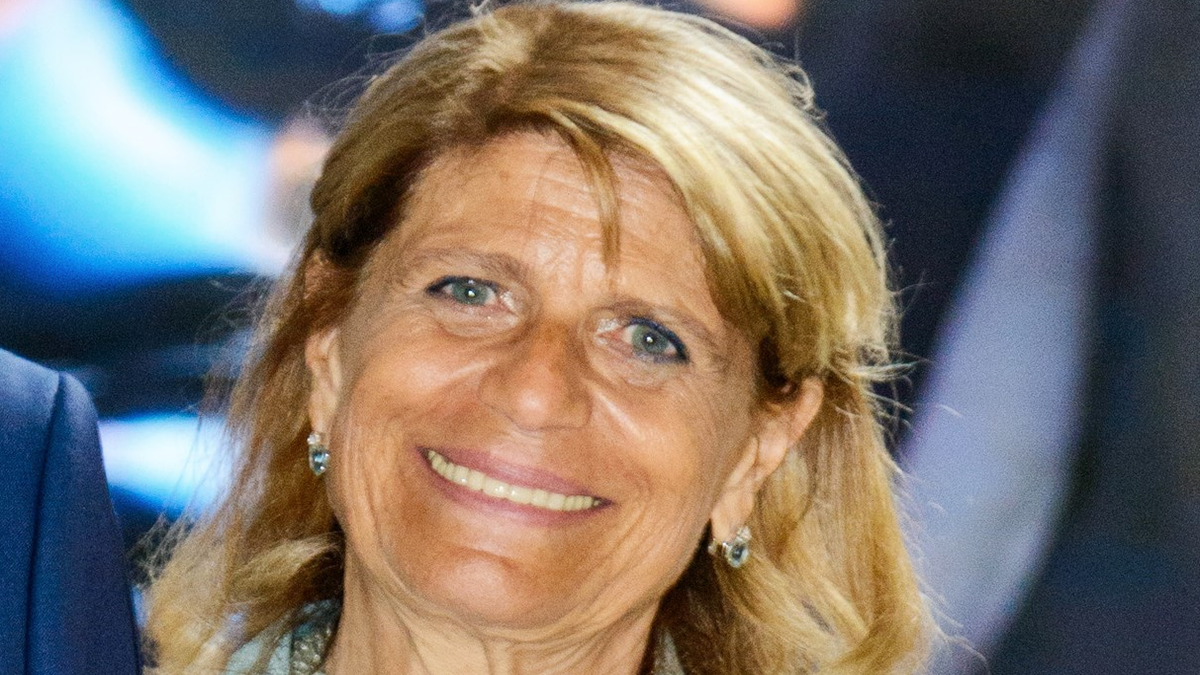
Webuild appointed Gianni DeGennaro President of Eurolinks, the General Contractor for the design and construction of the Bridge over the Strait of Messina, led by the Company and made up of an international consortium of companies.
The choice of a profile of this kind leads many to think that the Strait Bridge project was finally grounded afterwards at least one generation of hypotheses and words and, given the chosen profile, has been secured in relation to the issues of transparency and legality.
"Institutional and company experience, integrity and transparency always oriented towards an approach of legality and security for the country" says a note from WeBuild when indicating the characteristics that led to the choice of De Gennaro.
De Gennaro's professional career
Il Prefect De Gennaro was a public and private company executive for years, consolidating a profound expertise both in the institutional field and in the corporate and banking fields. Already Chief of Police – Director General of Public Security, it was Chief of Cabinet of the Ministry of the Interior, Director General of the Department of Information for Security (DIS) and Undersecretary of State to the Presidency of the Council of Monti government with delegation to the services of information and security. From 2013 to 2020 he was president of Leonardo (formerly Finmeccanica), to then become president of Banca Popolare di Bari from 2020 to 2022. Since 2013 he has also been president of the Centro Studi Americani.
How the Eurolink consortium is made up
The consortium Eurolinks, in which Webuild holds a 45% stake, is made up of the Spanish Sacyr (18,7%), Condotte d'Acqua (15%), CMC (13%), the Japanese IHI (6,3%) and by the ACI Consortium (2%). "An international team, selected at the end of a tender process, to ensure the best skills for the construction of a strategic infrastructural work and driving force for economic growth for the country, with the creation of one of the largest metropolitan systems in the Mediterranean" Webuild says.
Salini: collaboration between small and large companies needs to be strengthened
The CEO of Webuild Peter Salini, in speaking at a meeting with the top management of large companies, he took the opportunity to underline how infrastructures are driving development and employment, also thanks to the favorable conditions generated by the PNRR and thanks to the simplification that the new Procurement Code will bring. However, it is necessary to strengthen the aggregations of consortia of small companies with larger companies.
“We have to move from the functional logic of the Pnrr which looks to 2026 to long-term programs, to redesign the Italy we want to become” said Salini speaking at the CEO Talk “The company of the future. Sustainable, Inclusive and Technological”, organized by RCS Academy, with Corriere della Sera and BCG, which brought together managing directors, presidents and managers of large companies, on the strategies adopted to face the challenges of innovation, digital and sustainability. “In the infrastructure sector we must continue to focus on a integrated model of supply chain led by big business who operate as main contractors to increase the competitiveness of the production system. This model is fundamental in a continuously and rapidly evolving economic and geopolitical context, to ensure effective management of the new challenges posed by innovation, energy transition and sustainability".
“Infrastructures are driving development and employment” Salini continued, “also thanks to the favorable conditions generated by Pnrr and thanks to the simplification that will bring the new Procurement Code. However, it is necessary to overcome the limit of the fragmentation of the sector, to guarantee the delivery of quality projects within the established times. Aggregations and cordate of a small firms with large firms greatesti who operate as main contractors make it possible to create economies of scale and share the benefits of the investments made by large companies to cope with the growing technological content required by customers for infrastructure works, the need for continuous training and safety, greater monitoring of issues such as transparency and legality. On the subject of innovation, for example, from 2017 to 2022 the Webuild Group invested €148 million in innovation, with an average of 380 people involved in research and development projects” continued Pietro Salini.