Symbols matter. Especially on the front of Petroleum, which has always been a very sensitive indicator of the balance of power between economies. It is therefore no coincidence, Roger Diwan recalls, that OPEC+ has decided to implement the most important cut in oil production on the eve of Yom Kippur, the Jewish holiday. Diwan, one of the most expert analysts on the crude oil market, remembers well what happened 49 years ago, in 1973, when Egypt and Syria attacked Israel on the occasion of the holiday, starting a dramatic tug-of-war with Tel Aviv. But, above all, starting that crude oil price growth process which brought the western economy to its knees, unleashing the race of inflation and the start of the crisis of consumer economies.
Oil: the effective cut is 950 barrels per day
Other times, sure. There's no need to overdo it right now the impact of cutting production (two million barrels a day) decided by the cartel of producers, in reality, given the production problems of many members of the club, the effective cut will not exceed 950 barrels per day. And the state of many customers on the verge of recession, allows us to have doubts about the effectiveness of the squeeze. In the past, several times (1997, 2008 and 2020) the cartel had to reopen the crude oil taps to avoid a general crisis.
The Stock Exchanges go down, oil prices far from the peak
But the tightening decided in Vienna on the eve of winter is producing the first effects: after yesterday's large losses, the stock exchanges continue negative: the Ftse Mib drops 0,78% to 21.193 basis points, the Cac 40 in Paris 0,66%. Madrid and Frankfurt are both down 0,4%.
At the same time, Brent prices this morning they are just over 94 dollars, the highest since mid-September. In short, the quotations point upwards even if they appear a lot away from the peak ($139,13) reached in March.
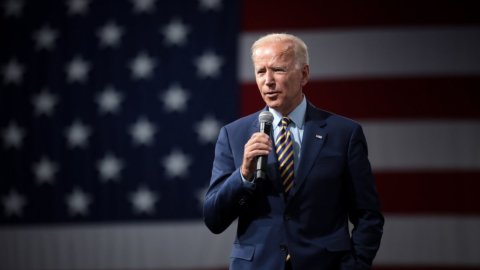
Risk of a surge in prices before the Mid Term elections: devastating effects for Biden
Since then, however, prices have dropped four times in the last five months thanks in part to the US efforts who have opened the taps of strategic reserves to flood the market with "black gold" to cool down prices. But the US action is short-lived. By the end of October Washington will have to turn off the taps, as the Saudis and Russians well know. It is easy, therefore, that prices can shoot up just on the eve of mid-term elections, set for November 8, with devastating effects for Biden: If gasoline rises above the $4-a-gallon dam, voters will punish the president for failing to beat inflation.
Bin Salman supports Russia, USA towards peace with Venezuela
Hence the political significance of the decision taken in Vienna in the presence of Aleksandr Novak, Putin's energy minister. The Oepc dominated by the Saudi prince Mohammed Bin Salman, ha decided to support Moscow, affected bylatest round of European oil sanctions.
A choice all the more significant because it coincides with the least support of China and India to the Russian offensive in Ukraine. Both Beijing and New Delhi have so far taken advantage of the discounts Moscow has been forced to place its crude oil. L'Saudi Arabiainstead, it offers an opportunity to support global prices upwards. And it didn't help Biden the humiliation of the visit to Riyadh last summer when the president bent down to shake hands with the sheik guilty of the killing of Khashoggi, a journalist from the Washington Post, barbarously eliminated in the Saudi embassy in Istanbul: Bin Salman makes no secret of liking the friendship of Putin and Donald Trump more than the democratic president. Nor should the effect of the Tehran women's protests in the face of the repression of the ayatollahs, a phenomenon that distances the hypothesis of an agreement on Iranian nuclear power.
In short, in order to find new suppliers, the US is preparing to make peace with Venezuela of Maduro, with the aim of restarting the productions of Chevron.
There is little economics and a lot of politics in this one oil crisis which falls on markets stressed by months of suffering on the gas front. This makes predictions difficult: crude oil, for now, is not reacting. But one thing is for sure: it will soon.