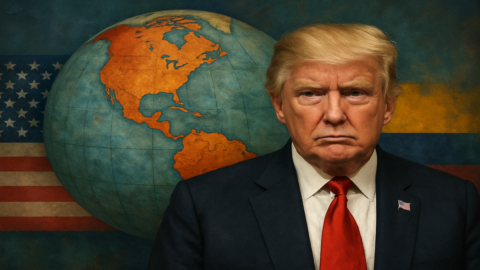
Il cease-fire which was achieved in the military conflict between Israel and Iran it would seem like a success propaganda of Donald Trump. The conditional is obviously a must, as it will be necessary to see if the truce it will come respected, given the fact that the history of the Middle East is littered with broken agreements.
There also remains the question of whether Iranian uranium enrichment facilities will Fordow, Isfahane Christmas were actually destroyed, as The Donald immediately proclaimed without waiting for objective evidence, or if they were more simply damaged, as stated in a preliminary report on which American intelligence – invested by the tycoon's wrath – had to quickly backtrack.
In the immediate future, however, the president who would like to achieve the Nobel for Peace and that he was unable to end the wars in Ukraine and the Gaza Strip within twenty-four hours of taking office, as he had instead promised during the 2024 election campaign with one of his many blusters, has apparently scored a point in his favor.
The Warlike Ardor of a Nobel Peace Prize Aspirant
The paradox that Trump has managed to present himself as figure of peace, after having involved the United States in an armed conflict already underway between Israel and Iran with Operation Midnight Hammer, is entirely in line with the biography of a character who has always shown himself ready to rewrite history to his own advantage.
He did so, for example, in the case of theassault of his supporters to Capitol Hill, on January 6, 2021, to prevent the official certification of Joe Biden's victory in the 2020 presidential elections, turning several hundred troublemakers into "patriots", whom he then promptly pardoned after his return to the White House as they were alleged victims of a judiciary politicized in favor of the Democratic Party.
Moreover, during the 2020 election campaign, the tycoon had already portrayed himself as a president of peace in reference to the foreign policy of his first term, casting a veil of silence over the attack on the Syrian air force base in al-Shayrat on 7 April 2017, the increase in US troops involved in fighting in Afghanistan in 2017, the use of the GBU 43 – at the time the most powerful non-nuclear device in the possession of the United States – against the forces of Wilaya Korashan and themurder of the Iranian General Qasem Soleimani, on January 3, 2020, a murder that for a few days seemed like it could trigger a war between Tehran and Washington.
Not even the high-penetration Gbu 57 bombs that Trump dropped on the Fordow, Isfahan and Natanz plants, with the risk of provoking a further escalation in a conflict in which up to that point the United States had not taken an active part, necessarily place The Donald in a contradictory position with respect to the Nobel to which the tycoon was formally nominated by Buddy Carter, one of Georgia's Republican members of the House of Representatives in Washington.
Let us remember that the Peace Award also includes among its winners Americans Woodrow Wilson, the Democratic president who led the United States into World War I, and Henry Kissinger, the national security adviser and secretary of state to Republican Richard M. Nixon who was co-responsible for the expansion of the Vietnam War into Cambodia in 1970 and was implicated in the coup that overthrew the presidency of Salvador Allende, bringing General Augusto Pinochet to power in Chile in 1973.
The last American to be awarded this prize in chronological order was the Democrat Barack Obama, the president who has been at war the longest in the country's history and who, after inheriting two wars from his predecessor, in Afghanistan and Iraq, has only concluded the second, instead extending Washington's military involvement in Libya, Syria, Somalia and Yemen.
The pursuit of peace through the use of military force
The Trumpian narrative has equated the Fordow bombing, which ended what the tycoon himself has dubbed the “Twelve Day War”, the dropping of the atomic bombs on Hiroshima and Nagasaki, which forced Japan to surrender and marked the final act of the Second World War.
This inappropriate analogy appears to recall the motivation given by Wilson to justify the entry of the United States into the Great War: to make a decisive contribution to the victory of the democratic nations against the autocratic powers (Wilhelmine Germany and Austria-Hungary), thus preventing the outbreak of subsequent military clashes and thus transforming the First World War into the "war to end all wars".
On the other hand, the idea of reaching peace through the use of armed force has spanned the entire history of the United States. For example, although he was elected to the White House in 1968 on the basis of a commitment to achieving a “prompt and honorable peace” in the Vietnam War, Nixon He extended U.S. participation in the conflict until 1973, because he wanted to sign the peace from a position of strength that would allow him to delay as long as possible the fall of the pro-U.S. regime in South Vietnam.
Trump himself has already tested this formula at the beginning of his second presidency, repeatedly warning Hamas to free the Israeli hostages, otherwise Washington would unleash “hell”.
The belief that a military superpower like the United States can rely on war operations to resolve crises and restore conditions of stability, rather than fueling global disorder, is so ingrained in Trump that, half-jokingly, The Donald has proposed restoring the historic name of the Department of Defense, returning to its original name of Department of War.
A swinging policy
The armed intervention of the United States against Iran, brief in its duration and limited in its objectives, also confirms the unpredictability of Trump's politics, the result not of amateurism and improvisation, as his opponents accuse him of, but of a precise desire to assert himself by disorienting allies, opponents and interlocutors in general.
Despite bellicose proclamations against the Tehran regime in all three of his White House election campaigns and the announcement of the United States' withdrawal from the Iranian nuclear deal on May 8, 2018, since the beginning of his second term The Donald had seemed to want to focus on a diplomatic solution in relations with Tehran, in compliance with the commitment made to the Americans not to involve the United States in "endless" Middle Eastern wars.
To this end, he had braked for months Benjamin Netanyahu, eager to take advantage of a perhaps unrepeatable window of opportunity (the fall of the Assad regime in Syria and the disarticulation of Hezbollah in Lebanon and Hamas in the Gaza Strip), to wipe out the Iranian nuclear program with air raids and targeted assassinations and perhaps even to overthrow the theocracy of the ayatollahs itself.
Yet Trump ended up giving in to the Israeli prime minister’s pressure and giving his green light to military operations in Jerusalem. At the G7 summit in Canada, The Donald had signed a resolution calling for a de-escalation in “recent developments between Israel and Iran.”
However, his request to Tehran not to limit itself to freezing the uranium enrichment program, as previously recommended, but dismantling it altogether was a contribution to the escalation.
As if that were not enough, two days before the US attacks on the sites of Fordow, Isfahan and Natanz the American president had declared that he would decide in the next two weeks whether to use military force against Iran, but then ordered the bombings little more than forty-eight hours later.
Furthermore, on the afternoon of Sunday, June 22, Trump had floated the possibility of a regime change in Iran, only to deny this solution the following day. In this way, on the one hand, the attack against Iran has displeased a part of Trump's electoral base, the one that still has its spokesperson in Steve Bannon and interprets the slogans "America First" and "Make America Great Again" in terms of a neo-isolationism that allows the federal government's resources to be redirected to solving internal problems, avoiding squandering them to carry out military campaigns abroad, especially if conducted in distant regions.
On the other hand, the refusal to get rid of the theocracy in power in Iran has disappointed the hawks of the administration, such as General Michael Kurilla, commander of Centcom (the United States Central Command), and hyper-conservative think tanks, such as the Foundation for Defense of Democracies, who hoped to give the final blow to the Tehran regime to stabilize the Middle East, reshaping it through the spread of liberal democracy.
The Donald's Interventionist Sovereignty
Once again Trump ended up surprising not only his critics but also his supporters. On the one hand, he proved to be aware of the fact that the regime changes in the Middle East in the past they had proven counterproductive for the United States.
In response to the al-Qaeda attacks of September 11, 2001, Republican President George W. Bush also proposed bringing democracy to the region by overthrowing the Taliban government in Afghanistan in 2001 and Saddam Hussein's dictatorship in Iraq in 2003.
The rapid military victory, however, plunged both countries into chaos, causing a total of 7.054 deaths among the US armed forces, without managing to prevent either the return of the Taliban to power in Afghanistan, or the outbreak of a civil war in Iraq, which in some respects did not end even after the installation of very weak pro-Western governments.
Washington did not fare any better with Obama's support for the Arab Spring. For example, the overthrow of Hosni mubarak in Egypt brought to government first Mohamed Morsi, linked to the fundamentalist Islamic organization and anything but pro-American the Muslim Brotherhood, and then to the authoritarian presidency of the general Adel al-Sisi.
Even more disadvantageous was the fall of 2011 Mu'ammar Gaddafi, thanks above all to a NATO intervention, sponsored by Washington, to protect the rebels. The Libya, in fact, has become a failed state, prey to factions that have given rise to bloody internal conflicts, and did not express any form of gratitude towards the Obama administration which had allowed the country to get rid of a brutal dictator.
Indeed, Libya was the scene of anti-American demonstrations, culminating on September 11, 2012 with the assault on the US consulate in Benghazi, during which the United States Ambassador, J. Christopher Stevens, and three of his entourage lost their lives.
On the other hand, Trump has never thought of a real retreat from the international scene. The Donald is intent on re-establishing the Washington supremacy at a global level, even through a rethinking of the concept of national interest, which is expressed in economic and security terms for the United States.
Hence, the abandonment of an ethical vision in the global arena to be pursued with the use of armed forces abroad, as his predecessors had done, but not the renunciation of military interventions – even limited ones – when national security is at stake. It is no coincidence that, in the name of defending the economic interests of the United States, at the beginning of last January, even before taking office for the second time at the White House, in a press conference at Mar-a-Lago, Trump had not ruled out the use of force to occupy the Panama Canal , Greenland, a project that is certainly fantasy politics but nevertheless the antithesis of the neo-isolationism recommended by Bennon.
The President and the War Powers
Operation Midnight Hammer also had implications for the Trump administration’s growing authoritarian tendencies. The military intervention against Iran was conducted without congressional authorization.
It has, therefore, sparked indignation and protests from Democrats, some of whom have even launched the proposal to undertake a third impeachment procedure against The Donald, a completely unrealistic and merely propagandistic initiative – like the two previous ones – because the Republican Party is in the majority in the Senate and the advocates of impeaching the president would therefore not have the votes to convict and remove Trump.
The issue of the constitutionality of the attack against Iran deserves attention, however, as it sheds light on the tycoon's methods of governance.
Historical precedents
Section 2 of the second article of the Federal Constitution assigns to the president il command of the armed forces, but section 8 of the first article gives the Congress the power of declare war.
In the past, in addition to its entry into two world wars, both the participation of the United States in the first Gulf War to liberate Kuwait from Iraqi occupation in 1991, and the military operations to overthrow Saddam Hussein in 2003, occurred on the basis of resolutions approved by Congress.
Even the intervention in Afghanistan in 2001 was covered by the consent of representatives and senators to the use of force, in this case against those responsible for the terrorist attacks of September 11. However, since the beginning of the twentieth century the United States has witnessed a progressive, albeit uneven, shift of war powers from Congress to the White House.
It was the Republican who began to take over the powers of war. William McKinley, not coincidentally one of Trump's most esteemed presidents. In 1900, McKinley added U.S. troops to the international contingent tasked with relieving the siege of the Foreign Legation Quarter in Beijing and quelling the Boxer Rebellion in the Chinese Empire.
He did so without seeking the consent of Congress, under the pretext that the military operation was extremely urgent and there was not enough time to convene senators and representatives and discuss the appropriateness of the participation of American soldiers.
The Democrat Harry S. Truman he did not ask Congress for a declaration of war for his intervention in the Korean conflict in 1950, justifying himself by saying that the war operations had been launched in application of a United Nations resolution from which the United States could not withdraw as a member of this organization.
Congress subsequently gave the Republicans a free hand in advance. Dwight D. Eisenhower in 1954, to counter a possible attack by the People's Republic of China against Taiwan, and to Lyndon B. Johnson in 1964, to counter future incursions by North Vietnamese forces against U.S. military forces in Southeast Asia, laying the legal foundation for Washington's direct participation in the Vietnam War.
Instead, in 1973, taking advantage of the weakening of Nixon In the wake of the Watergate scandal, Congress passed a War Powers Resolution, still in effect today, requiring the president to notify congressmen and senators of the use of armed forces outside the country's borders and to withdraw them within 60 days, extendable to 90 days in special circumstances, in the absence of authorization from lawmakers.
Nonetheless, in 2011, Obama he refused to ask Congress for approval for the participation of the US military in the raids to prevent Gaddafi's air force from hitting the insurgents, operations that lasted over seven months, from March 19 to October 31.
According to the president, the application of the no-fly zone over Libya had been decided by the NATO council and, after the Senate had ratified the United States' accession to the Atlantic Pact in 1949, Washington was bound by the decisions of this military alliance and the federal government could not call upon Congress to scrutinize individual choices.
War powers and “state of exception”
On the surface, the US attack on Iran would legitimately fall within the scope of the 1973 provision. The bombing of the Fordow, Isfahan and Natanz facilities does not in itself constitute war because it was an extremely limited intervention in space and time.
Furthermore, Congress's power to declare war has never been interpreted, either by the legislature or the executive, to mean that senators and representatives must authorize any military action abroad.
Finally, the second article of the Constitution gives the president the prerogative to use the armed forces to defend the United States and American citizens from attacks not only already in progress but also imminent, and to protect and promote national interests. However, this is precisely the crux of the constitutional question. The crux is to what extent Iran's uranium enrichment program actually constituted a threat.
According to Tulsi Gabbard, Washington's director of intelligence, the Tehran regime was still far from being able to assemble a nuclear device, even though Trump then forced her to deny her initial assessment and align herself with the positions of those who declared that Iran was imminently reaching a nuclear potential.
As in the case of the alleged "invasion" of illegal immigrants to proceed with mass deportations, the premises of Operation Midnight Hammer have once again confirmed Trump's tendency to artificially create hypothetical national emergencies to avail of powers provided for by the Constitution and by current laws but only in circumstances of particular gravity.
This is an extremely dangerous methodology for democracy, because it almost seems to draw inspiration from the concept of the “state of exception”, formulated by the Nazi jurist Carl Schmitt to legitimize the suspension of the guarantees of the rule of law.
. . .
Stefano Luconi teaches History of the United States of America in the Department of Historical, Geographical and Ancient Sciences at the University of Padua. His publications include The “Indispensable Nation”. History of the United States from its origins to Trump (2020), US institutions from the drafting of the Constitution to Biden, 1787–2022 (2022), The black soul of the United States. African Americans and the difficult path towards equality, 1619–2023 (2023). The race for the White House 2024. The election of the president of the United States from the primaries to beyond the vote of November 5 (2024).