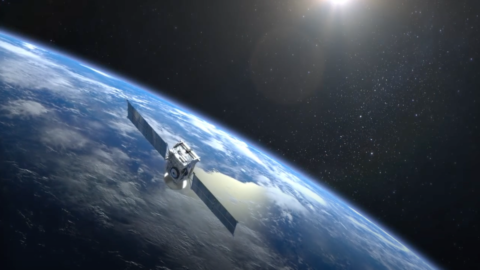
The Europe raises the bar and chooses the path of integration to bridge the gap with the United States in space. With the signing of the Memorandum of Understanding, Airbus, Leonardo e Thales bring together space activities in one new pan-European company which aims to build critical mass on satellites and downstream services, the only area where the comparison with Elon Musk's ecosystem (and his SpaceX) is immediately contestable. The declared objective is strengthen the continent's technological sovereignty and build an end-to-end offering, from space infrastructure to services, excluding launchers, an area where Europe is still lagging behind.
La challenge to SpaceX It therefore involves the ability to design, produce and manage constellations and service platforms, bringing us closer to the integrated model that has made Starlink a global benchmark.
Toulouse headquarters, team distributed throughout Europe
La new entity will be based in Toulouse and teams spread across France, Germany, Italy, Spain, and the United Kingdom. This is more than just a symbolic choice: the French aerospace capital becomes the operational hub, while the industrial network remains widespread, with the aim, the parties explain, of working as "a truly pan-European entity."
The company will aim to to be operational in 2027, after the necessary regulatory authorizations, with approximately 25 employees, pro-forma 2024 revenues in the order of 6,5 billion and an order backlog exceeding three years of turnover.
The industrial perimeter: an integrated supply chain for the orbit
Airbus confers Space Systems and Space Digital from Airbus Defence and Space. Leonardo brings the Space Division, including assets in the Telespazio and Thales Alenia Space joint ventures. Thales puts its stakes on the table Thales Alenia Space, Telespazio, and Thales SESO will merge. This will create a company with complementary technologies and the ability to develop complex programs in telecommunications, navigation, Earth observation, scientific research, exploration, and security. The ambition is to to be a trusted partner for major national and European programs and compete, in the medium term, with the industrial scale of US players.
MBDA-style governance and merit-based CEO selection
La shareholding structure is balanced: 35% to Airbus, 32,5% to Leonardo and 32,5% to Thales, with joint control and shared governance on the MBDA modelThe parallel is not accidental. As with missiles, a balance is sought between "sovereign" programs and common cross-functional functions, avoiding duplication of structures. The operational guide it will not be subject to rotation among the members and will be open to external applications: "it will not be an organization where people will arrive with a passport, but with skills and knowledge," explained Airbus, clarifying their intention to build a chain of command focused on industrial effectiveness.
The industrial plan includes annual synergies "for several hundred million euros" starting from the fifth year of the agreement, in line with industry benchmarks. The rationalization work has already begun in part at the parent companies, but the newco will pool procurement, engineering, and operations, with the aim of eliminating overlaps and accelerating the product development cycle. Leonardo has learned confidence in economic stabilityThe company, they assure, "will be profitable from day one", thanks to a broader commercial pipeline and an integrated portfolio of solutions.
“A fundamental step”: the line of the three CEOs
In the joint statement, Guillaume Faury, Roberto Cingolani e Patrice Caine they claim the strategic importance of the agreement.Fundamental step taken Towards the establishment of a new company for the development of the European space industry. We are building, in line with our vision, a more solid and competitive European presence within an increasingly dynamic global space market. By pooling our talents, resources, expertise, and research and development capabilities, we aim to generate growth, accelerate innovation, and create greater value for our customers and stakeholders. People will be at the heart of this initiative.”
On the political front, from Rome the support is clear. For the minister Adolfo Urso the operation “is the right way” to create European champions and ensure strategic autonomy. In Italy, metalworkers' unions judge the merger positively, trusting in the absence of industrial overlaps. More dissatisfied in France where, the CGT Métallurgie instead contests the “Bromo” project, calling it a “misleading pretext” and fearing a monopoly to the detriment of the Cnes and ESA agencies.
Why it's (really) a challenge to SpaceX
The competition with SpaceX isn't being played out, at least for now, on the launcher front, where Elon Musk's company has a clear advantage. The European game is opening up on satellites and services, the heart of the Starlink model: high-capacity constellations, resilient digital infrastructure, integration with ground networks, and defense and security applications. Here the newco can bridge the gap, leveraging its industrial scale, expanded product portfolio, and a shorter value chain. In the medium term, this integration can bring Europe back to the table of protagonists, with a competitive offering to governments, institutions and global markets.
For the first time, Europe's space sector is attempting to replicate the "country-system" approach on a continental scale in the satellite-services segment. Not, therefore, a copy of SpaceX, but a European adaptation of a simple principle: integrate to innovate. That's where the challenge lies, and it's from there that we'll measure the distance with those like Musk, who have transformed low orbit into a global platform.