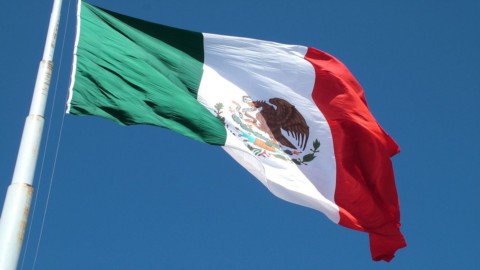
As it reports atradius, Mexico's economy is generally diversified, closely synchronized with the US business cycle, which account for 80% of exports (over 25% of Mexican GDP) and are the main source of remittances (2% of GDP). Mexico's dependence on oil revenues has declined, but still remains significant: it accounts for 7% of merchandise exports, 8% of GDP, and 20% of government revenues.
The Mexican peso is vulnerable to changes in market sentiment, due to a high domestic capital investment (over 250% of official reserves) and as it is the most traded emerging market currency. With the signing of the USMCA agreement, short-term uncertainty about North American trade has eased. Overall, the USMCA's economic impact on US-Mexico trade is likely to be limited, as it is effectively a minor modification of the NAFTA agreement. However, US tariffs on steel and aluminum imposed on Mexico remain in place for now and long-term uncertainties still remain.
Since 1994, average annual real GDP growth has been 2,6%, due to low investment and low productivity. While uncertainty about future trade relations with the US has diminished, uncertainty about economic policies has increased, which could further dampen investment this year. While in 2018 the stability of private consumption and accelerating exports compensated for a low investment rate, consumer confidence decreased and this is expected to weigh negatively on consumption growth in the short to medium term. Concerns stemming from the new administration's policies and the ongoing normalization of US monetary policy are weighing on the currency, with the peso's exchange rate expected to be unstable in 2019. At the same time, following interest rate hikes, inflation has declined and should be within the target range this year Central Bank between 2% and 4%.
Concerns about the direction of economic policy and contract enforcement have increased, especially after the decision to cancel Mexico City's new airport projects, even though a third have already been built and almost 70% of the project has already been financed . The new president also announced that he would suspend oil auctions for three years, slowing down the fundamental energy reforms implemented by his predecessor. The 2019 Budget Plan, introduced in December, has dispelled, at least for the moment, doubts about the new government's commitment to financial stability.
While the Plan includes more spending on social programs and infrastructure, it continues to preserve the fiscal framework established by its predecessors. However, it remains to be seen whether the government will deliver on its commitments in 2019, especially if revenues turn out to be lower than expected, i.e. if economic growth turns out to be lower than expected and oil prices fall. The public debt structure is generally favorable (67% in local currency): the main vulnerability is therefore represented by the relatively high share of debt held by non-residents (50%), with refinancing risks mitigated by a average over ten years and prudent debt management.
According to analysts, a radical deterioration of the economy appears rather unlikely: fluctuations in exchange rates act as a shock absorber for the economy, also thanks to the fact that foreign currency debt, held by the public and private sectors, remains limited. The banking system is profitable, well regulated, controlled and capitalised: bad loans are stable at 2,1% and fully provisioned, while dollarisation (13%) and reliance on foreign financing are low and reduce exposure to shocks external. Both public debt and external debt are sustainable, with the latter stabilizing around a relatively low rate of 40% of GDP. Current account imbalances remain modest; however, coverage of the current account deficit by foreign direct investment is expected to decrease from over 100% to 80% this year.
The international liquidity position is adequate with abundant official reserves, while there is additional liquidity potential from an IMF precautionary credit facility of $88 billion, recently extended until November 2019, which Mexico can draw on in event of adverse global credit conditions, reducing transfer and convertibility risks. Access to capital markets still remains robust, reflected in several international bonds signed by the sovereign government and the private sector last year. However, analysts reiterate the risks from rising funding costs, as spreads have rallied substantially against US Treasuries since late 2018.
Mexico represents the twenty-ninth destination market for Italian exports with a commercial exchange that in 2017 amounted to around 5,2 billion euros: the balance is extremely positive in favor of Made in Italy with sales of around 4,3 billion euro (+15,1% compared to the previous year). Mechanics and the automotive sector stand out among the most requested Italian products. As illustrated by SACE Export Report excellent prospects also exist for the next few years, especially as regards capital goods and intermediate goods. Hence, for the period 2018-2021, the growth of Italian exports should amount to around 7,1% with very interesting trends as regards furniture, textiles and clothing above all, thanks to the constant expansion of the middle-income segment of the population -high.
The data relating to the first half of 2018 show sustained growth in the agri-food sector which has increased by +46% in the last five years. The agri-food sector is one of the sectors indicated by SACE among those that will offer interesting growth opportunities for Italian exports between now and 2021 (with an average growth of 4,2%) as well as chemicals (+4,7%), appliances electrical (+3,9%) and rubber and plastic (+3,5%).