Lights on luxury: after months of tension, good news arrives for high-end fashion houses. A federal court in the United States has Donald Trump's duties suspended from coming into force, triggering a wave of optimism on European stock markets and bringing luxury stocks back into the spotlight, having long been penalised by the trade war launched by the White House.
Despite this relief, the sector still faces challenges challenges important. Sales are falling and the slowdown looks set to continue. A worrying picture emerged from the recent Morgan Stanley summit in Paris: demand in China slow down, i consumers they become more carefull prices and less likely to invest in high-end goods, especially after the significant post-pandemic increases.
US-EU tariffs: European luxury in the balance between negotiations and uncertainty
This week, former President Trump had threatened with 50% tariffs on imports from the European Union, with a deadline set for 1 June 2025. However, it has formally postponed the date to July 9th to facilitate further negotiations with Brussels. The final twist, however, came from the US Commercial Court, which ruled that the president cannot impose general tariffs without the approval of Congress, thus reducing his power over this key instrument.
The White House immediately announced appeal, aiming to bring the case to the Supreme Court, where the composition of the judges could reopen the game. Meanwhile, uncertainty weighs on the negotiations commercial and on strategy of luxury companies, which are heavily dependent on the American market. An escalation of customs barriers would risk eroding margins and competitiveness at a global level.
Luxury stocks recover, but caution remains a must
Despite this complex scenario, the main luxury groups do not seem to be willing to drastically change their production strategies. In recent days, both Hermès that François-Henri Pinault, CEO of Kering, have excluding thehypothesis of relocating production in the United States to avoid duties. In line with this position, Francesco Milleri, CEO of Essilor Luxottica, reiterated at the meeting that the Italian and French activities will not be involved in transfers, underlining the importance of local “savoir-faire”. Any transfers would only concern some operations in Mexico and Thailand, but would still be difficult to implement.
Meanwhile, i titles they are on the rise: in Milan they shine Moncler (+ 1,53%) and BRUNELLO CUCINELLI (+2,02%), with performances higher than the more timid rise of the Ftse Mib (+0,35%). Outside the main basket, rallying Savior Ferragamo, which marks a growth of 6,49%. The Italian fashion house had warned investors in its latest quarterly report: if US duties are maintained, part of the costs will inevitably be passed on to consumers. Even the fashion capitals are not left behind: in Paris, prices are rising Kering (+ 2,58%), Hermès (+ 1,39%) and lvmh (+1,6%), while in London Burberry marks a +1,54%.
The real issue: the slowdown in Asian demand
Even if duties remain (for now) frozen, the luxury sector has to deal with a more complex reality. The real Achilles heel is the slowdown in Asian demand, in particular in China, which has always been the driving force of the global high-end market.
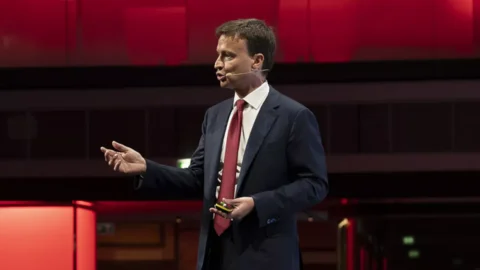
During a hearing at the French National Assembly, Stephane Bianchi, Deputy CEO of lvmh, confirmed a delicate situation: “Chinese customers travel less and spend less in Europe”, while in the United States “demand remains weak”. A double brake that weighs heavily, considering how much luxury tourism plays a strategic role in international demand.
Further complicating the picture is the issue of prices, which have undergone significant increases in recent years. Between 2020 and 2023, according to an analysis by Amber, the main luxury brands have raised their price lists by an average of 36%, double the rate of US inflation in the same period. If initially premium consumers had absorbed these increases well, today the first signs of weakness are emerging.
Carol Ryan of the Wall Street Journal sums it up clearly: “Luxury brands cannot afford to cut prices without compromising their image. Doing so would mean admitting that they have misunderstood the market and that their products are not so desirable.” In essence, better to stay the course and wait for more favorable times.
Luxury: Skyrocketing Prices, More Cautious Consumers
In this regard, Bianchi clarified: “We can increase prices by 2-3% per year” to compensate for any additional fees. As for fine jewelry, the most exclusive customers would be willing to accept these increases, but “it does not mean that price sensitivity is infinite”.
The situation is different for more sensitive segments such as cosmetics e cognac, where LVMH CFO Cécile Cabanis explained that “the ability to raise prices is practically non-existent”.
Despite the slowdown in travel and spending by Chinese consumers, the French luxury giant confirms its intention to continue investments in China. In the United States, however, the first signs of recovery can be seen, even if the climate remains uncertain due to trade tensions with the EU, as Bianchi underlined.
In short, the luxury sector navigates a delicate balance, made of elegance but also of economic fragility. The effect of tariffs is not averted and important challenges remain on the table: the return to growth in key markets, a more strategic management of prices and the adaptation to a more cautious and aware consumer.
In the meantime, the stock markets are smiling and luxury stocks, with cautious confidence, can enjoy a positive light at least for one day.