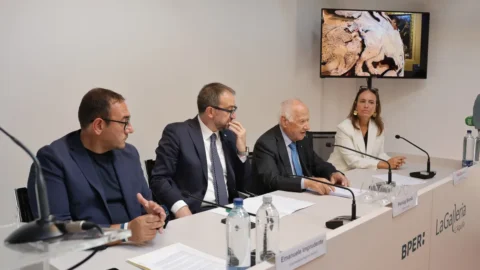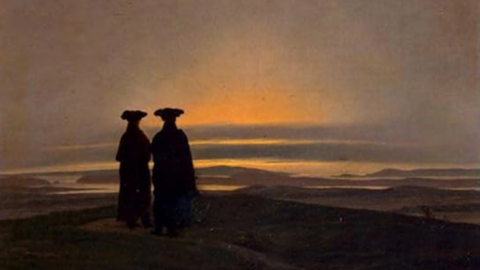
It would be enough to examine even a few excerpts from the correspondence between Leonardo Sciascia and Piero Guccione in a dense epistolary correspondence that followed one another uninterruptedly from 1975 to 1989 - to grasp the profound charge of humanity, the fruit of mutual admiration, which underlies the friendship and intellectual partnership between the two great Sicilian artists. A "correspondence of loving senses", despite the inevitable ideological differences that the letters reproduced here for the first time give us, attested by a series of projects and collaborations - and think of Sciascia's writings on Guccione, or the painter's illustrations for the Sellerio series “The perfected civilization” – which for over a decade punctuates the existential and artistic path of these two “reverse” Enlightenment artists.
What fuels the creativity of both, as emerges from the analysis of the correspondence and the original contributions that make up the volume, is in fact not only that pairing "beauty-truth”, identified by Sciascia as a distinctive feature of authentic artistic expression, but also a common luministic-enlightenment vein, which is reflected in a dialectical vision and sometimes contradictoryrationalistic ideal, open to contamination and denials and not exempt from the complementary charm of the irrational and the metaphysical.
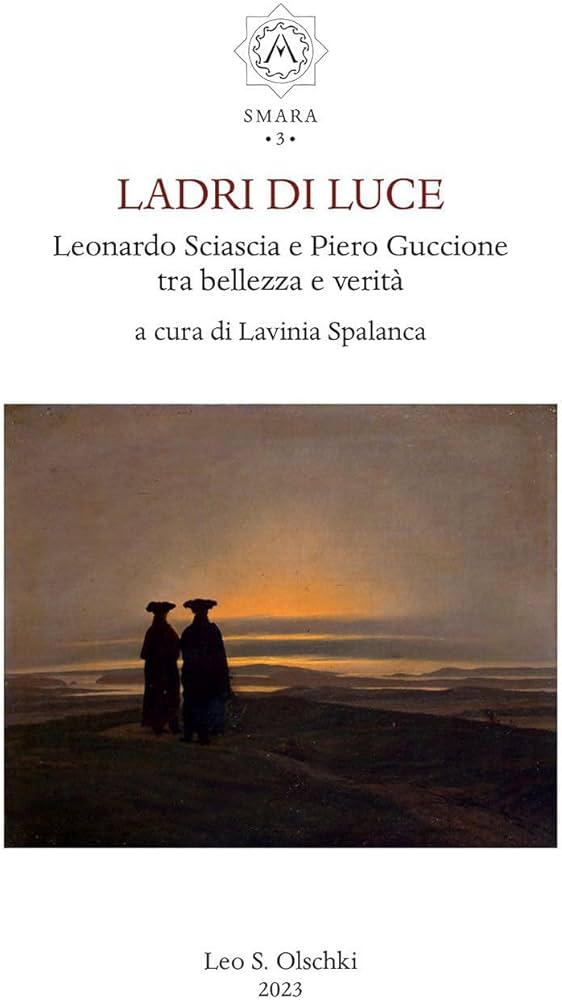
The author: Lavinia Spalanca
She is a researcher in Italian literature at the University of Palermo. Among his many fields of interest, crucial is the relationship between the intellectual and power from the 2012th century to the present day, addressed in numerous studies on the representation of power in ducal Florence, the different declinations of the war narrative in literary modernity, the cognitive heresy and ethical-civil resistance in the "short century". She is a scholar of Sciascia "art critic" (Leonardo Sciascia. The temptation of art, XNUMX), she is a member of the "Leonardo Sciascia" Foundation and of the National Committee of the Centenary of Sciascia. You are part of the scientific committee of «Todomodo. International journal of Sciascian studies".