The race for renewable energy has pushed the EU Commission to create a bank for new investments. Establishing a specification for hydrogen expresses the desire to nominate the old continent for first place in the world in the use of green hydrogen.
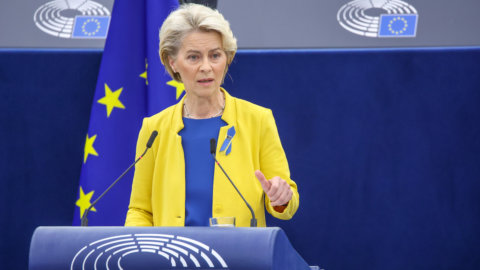
The 2023 European Week dedicated to the energy of the future marked the substantial debut of the bank, with the president Ursula von der Leyen to announce the first auction worth 800 million euros. A good start because, as is known, massive investments are required to produce green hydrogen with currently somewhat uncertain returns.
It is no coincidence that fuel currently does not exceed 2% of all energy sources used in Europe. “The hydrogen economy is flourishing,” said von der Leyen at the opening of the Thematic Week. Four years ago, when the Green Deal was launched, clean hydrogen was just the dream of some visionaries.
In 2022 the first 'hydrogen valleys' arose: there are H2 trains and buses around Europe, in Germany they are thinking of building a hydrogen pipeline.
But the game that Europe wants to play – and perceived during the European Week – concerns hydrogen valleys, hydrogen trains and clean steel factories. The Commission has so far authorized more 17 billion euros in state aid for 80 projects in the private sector.
In spring 2024 there will be the bank's second auction for a value of 3 billion and is presented as an invitation to industrialists to prepare in time.
The reason for such a large mass of investments lies in the ambition to fuel heavy industries, transport, public structures. Infrastructure with other public investments is needed, net of the ECB's policies and the rise in interest rates. Energy is between the most exposed sectors but also the one with more corner, in the sense that it has its outlets in the old energy systems.
The market will be global
The hydrogen market must expand but without partnerships with the private sector there can be no innovation. Also important are the trade agreements with Egypt, Kenya and Latin American countries presented in Brussels as having great potential for producing green energy.
The industrial plan is to see that energy transformed into clean hydrogen and marketed. The European bank will also have to move in this area to achieve a distribution balance, otherwise the industries will be deluded and goodbye hope of reconversion.
Finally, the enthusiasm with which Ursula von der Leyen and the European commissioners talk about renewables must take into account the pragmatism of those governments that take different paths.
The Commission wants to produce 10 million tons of green hydrogen and must import the same amount by 2030. It is not certain that it will not succeed, but looking at data from just 20 months, the EU uses 70% of polluting sources. The Netherlands, Ireland and Poland consume 88% of fossil energy. Italy, Germany, Luxembourg are at 79%, Malta even at 96%. Only Sweden, Finland and France have shares below 50%. To convince these governments, or their economies, is a bank with such generous auctions enough?