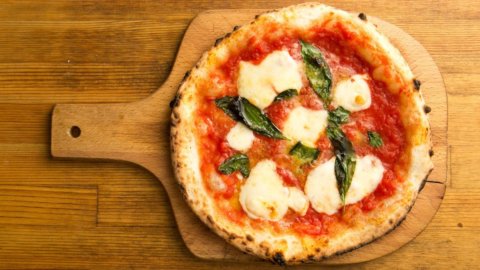
The Neapolitan Pizza has now become part of the Unesco World Heritage. The announcement was made by Minister Martina with a note expressing all of Italy's pride in the choice of the international body made up of 200 countries which have recognized "the art of Neapolitan pizza makers" as a cultural asset to be preserved and protected.
“Made in Italy achieves another great success – said the Minister Maurizio Martina upon arrival of the news – It is the first time that UNESCO has recognized as a World Heritage Site a trade linked to one of the most important food productions, confirming that this is one of the highest cultural expressions of our country. This is excellent news that launches 2018 as the year of food. The art of the Neapolitan pizza maker embodies the Italian know-how made up of experiences, gestures and, above all, traditional knowledge that is handed down from generation to generation. It is a historic recognition that comes after a complex negotiation process that lasted over 8 years, which rewards the Ministry's commitment alongside the associations of pizza makers. I thank the local institutions, the Campania Region, the Ministry's experts and all those who, with their commitment, have made this result possible, which reaffirms the leading role played by our country in enhancing its food and wine identity."
The Unesco decision follows that of 2010 by the European Community which recognized the Neapolitan Pizza as a Guaranteed Traditional Specialty of the Community.
Proposing only the candidacy of the Neapolitan pizza for 2017 to UNESCO, the designating commission had underlined that this was equivalent to "recognizing the value of a sustainable tradition, attentive to naturalness, which speaks of raw materials linked to a true love and respect for the earth , of ingenuity of men and women who wanted to find tasty ways to feed their families and their communities. And he concluded by emphasizing how “the art of pizza makers has performed a function of social redemption, an element of identity of a people, not only the Neapolitan one, but that of Italy. It is a brand of Italianness in the world“.
In fact the pizza numbers are impressive: it has in fact been calculated that almost 8 million pieces are baked in Italy every day, i.e. about 192 million pizzas a month or 2,3 billion pizzas a year for a turnover of 12 billion euros which gives employment to 100 permanent workers to which another 50 are added over the weekend. Not only that but it is the whole sector in general food that attracts employment as the statistics show.
Certainly Neapolitan pizza is the best known, appreciated and imitated Italian food in the world. His majesty is the Neapolitan Pizza. A commoner nobility, to tell the truth. It has humble origins that are lost in time, in fact, but in the shadow of Vesuvius they have been able to make it an international legend to the point that it is the best known Italian word abroad, more than cappuccino, more than spaghetti, more than espresso.
Just to know on average we eat 7,6 kilos of pizza a year, about 38 Neapolitan pizzas each, a quantity that exceeds that of many countries starting with France and Germany (4,2 kilos) or Spain (4,3). But, surprisingly, there are places where pizza is even more widespread such as Canada, where the average consumption reaches 7,5 kilos per year, or the United States, which ranks first among pizza fans with 13 kilos each.
The first news about the Neapolitan Pizza are lost in time. The most popular were very simple, one seasoned with garlic, lard and coarse salt, the other, for those who could afford it, with caciocavallo cheese and basil. The ancestor of modern pizza makes its appearance three hundred years ago: it is the marinara pizza with tomato, garlic, oil and oregano. But it is at the end of the nineteenth century that the most famous of the pizzas, the Pizza Margherita, was born. Italian unity had just been conquered, the King and Queen had come on an official visit to Naples and with a pinch of audacity a Neapolitan cook Raffaele Esposito sent the queen a pizza made with the colors of the Italian flag: the white of the mozzarella, the green of the basil the red of the tomato. Boldness is rewarded. The Queen likes that poor but tasty food and a letter attests to her appreciation. “Precious Mr. Raffaele Esposito, Naples. I can confirm that the three types of pizzas you made for Her Majesty the Queen were found to be very good. Believe me of you, most devoted Galli Camillo, Head of the Table Services of the Royal House.” The text is preserved and still displayed in the Pizzeria Brandi, in Via Salita Sant'Anna di Palazzo where a marble plaque was placed. The Margherita pizza was born, in honor of the queen, and on the wave of this affirmation the first pizzerias spread since before pizza was a street food carried around by street vendors.
The pizza phenomenon is now so international that people are also thinking about its surroundings and its modern variations in terms of delivery, environmental impact, street food, packaging and nomadism. An international competition, the Desita Award Pizza Experience in collaboration with the Qualivita Foundation and Tuttofood of the Milan Fair, rewarded the winners of a competition that involved 35 countries from all over the world in the name of the international design contest. Three winning projects, that of a nomadic pizzeria that can be set up on beaches all over the world signed by the Italian Giuseppe Sorrentino; an innovative solution against paper waste that transforms waste (calculated at two million tons a year) into something precious designed by the American Nicholas Bender and the Icelandic Eir Rovira, and a fun and convenient experience for personalizing the pizza and get everyone to agree on the type of pizza to order so that every consumer is able to prepare their own piece of pizza with different toppings with a specially designed package with perimeter compartments designed by Peruvian Vania Valeria Adrianzen.
A special mention also went to Slovakian David Toth who proposed a project in line with the times: a particular aerodynamic package to facilitate the delivery of pizza by drone while respecting its quality and temperature.