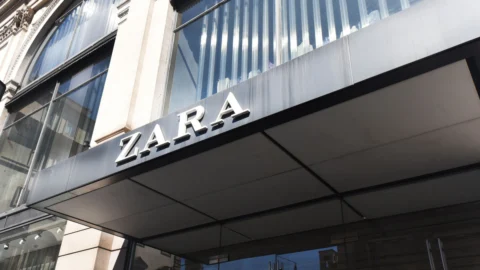
Inditex is running on the sales front, but is slowing down on margins and the market is unforgiving. title of the Spanish fashion giant, owner of Zara, Bershka, Stradivarius e Massimo Dutti, falls by more than 4% on the Madrid Stock Exchange after the publication of results The biggest downside was the EBIT performance, which fell short of analysts' expectations, while revenues, net profit, and cash flow generation continue to demonstrate the group's solidity.
The semester in fact closed with a significant growth in sales: Inditex has registered revenues for 19,8 billion euros, an increase of 7,6% compared to the same period of the previous year. In the second quarter alone, from May to July, the turnover reached approximately 11 billion euros, supported by the good reception of the spring/summer collections and a positive trend in both physical and online stores. Numbers that had prompted analysts to Citi to predict a possible positive reaction of the stock, but which were not enough to convince the market, which was mainly focused on the evolution of margins and operating results.
Inditex's first-half results: EBIT and margins below expectations.
The operating result is what is holding investors back.EBIT rose 7,6% to around 3,8 billion euros, but stopped short of the 3,92 billion euros expected by consensus. The gross margin The quarterly margin, equal to 56,7%, was slightly lower than expected. Gross margin for the first half of 2020 amounted to €11,6 billion, up 8,3% and an improvement of 40 basis points compared to the first half of 2025, while EBITDA reached €5,5 billion, up 7,8%. However, despite this growth, operating costs increased by 8,3%, contributing to a dampening of operating profit momentum.
Among the factors that have affected the costs there are also the interruptions linked to the conflict in Middle EastAs explained by the CFO Andres Sanchez Iglesias, The situation led to increased transportation and production costs in the first half of the year. The war also continues to impact Inditex's sales in the region, although the situation has improved compared to the first quarter. The group operates approximately 480 franchisee-operated stores in the Middle East.
The rest of the budget confirms a solid picture.pre-tax profit rose 6,8% to 3,8 billion, while theNet income reached €3 billion, up 6,8% year-over-year. Cash generation was even more robust: funds from operating activities reached €4,1 billion, up 11%, while the net financial position rose 4% to €10,4 billion.
Also the Commercial network is shrinking and focusing on larger, more strategic stores: as of July 31, there were 5.444, compared to 5.528 a year earlier. Zara's stores decreased to 1.487, while Lefties grew, reaching 223 stores and aiming to expand in the UK and Germany. Meanwhile, Bershka, Stradivarius, and Pull&Bear each surpassed €1 billion in revenue at the end of the first half of the year, growing at a faster pace than Zara.
Geographically, theEurope outside Spain, it remains the main market for the group, with 51,5% of sales. This is followed by Americas with 17,9% and the Spain with 15,6%. Asia and the rest of the world represent 15%, a slight decrease of 1%.
Inditex reports growing sales and confirmed 2026 guidance.
If the market reacted badly to theEBITManagement looks ahead with greater confidence. The fall/winter season has started positively: between August 1st and September 7th, in-store and online sales grew 9% compared to the same period in 2025, despite the particularly intense heat that hit Europe. June and July were among the hottest months on record in Western Europe, complicating the traditional transition from summer to fall collections. Despite the high temperatures and a slowdown in consumption in the United States reported by some competitors, the new fall/winter collections were described by the group as "very well received."
The data allows Inditex to confirm the guidance for the full year. For 2026, the group expects gross retail space to grow by around 5%, with a positive net contribution in terms of space and solid online sales. The negative impact of 1% of exchange rates on annual revenue is also confirmed, while the gross margin is expected to remain stable.
On the front of investmentsInditex had forecast ordinary capital expenditure of approximately €2,3 billion for 2026, primarily for store renovations and improved logistics. This figure is supplemented by another €200 million for modernizing corporate offices. Analysts at Rbc They estimate that Inditex's annual investments are about three times higher than those of rival H&M.
Interesting signals are also emerging on the competitive front. The documents relating to the planned listing in Hong Kong of Shein They highlighted a slowdown in the ultra-affordable fashion platform's revenue, suggesting a possible easing of pressure on European fast-fashion retailers. Meanwhile, Inditex continues to strengthen its presence in the more affordable segments through Lefties.
The payment of the next November 2nd has also been confirmed. dividend final dividend for the 2025 financial year, equal to 0,875 euros per share.