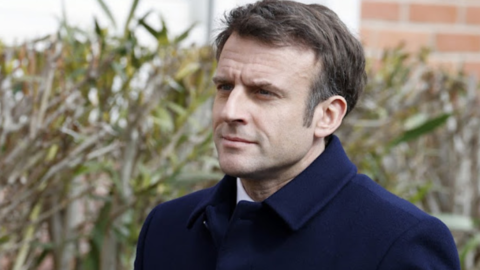
Ten days of strike promoted by all sindacati and a climate of violence unleashed by Black bloc: the France it's been burning for weeks, but it can't last like this. President Emmanuel Macron had the courage of unpopularity by promoting a reform of pensions which he himself would have gladly done without but which "is necessary" because it secures the French social security system also for the future. But the country has not understood this and between the Elysée and France there is a sentimental divorce which is already much more than the lack of communication and mutual distrust. But can we continue like this? No, you can't: Macron knows it and the unions know it or, at least, the most intelligent and realistic of them knows it, Laurent Berger, leader of the CFDT, the second largest French trade union, a kind of CISL and once a friend of Macron. “Macron go back to dialogue, otherwise it helps The Pen” he declared last Wednesday in an interview with la Repubblica. But hers is not the only timid sign of thaw, even if the surprise election of Sophie Binet at the head of the communist union Cgt, a sort of union version of Elly Schlein, is not exactly a good omen.
FRANCE: FIRST SIGNS OF THAW FROM TRADE UNIONIST BERGER AND PREMIER BORNE
On the same day that Berger launched the first signs of readiness for dialogue, Prime Minister Elisabeth Borne he invited the unions to a meeting without an agenda for April 5. Which means that everything can be discussed. Even pensions? Not of the suspension of the reform as the unions are asking but perhaps of some of its application aspects and then of work and justice. The distances between Government and unions are abysmal but the opening of a discussion table is already something.
At that meeting, however, there will be a stone guest: the Constitutional Council, chaired by former socialist prime minister Laurent Fabius, who on April 14 will have to decide whether or not the text of the reform complies with the Constitution and on April 20 whether or not to admit a popular referendum on raising the retirement age from 62 to 64 envisaged by the Macron reform.
FRANCE: THE CONSTITUTIONAL COUNCIL CAN PLAY A DECISIVE ROLE
In short, hot days, very hot for France and for the fate not only of the pension reform but for the future of Macron himself. Everyone understands that France cannot continue in a clash that splits it vertically, which paralyzes it and which offers more and more room for maneuver to violence and which in the end only plays into the hands of the right. But who will take the first step towards the thaw? Perhaps Nicolas Domenach is not entirely wrong when he writes for the economic weekly Challenges that paradoxically "Macron must hope for the censorship of the Constitutional Council", not total but partial, to restart dialogue with the unions without losing face. But what will the 14 members of the Constitutional Council do on April 9? Some say that Fabius could seize the opportunity to take revenge for the censure suffered in May 3 years ago by Macron himself who publicly criticized the Council for its slowness in validating the extension of the state of emergency desired by the Executive. But that would be petty pettiness. More realistically Le Monde he thinks that the Constitutional Council will reject the pension reform, yes but only partially, offering the Government and the unions the possibility of resuming the dialogue on new and more constructive bases.
FRANCE: WILL THE RETURN TO REASON PREVAIL OVER RESENTENCE AND SOCIAL RANCOR?
Macron is experiencing to his cost that the modernization of France is not a gala dinner and that it is impossible to carry out reforms without consensus, but among the more pragmatic trade unionists like Berger, how many could swear that without a profound reform, the French social security system is in capable of holding up despite the lengthening of life expectancy, the reduction of active workers and the growth of pensioners? The next few days will tell us if in France the return to reason will be able to prevail over resentment and social resentment.