Other than Lazarus. Good old Kodak refuses to end up on Wall Street memorabilia. Indeed, thanks to the pandemic, the intervention is unknown how gratuitous by Donald Trump and the office of Robin Hood's followers, the title of what was the symbol of the film industry for photography, already gone bankrupt, has given a new life. Even the fourth.
IERI (Yesterday) Kodak shares have indeed shattered all records achieving a sensational rise: +1.481% in three days, going from a price of 2,10 dollars per share last Friday to 33,10. The valuation of the Rochester share, an old industrial village in New York State where Xerox was also born, has risen from less than 890 million dollars to over one and a half billion.
A sudden resurrection, matured after the Wall Street Journal picked up on the news of a local TV station on an unspecified agreement with the government, confirmed with great embarrassment by Joe Continenza, the CEO of Kodak who had been managing the brand's legacy for seven years . "Yes, there are big news coming", he confessed to reporters, immediately adding, in fear of the SEC, "you won't know anything from me".
But the news, relaunched by the tam tam of small speculators who move on the net through the Robinhood.com site, immediately exploded. The US government has granted a $765 million loan to Eastman Kodak. The operation, the first of its kind in many years, took place under the Defense Production Act, a federal law passed in the 19s in response to the Korean War and "dusted off" by President Trump during the Covid-XNUMX emergency. which allows the White House to indicate to companies which goods to produce goods because they are considered necessary and of which there is a shortage.
In the case of Kodak, the mission will be to produce generic drugs, including hydroxychloroquine, still used by Trump to "prevent" the coronavirus that Antony Fauci himself, White House adviser for Covid 19, declared ineffective. But that instead Trump's son continues to advise, even after having incurred Twitter censorship.
Beyond the doubts, the fact remains that only 10% of the medicines used in the USA are produced on American territory, which exposes the superpower to a dangerous dependence on India and, above all, on China. Hence the president's decision to revive the old Kodak which has really seen all the colors. The history of the company looks like a film. The group born in 1888 has been a leader in the photographic film sector for almost a century.
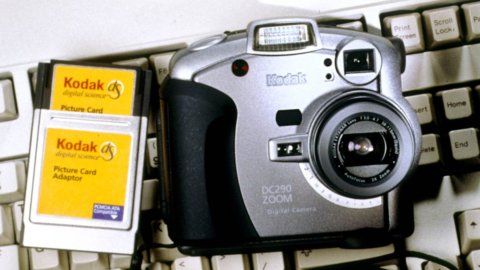
Then, in a short time, digital has transformed an entire sector, wiping out even giants considered timeless. The company has reinvented itself by moving into the production of digital cameras. A transformation that didn't last long. The arrival of smartphones has surpassed even digital cameras. But Kodak didn't give up. In 2011 it transformed into Kodako, a blockchain that guaranteed access to a platform specialized in services for photographers.
Then he kicked off kodakcoin, a platform based on virtual coins. After the last flop the adventure seemed to have come to an end. But in 2013 Joe Continenza, forced to file for Chapter 11, played his last card: for 525 million dollars he sold his patents to giants such as Apple, Microsoft, Samsung, Adobe to then specialize in production of advanced printing systems and image management for businesses, 3D printing, maintaining film production for the motion picture market.
It looked like the antechamber of a dignified avenue at sunset. But Donald Trump had other plans. Kodak may not be the best equipped company to enter the generic drug market. The group will have to convert the plants and most importantly, develop new skills. True, but it wasn't easy to find another brand so authentically American to mobilize in a revenge key.
And the 117.051 new Kodak shareholders, recruited in just three days away robinhood.com (the zero commission trader) go to show that the US president remains a great marketing man.