“From Kafka”
Franz Kafka's closest moment to moving to the Holy Land was when he thought, with his latest lover — Dora Diamant — of opening a restaurant in Tel Aviv. She would cook and he would serve the tables. Unfortunately, tuberculosis struck the Prague writer in June 1924, before "From Kafka" could open its doors. Specialty? Definitely, "scapegoat on the spit".
In 1939 Kafka's friend Max Brod fled Nazi-occupied Czechoslovakia for Palestine with a suitcase containing most of the Prague writer's manuscripts. A unique heritage: there were the unfinished novels The process, The castle e America, together with diaries, notebooks and miscellaneous correspondence.
Decades later, the contents of that refugee's suitcase spawned a series of very scathing lawsuits. In fact, the question of the ownership of Kafka's manuscripts has covered the entire judicial process up to the Supreme Court of Israel to which the case arrived in 2016.
Benjamin Balint, critic, translator and professor of philosophy at Al-Quds University in Jerusalem, reconstructs this saga step by step in his book Kafka's Last Trial: The Case of a literary Legacy, the reading of which takes quite a lot. Not only does Balint discuss the strictly formal question of where Kafka's works belong, but he also explores the meaning of a writer's cultural and literary heritage in an age which, like Kafka's stories of bewilderment and anguish, confounds the concepts of identity and belonging.
Then there is the whole complex and debated question of Kafka's relationship with Jewish culture and how much his origins and training in a Jewish family have influenced his works.
Max's suitcase Brod
Willi Nowak, Max Brod, 1910–11, Jewish Museum, Prague.
Kafka published little in his life, the novel The Metamorphosis and some collections of short stories all appeared in literary magazines. His admirers know that we can only read much of his work thanks to an act of betrayal perpetrated by his best friend.
Before dying, the German-speaking Jewish author who lived in a Czech city had instructed the devoted Brod to burn all his papers, writing peremptorily: "without reading them and up to the last page".
For Brod, however, disobedience to that peremptory order was the greatest act of loyalty to his friend. Already in 1939 the post of executor of Kafka's will had given Brod worldwide fame. In Germany, he had also attracted the vandalizing wrath of the Nazis.
After the war, however, Brod, now living in the newborn state of Israel, failed to revive his literary career, but his fame still flourished as the keeper of "Kafka's flame". His intense work around the work of the great writer had the consequence, as Balint says, that “the Kafka we know is Brod's creation”.
His partner, Esther Hoffe, also an immigrant from Prague, helped Brod in his work. Upon the latter's death in 1968, Brod bequeathed her belongings to Esther, including Kafka's precious documents. At the same time Brod ordered, in a cryptic way, that the heritage of Kafka's papers became part of a "public archive".
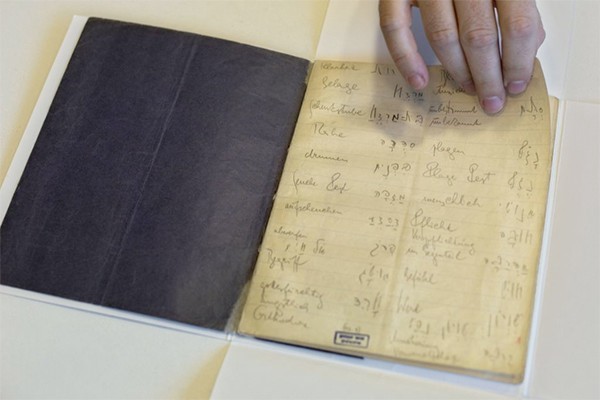
Franz Kafka's German-Hebrew vocabulary manuscript in a notebook part of Brod's legacy. The manuscript is kept in the National Library of Israel in Jerusalem. In 2016, the Supreme Court of Israel ruled that Kafka's manuscripts belong to that institution.
If Israel wants Kafka
This will was intended to fuel any kind of legal dispute. After a preliminary skirmish in 1974, the arguments reached heights of properly Kafkaesque absurdity, especially after Esther left her priceless inheritance to her daughter Eva, a retired El Al employee, in 2007.
Two images of the new headquarters of the National Library of Israel, inaugurated in 2016. The building was designed by the Swiss studio i Herzog & de Meuron with the Israeli studio Amir Mann-Ami Shinar Architects & Planners as executive architects. Kafka's manuscripts will be kept in this astonishing building.
Meanwhile, the National Library of Israel had begun a campaign to establish Kafka's work as "a cornerstone of modern Jewish culture." Consequently, his manuscripts had to stay on the shelves of the institution. The fact was, however, Esther and Eva had already negotiated the transfer to the National Archives of German Literature (Deutsche Schillergesellschaft eV) in Marbach am Neckar, Germany, the birthplace of Schiller, one of the creators of modern German national sensibility.
The Germans had made a tempting offer for Brod's casket. The ambiguity of Brod's will returned to the fore, also becoming a national and international political issue on the difficult issue of the relationship between Germany and Jewish culture. If indeed Kafka, as the Israelis claimed, was one of the greatest expressions of their culture and their identity, Kafka's documents had to stay in Tel Aviv. The Germans, in whose language Kafka had written all of his works, thus becoming a prime example of the literary use of Goethe's language, instead claimed the universality of Kafka's work and the fact that he belonged to humanity. The Germans, Balint suggests, wanted to affirm the priority of "European universalism over Israeli particularism".
As we know, Kafka's relationship with Jewish culture was very problematic and a source of anguish, even though his roots are undoubtedly in that culture. He was not observant, but spoke Yiddish, a language that he also often used in his writings about him. Kafka's Judaism debate is also highly controversial. For example, the Marxist scholar Lukacs, who has an enormous consideration of Kafka's work, writes that "Kafka is an atheist who does not conceive estrangement from God as liberation, but as the triumph of desolation". And this anguish feeds his work and gives it a disconcerting modernity.
An impossible epilogue
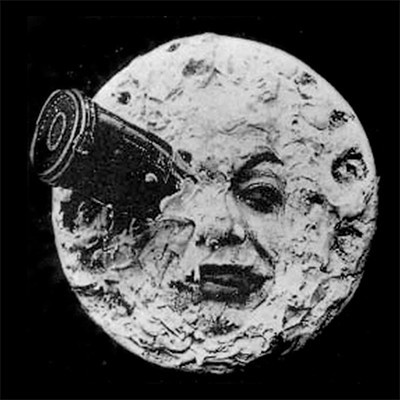
The Israeli poet, Lali Michaeli, writes in commentary on this strange story of the residence of Kafka's manuscripts: "Given the otherworldly talent of the writer, Kafka's manuscripts should be sent to the moon".
Balint in his book describes the judicial story of Kafka's papers and elegantly intersperses scenes from the trials with episodes from Kafka's biography and cultural heritage in the narration. He highlights the paradox of a legal case that has tried to relate the most ambivalent of the authors, the last pariah without any affiliation, to a fixed identity. Balint admits that Kafka may have also flirted with Zionism, but (in 1914) he wrote Kafkaesquely: “What do I have in common with the Jews? I have almost nothing in common even with myself."
Disputes about his Jewishness or his Germanity have become the grist that drives a slowly honing legal mill. Clarity and certainties are sought in a mind that, in literature and in life, often "wobbled on the threshold of every action". In the end, in court, the National Library of Israel prevailed. Eva Hoffe denounced the verdict as a violation of law.
Lali Michaeli, an Israeli poet, deserves the final say on the matter. "From my point of view - he observed - given the otherworldly talent of the writer, Kafka's manuscripts should be sent to the moon".