

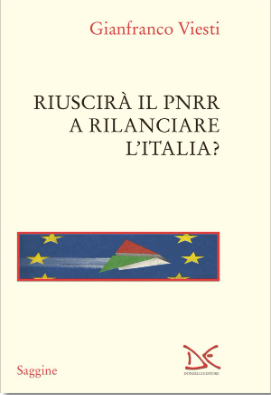
Italy is not a country for recovery and resilience plans, one could say badly paraphrasing the Coen brothers. But it is so? This is what I am trying to discuss in a small essay for Donzelli to come out.
When it became certain that Italy would obtain enormous resources as a result of the European initiative of next generation, the difficulty of actually being a country for recovery and resilience plans appeared immediately clear. A country that instead seems incapable of projecting itself, of dreaming of the future, of fighting for a better future. For many, too many years he has been trapped in "presentism": in that regime of historicity identified by the French philosopher François Hartog and referred to in the fine recent volume by Giorgio Caravale on the relationship between politics and intellectuals. A country characterized by a political discussion, and in general by a public discussion, entirely centered on continuous but limited guerrilla warfare around specific topical issues from time to time, first of all immigration, and not by a comparison between different visions long-term. A country inattentive to the great knots that bind it, first of all the great inequalities, between social, gender, generational and territorial classes. In which the long austerity has helped to focus attention more on cuts in public intervention, more on the often mentioned spending reviews than on policies of reform, modernization and structural strengthening of schools, health care, welfare, large infrastructure networks. And in which long-term sectoral planning, for railways as well as for water networks, for healthcare and for research, for urban transport and for the energy transition, have lost their importance and centrality in government action .
The match of the Next generation
And so when it suddenly opened the match of the Next generation, and Italy was asked to project itself into the future, to identify its collective objectives and therefore to coherently plan the large, new resources available, responding was extremely difficult. And therefore we didn't start from a vision of the future, but by collecting the projects already available; the drafting process was thus additive and the Plan presents itself, even in its final version, as a sum of projects.
Of course, it should not be forgotten that i Conte II and then Draghi governments they were grappling with the health emergencies connected to the new flare-ups of the pandemic and those connected to the shutdown of economic activities, the need to allocate refreshments to businesses and citizens. The emergency was pressing. But this does not explain, on the part of both, the total inattention, which was not difficult to detect, to a public discussion on the general formulation of the Plan and on its specific measures; the lack of attention to its basic coherence and to the multiplication of interventions that would have made its implementation difficult. The attention of the Draghi government has been entirely concentrated on the "reforms” and very little about “investments”, in the conviction of the Prime Minister and his closest collaborators that the former would have been sufficient to make a radical transformation of the country possible in two years and therefore the implementation of the expenditure. It was really difficult to make room for some criticism, some requests for discussion, even if coming from authoritative personalities, in a landscape marked by a chorus of paeans to the "government of the best" and his ability.
After summer 2021, then, the Plan has foundered. With a process of minimal visibility but of maximum interest, the most relevant decisions for the future of the country were taken by a series of mainly technical ministers of the Draghi government, through the uneven and in many cases questionable methods of choosing specific projects to be made in measures of the Pnrr. It is they who, once again in the absence of any significant political discussion and public opinion, have made crucial choices; there was very little coordination on the part of the prime minister and very little communication with the political forces of the vast majority. And, with these decisions, the Plan has materialized. There was therefore a period in which the legendary "button room" evoked by Pietro Nenni many years ago really existed; and the ministers of the Draghi government have pressed practically all of them.
Thus the ship set off amidst a chorus of hurrahs, between repeated, unanimous hellos at each of the many deadlines that were respected, between garrulous cheers as the various community checks arrived, for a nice total which so far amounts to 67 billion. The Plan, as I try to document in the essay by analyzing different thematic areas, has lights and shadows. But in the meantime it started.
The Government of Giorgia Meloni and the Pnrr
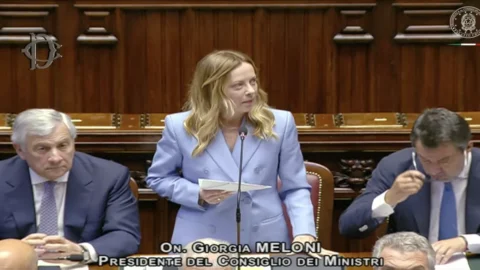
Then they arrived early elections, and the success – thanks to the suicide of the adversaries and the lack of love of the Italians for the polls – of the only opposition party to the "government of the best". Giorgia Meloni and her collaborators then entered the control room: but they found them all pressed. They couldn't not know. They could not fail to know that fate had reserved a truly thankless task for them: to carry out all the planned investments, in a macroeconomic framework completely transfigured by the effects of the war in Ukraine, From 'inflation and by the sharp increase in the prices of public works, which made many Pnrr cost forecasts obsolete and which had already forced the Draghi government to intervene with new funding from the fund for non-deferable works.
The premier immediately aimed at theoccupation of power: concentrating the delegations on the Pnrr together with those on the cohesion funds in a single dicastery, and entrusting it to its most faithful and expert Raffaele Fitto, former president of the Puglia region and MEP. Fitto then carried out a reorganization of the central control structures of the Plan, already rather verticalised, bringing everything under his dicastery and aiming to replace the Dragonian technicians with personalities trusted by him. Ambivalent move. On the one hand understandable, given the opportunity to bring all the decision-making bodies closer to the premier and to jointly maneuver the cohesion funds together with the Pnrr, which at the time of the "government of the best" had been the subject of little political attention and placed under the control by Minister Carfagna. But on the other, very risky: due to the risks associated with the ongoing redesign of structures, such as the Agency for Territorial Cohesion, already engaged on several fronts and with the halter deadline of 31 December to report the structural funds; and for the need, faced with such a concentration of power and resources, to move quickly thanks to a strong high-level technical structure. Speed that has not been seen so far.
Then, in March, the Court of Auditors has published its periodic Report on the Pnrr. With all due respect to the accounting judges, it says absolutely nothing that insiders didn't already know. That spending on the works was much, much slower than what the Draghi government had imagined with the Def 2021 was already clear with the Nadef 2022; that there were problems with specific measures it was clear from the very valuable repeated analyzes of the Bank of Italy and the Parliamentary Budget Office; that transparency and updating on the Plan, especially as regards the Regis platform, were very unsatisfactory had been documented by many, starting with Openpolis. But the publication of that document opened a Pandora's box. The Dragon Plan of Dreams has become a nightmarish document. A flurry of declarations, in a Rossinian crescendo of intensity, on the impossibility of realizing it, on the inappropriateness of continuing, on the need to rewrite it as much as possible; a string of pearls, among which the brightest was perhaps that of the Northern League leader in the Chamber of Deputies Molinari, evidently forgetting that he was also part of the majority that had approved the Plan.
If the Italian Plan is skipped, the whole Recovery is skipped
At this juncture, the Meloni government has not done what it should have done and has done what it shouldn't have. He did not allow the country and Parliament to know how things really are presenting, as his duty, the third Report; he did not keep his tone low by entering into a technical dialogue on specific points with the Commission, which was forced, quietly, to remember that it was available there. Even because if the Italian Plan is skipped, the entire Recovery is skipped and any future hypothesis of common debt. Fitto has instead repeatedly indicated that some parts of the Plan are unfeasible and that it is necessary to move projects from the Pnrr to the cohesion funds, without saying which ones, for how many resources, with which procedures, with which guarantees on territorial allocation and replacing them with what. By flashing spectra of strong interests, from companies to corporations close to the government, to obtain many new loans in their own pockets instead of committing themselves to complex public infrastructures.
So is it true that Italy is not a country for recovery and resilience plans? That we wrote it in a very questionable way, that we chose the projects with questionable procedures and then at the first difficulties we raise our arms and unleash a meaningless discussion? That we are only capable of asking for a lot of money and then we are unable to use it? That we give up on restarting public investment (the heart of the Next Generation) and prepare ourselves for a shower of subsidies?
The challenge of the Pnrr is as good as that of the euro
No. This would really be the end; the resignation to stay there sad Italy of the XNUMXst century. The challenge of the Pnrr is as good as that of the euro; we don't have a Ciampi, but we'll have to do it anyway. To return to being a serious country, it is precisely on the Pnrr that, as in Dante's Inferno, "(our) noble will appear". With all its defects, with all the mistakes made, with some of the perhaps two hundred thousand planned projects that will certainly have to be replaced, with some measures that will not be implemented at all, the Pnrr is the challenge that Italy must take up to go back to being a big and serious country. A journey into the hell of implementation to return to "seeing the stars" of a finally modernized public capital, of green and digital transitions underway, of gender, generational and territorial inequalities perhaps a little reduced. The Pnrr will not be able to relaunch Italy: but it can represent a fundamental step on the way out of the long tunnel of presentism, to go back to thinking about the future.

Dear Vieste
It would take the thickness of post-war politicians (what was the Marshall Plan if not the same thing). It may seem trivial to say it but historical truths often certify them precisely in apparently trivial passages.
Furthermore, in the post-war period we had a "centralist planning government" which, despite many errors, led within 10 years from nothing to being the seventh world power.
Today, no one can understand me better than you, let's talk about differentiated Autonomy, that is the madness of a small group well known for other antics, which for poor interests in the garden (not even in the shop) complicates things a lot in a context where the global vision and planning according to the country system is fundamental.
There are many roosters crowing, time passes inexorably in a sort of apathy that has enveloped this country and that does not herald anything good