Hezbollah launched the announced retaliation on Israel in response to the killing of the terrorist group's military commander, Fuad Shukr, occurred in Beirut last July, launching hundreds of rockets and explosive drones against Israel. The Israeli army responded, first with "pre-emptive" strikes then with a more massive aggression hitting hundreds of targets.
Attacks and counterattacks
A so-called “preventive attack” with planes and drones. The Israeli commanders explained that they had certain information that the pro-Iranian Shiite militia in Lebanon had planned a massive bombing by five in the morning.
In a statement, the Shiite militia said it had launched explosive drones against Israel, targeting military sites, stressing that it had launched more than 320 rockets towards northern Israel in the last few hours, together with several drones loaded with explosives, and targeted 11 military bases. The attack would be in retaliation for the death of senior commander Fouad Shukr, killed in a raid in the southern outskirts of Beirut on July 30. A political source told Israeli public television Kan that Hezbollah had targeted the Defense Ministry in Tel Aviv and other strategic targets in central Israel, but the defense systems worked.
In a statement, the group said it had targeted Israeli military sites to facilitate the passage of explosives-laden drones "to other targets deep inside" the Jewish state. Hezbollah later declared the attack over, announcing that he had “successfully completed” the “first phase” of the retaliation.
Netanyahu: “We hit those who hit us”
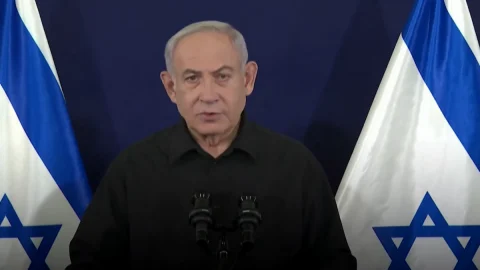
“This morning at dawn we discovered Hezbollah's preparations, which was ready to attack Israel, we gave orders to the army to act immediately to eliminate the threat. The IDF is operating forcefully and has destroyed dozens of rockets aimed at the north. I ask the citizens of Israel to follow the safety instructions,” said the Israeli prime minister Benyamin Netanyahu in the Security Cabinet meeting that ended at 8:36 local time, 7:36 Italian time. “We hit those who hit us”, Netanyahu added.
Israel “does not want all-out war” in the region, government ministers said. “The country – wrote Defense Minister Gallant – is acting to protect its citizens and its territory” from what he calls an “axis of evil” led by Iran. Israel “will act based on developments on the ground,” the minister added.