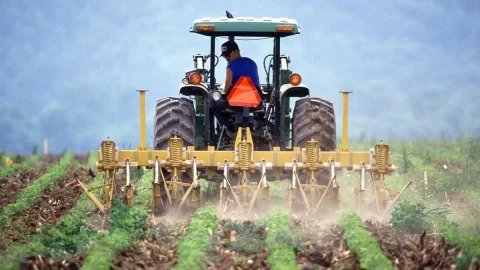
It's bad news, but it's not a surprise. The action of the Carabinieri against gangmastering in August throughout Italy cannot be defined as unexpected. Let's say right away that the Indian laborer died yesterday had been hired regularly. However, the police discovered companies with sustainable agricultural production and low environmental impact committed to exploiting it liberally illegal workers. Worse, they systematically resort to gangmastering. The databases consulted by the Carabinieri in recent days have made it possible to directly accept what is happening in hundreds of companies. The clean face of much Italian agriculture, at the end of the checks, turned out to be false. In ten days, 958 companies were checked and 507 were found to be irregular: 52,92%. A record of illegality unfortunately confined to the bottom of the list of things to deal with. The military acted throughout Italy with territorial departments and with specialized personnel of the Carabinieri for the Protection of Work. Out of approximately 5 thousand workers checked, 1268 were found to be irregular. More than 2 thousand non-EU citizens were found in the countryside from Turin to Pescara, from Brescia to Syracuse which led to the closure of 145 agricultural companies and hundreds of complaints for "illicit intermediation and exploitation of labour": gangmastering, in fact.
We have also raised sanctions and fines - say the carabinieri - for more 4.900 thousand eurosoe seized vans for transporting agricultural workers to the fields. In short, an alarming picture throughout Italy in conditions of semi-slavery which contradicts those who wanted it limited to the South. Many still support it but "it is an idea that no longer makes sense" the sociologist explained to " Collettiva " of the CGIL Francesco Carchedi. The Carabinieri and the police forces detect gangmastering more clearly where there are areas of greater agri-food wealth such as in the large northern provinces, is the basic thesis. Politics has no impact on the phenomenon that silently corrodes the legal labor market and undermines the credibility of the thousands of agricultural businesses involved in complex transitions.
Are new laws needed?
The ugly contradiction is that in those areas of the North there is the greatest sustainable and certified agricultural production. There are associations and solidarity groups that promote responsible purchasing of products from companies that do not exploit illegal labor. It is the ethical path, but when we also went to the countryside and large-scale retail trade to understand, reality took a long time to meet us. The responsibility of honest producers and civil complaints against those who resort to gangmastering and weaken competition must certainly increase. Quality and entrepreneurial dishonesty cannot go together.
The prime minister's complaint is not enough
“The shame of gangmastering is far from being defeated, despite the efforts made by governments of different colours,” he said Giorgia Meloni in the Chamber after the terrible death of the immigrant laborer Satnam singh in the Lazio countryside. The police raid shows that new laws are not needed. The military acted on what was available and was up to the task. All it takes is will and organisation, waiting for the specific European directive which will come into force in 2027. It is inconceivable that in the meantime tomatoes, flours, fruit juices and wines obtained with the black market of arms. The prime minister possesses an extraordinary dose of pride and knows that the phenomenon goes against Italy's social and economic interests. You can do more and better to avoid the risk of being overshadowed by that shame shouted in Parliament.