“Conflict between powers, regulatory risk and impact on foreign investment”: this is the title of the research with which I-Com (Institute for Competitiveness) finds that investments at risk are equal to 26,4 billion euros and 6,8 billion are completely "stranded" resources, due to bureaucracy and institutional conflicts. Out of all these resources that may never be invested in Italy, the weight of foreign capital is extremely significant and has a volume of 19,4 billion euros, against 13,7 of national origin. This is probably why fewer and fewer foreign investments arrive.
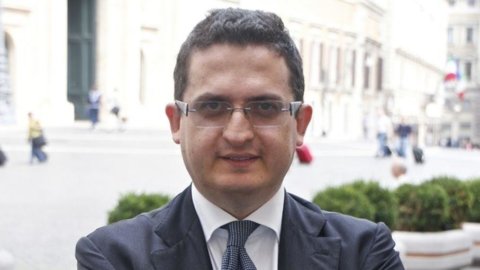
What exactly are these “rocks”? Excess but above all ambiguity of regulation, conflicts of competences and decision-making paralysis are among the "improper costs" of operating in Italy and risk discouraging a growing number of Italian and multinational companies. “The current government is spending a lot to attract foreign multinationals to our territory. The priorities for these subjects are not incentives of an economic nature, but certain rules that leave as little room as possible for conflicts of interpretation and entrust the final decision to an authority of last resort, which is the one with the most suitable skills for the problem to be resolved. The assembly approach to decision-making is one of the main reasons for Italy's decline, underlines Stefano da Empoli, President of I-Com.
The research
The 83 investment projects examined by I-Com, for a total of 33,3 billion euro blocked or at risk, pertain to 7 market sectors, selected on the basis of criteria such as the presence of foreign capital and the role of regulation. In detail:
– Energy: with 12 billion euros in danger – 45% of which absolutely blocked – it is the most problematic sector with respect to the investment/bureaucracy ratio. A stalemate that risks jeopardizing the creation of strategic infrastructures for the development of Italy. In this regard, I-Com analyzes the case of TAP (Trans Adriatic Pipeline), the gas pipeline which, from Azerbaijan to Puglia, will open a new supply route to Europe. The ongoing dispute between national administrations (Minisero dell'Ambiente, dei Beni Cuturali and MISE), regional (Regione Puglia) and local (Province of Lecce and Municipalities), could jeopardize the opening of construction sites in 2015;
– TLC: with 40% of foreign investors and €9 billion of fixed investments, the sector has been witnessing for about two years a paralysis of projects on new broadband and ultra-broadband networks. Among the causes, the non-approval of the new ministerial guidelines on electromagnetic limits and a regulation on road excavations, which imposes the use of obsolete techniques and materials, such as to make the intervention costs unsustainable for the operators;
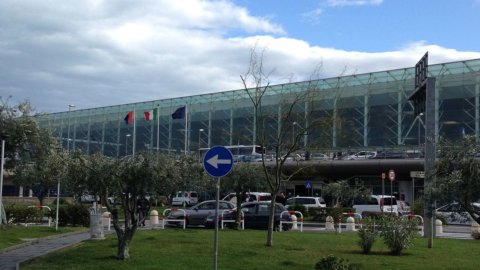
– Renewable Energies: the introduction of the controversial 'spreading-incentives' provision has changed the reference panorama for companies in the sector (45% foreign), with the consequence of jeopardizing a package of approximately €6 billion; Transport: there are around 5 billion euros that companies in the sector (multinationals in 53% of cases) could not allocate to the infrastructural development of our country. For example, a dialectic problem between state bodies is at the origin of the stalemate on the projects for airport terminals in the cities of Venice, Florence, Genoa and Malpensa. For a total of over €4 billion, over a 5-6 year horizon;
– Pharmaceuticals: according to Farmindustria, multinational drug companies are ready to invest €1,5 billion in Italy over the next 3 years, provided that the regulatory framework evolves towards greater stability. The I-Com study tells us, however, that there are more than 300 million euros of investments that could go up in smoke. The research examines the emblematic Avastin-Lucentis case, which saw the Competition Authority deny the technical-scientific assessment of the Italian Medicines Agency;
– Large-scale distribution: has an almost total share of foreign capital, depending on the presence of operators such as Ikea and Decathlon. The projects whose realization is at Cuban risk for about 600 million €. Just Decathlon, after the stop to investments in Brugherio and Rovigo, currently sees an investment of € 20 million in Naples hanging in the balance;
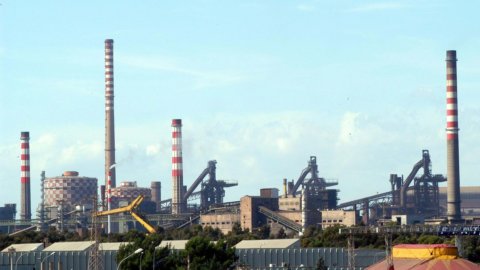
– Steel: the current acquisition of the Lucchini plant in Piombino by the Algerian Cevital will bring the presence of foreign operators on the Italian steel market to 92%. An operation worth over 400 million euros, which could be jeopardized due to the extreme difficulty of the reference regulatory and institutional framework.
“The budgetary situation does not make it possible to reduce, at least in the short term, the tax burden on businesses and even the interventions announced on the labor market are not enough, by themselves, to give impetus to growth. In this context, it is therefore essential to put the machinery of the institutions back in order, reducing the weight of regulation and increasing its certainty" - adds Stefano da Empoli - "Companies are not frightened by the rules but by the scarce safety margin that hovers over their correct application".