Beware of deceiving yourself. In the best-case scenario, it will take years to restore balance between supply, demand, and prices of petroleum products. Years, and only if everything goes well, to extinguish those upward pressure of energy costs around the world, which are significantly slowing down the well-being of economies. In short, Hormuz will continue to keep us on tenterhooks even in the highly uncertain event of a lasting agreement to end hostilities between America and Iran, with a parallel resolution of tensions in the region centered on Israel and its interests. And if, instead, the conflict between the US and Iran were to rekindle, as everyone fears with solid justification, the anti-crisis therapies that have so far contained it shock oil could give way to a real crash.
The harsh halt comes from the International Energy Agency (IEA) in its latest monthly report “The Energy Mix”, dated June 29, which reels off some truly disturbing numbers and figures.
All the numbers of the long wave
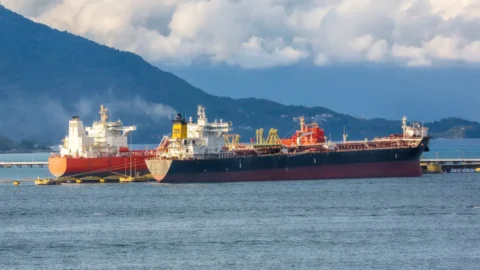
Oil prices have fallen sharply in recent weeks as tankers are finally able to exit the strait, which remains rough. The dangerous sequences of enamel must be reclaimed, the safety procedures continue to drain attention and resources, the insurance contracts They are decongesting, but not completely. The knock-on effect of all this will be long-lasting. And yet, major consumers of petroleum products continue to reduce their supply. So much so that the IEA's latest forecast points to a decrease in global oil demand of nearly 5 million barrels per day in the second quarter of this year compared to the same period in 2025.
The emergency strategy that large consumer countries have managed to implement is both comforting and worrying. It is true that some large Gulf producers have used alternative routes for their offer you go through the strait. It is also true that all this, combined with the price hikes, inflated many oil coffers, especially those of the United States, at the forefront of those who have benefited from the situation substantial extra profitsWell supported, as far as we know, by the Russians, thanks to their parallel and not fully surveyed export routes, which have allowed them to at least partially circumvent the sanctions.
A wide-ranging tension: from price lists to reserves
But it's also true that to stem the crisis, the world has drawn heavily on oil reserves, something that understandably cannot be repeated or sustained, especially since the balance of reserves drawn and reserves replenished remains negative. In the short term, the temporary release of Hormuz is providing positive signs. There's little consolation in the global scenario. The entire world is destined to suffer anyway.
They are many numbers which support the IEA's warning. "Southeast Asia's energy import bill," the IEA report reads, "is expected to rise to $400 billion by 2050, equivalent to 5% of its economy." Global oil demand is expected to decline by 1,1 million barrels per day this year on an annual basis from over 110 million barrels per day before the Hormuz crisis, with a correction down 700 barrels per day compared to the IEA's previous monthly report.
Are the prospects so correct? Deliveries in the second quarter of 2006 fell by 5 million barrels per day on an annual basis, which will only be partially recovered in 2027, which is forecast to mark a rebound which will not reach halfway, 2 million barrels per day. Global supply is set to decline by nearly 4 million barrels per day, reaching around 102 million barrels per day in 2026, before recovering to 110 million barrels per day, only if all goes well, during 2027. Inventories are no consolation. Their decline accelerated in May, falling to 143 million barrels, a contraction of 4.6 million barrels per day from 74 million barrels (-2.5 million barrels per day) in April.
Meanwhile, “lower crude oil uses by refineries in China, the Middle East, Eurasia and elsewhere in Asia, down more than 5 million barrels per day year-on-year in the second quarter of 2026, have transmitted this offer shock in product markets” confirms the International Energy Agency. In short, the gloomy forecasts of many analysts are coming true: the Hormuz crisis will indeed have a long-lasting impact, no matter how things turn out.