La Société national des chemins de fer français (Sncf), the French railway giant, has announced its entry into the Italian high-speed market. Starting in 2026, i TGV high-speed trains they will connect the cities of Turin, Milan, Rome, Naples and Venice on a daily basis. An important move for Sncf, which aims to achieve a 15% market share by 2030. A new offer that will enrich the Italian railway panorama with new options, making the market even more competitive and dynamic.
Alain Krakovitch, general director of Tgv-Intercity, stated that the official request for the framework agreement has already been presented to RFI, the Italian network manager, and will cover a period of 15 years.
Sncf: scheduled routes
Sncf Voyageurs it is active in 9 European countries as well as France, with a third of its customers coming from international markets. In Italy, it has been operating since 1995 with the Artesia service and since 2011 with the cross-border service Tgv Inoui, which offers daily return routes between Milan, Turin and Paris.
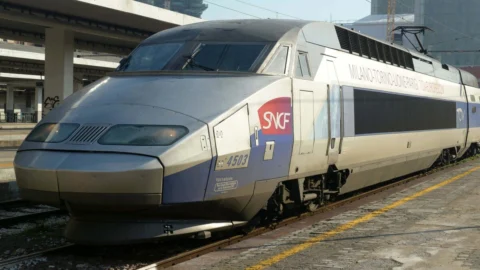
Sncf plans to operate nine round trips between Turin, Milan, Rome and Naples and four between Turin and Venice, using 15 new high-speed Tgv M trains. These trains, built by Alstom, represent a technological challenge to Hitachi Rail's Frecciarossa 1000 competitors and Italo's trains.
The choice to operate between Turin, Milan, Rome, Naples and Venice is not random: these cities represent crucial nodes for rail transport and attract a high volume of passengers.
In addition to the main routes, Sncf plans to gradually expand the service, similar to what has been done in Spain since 2021, in cities such as Brescia, Verona, Padua, Bologna and Florence. This expansion will not only increase geographic coverage, but also improve the accessibility and convenience of high-speed transportation for more travelers.
The will also continue daily service between Paris, Turin and Milan, which is currently reduced to just one return journey per day (instead of three), part of which is made by bus after the landslide in the Maurienne valley severed the rail link last August. The reopening of Frejus railway tunnel, between France and Italy, is not expected before November.
Sncf launches the challenge to Frecciarossa and Italo
Sncf's entry into the Italian market does not go unnoticed, especially for the two main operators already present: Trenitalia with his Frecciarossa e Italo.
Frecciarossa, which recently extended its operations in France on the Paris-Lyon route, will now have to face direct competition on the national territory. A competition he will also have to face Italo, the Italian private operator, bought last year by the MSC Group owned by the entrepreneur Gianluigi Aponte. Both Italian operators will therefore have to review their strategies. Trenitalia, part of the Ferrovie dello Stato (FS) group, has expanded its operations in various European countries, including the launch of the Milan-Paris service and participation in the English market with routes such as London-Edinburgh. Italo, for its part, will continue to focus on service quality and technological innovation to maintain its leading position. To maintain their market share, both companies will have to further improve their offerings and services.
A benefit from this competition they will definitely be the passengers who will have more travel options and potentially lower prices. reducing prices.
Sncf: the new Tgv M
Il Tgv M, the train chosen for these operations, promises significant innovations. These trains will be more environmentally friendly, with a energy consumption reduced by 37% compared to current models. Furthermore, they will be adapted to Italian infrastructure, ensuring greater efficiency and comfort for passengers. The first deliveries of these trains are scheduled for the second half of 2025, allowing Sncf to begin operations in time for 2026.
Rail transport: an evolving market
Sncf's entry into the Italian market is result of railway liberalization, which stimulated competition and improved the quality of service for passengers. At the same time, in France, Sncf is preparing to compete with Proxima for the first time, an independent private railway company launched by the Antin fund with an investment of 1 billion euros.
Proxima, which will essentially be the French version of Italo, aims to connect cities such as Rennes and Bordeaux with Paris, using 12 Alstom Avelia Horizon double-decker trains, which will be delivered in 2027. A new competition therefore not only for the Italian market but also for high-speed rail transport across the Alps.