The market for plant-based substitutes is booming, a vegan alternative based on the non-exploitation of animals and the planet. After the non-meat meat and the vegan egg, the vegetable fish: from fake tuna to no-shrimp prawns to 3D printed smoked salmon, a novelty of the Viennese startup Revo Foods, which has tiptoed into the business of vegetable substitutes.
Growing environmental concerns associated with meat and fish consumption are driving consumers towards healthier and more sustainable food alternatives. And if demand rises, supply must necessarily adjust as well. In recent years, the plant-based food market has had a very strong rise, we saw it first with meat without meat, now the focus has shifted to vegetable fish. At the origin of the choice there would be reasons linked above all to the environmental impact and to safeguard the welfare of the animals.
There are several products aimed at expanding food possibilities: after non-meat steaks, non-egg eggs, milk and vegan derivatives, the first fish substitutes also arrive. Fish substitutes are of course cruelty-free, be sustainable and very similar to the original. Among the most widespread tuna, salmon and shrimp at the top of the rankings of the most loved marine products, and often more linked to phenomena of exploitation of the seas and labour. In this case, vegetable solutions represent an alternative that reduces the stress of the marine ecosystem without sacrificing taste.
Il tuna it was one of the first products to be tested in its "vegetable" version. Vuna by Nestlé is made with water, pea and wheat proteins, rapeseed oil, salt and natural flavourings. While the British company Good catch, partner of Whole Foods, has proposed three types of “fake tuna”: a natural vegetable one, a Mediterranean one and one with herbs made with chickpeas, lentils, peas, broad beans, white beans, seaweed oil and soybeans. Impossible Foods is perfecting the Impossible Fish burger, made from hemoglobin, a plant protein derived from soy. New Wave Foods, a Californian startup, has instead dedicated itself to the most popular crustaceans: prawns and shrimps. To recreate the color they used some algae, the same ones responsible for the nuance of the original.
The proposal of the Californian start-up is vast Sophie's Kitchen: from smoked salmon to shellfish, to tuna. All these products are made with pea protein and konjac root, a plant that gives a gelatinous consistency, widely used in the oriental tradition to make shirataki spaghetti. Even the large no-meat producer Gardein offers its vegetable crab meatballs and its fried fish fillets obviously without the fish.
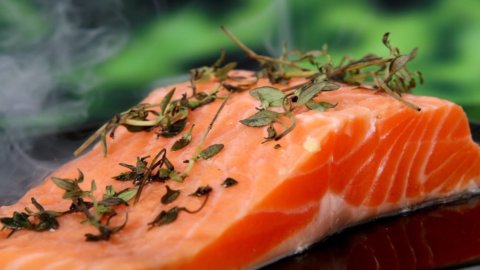
To complete this list, salmon for many years now included in the Greenpeace list of foods at risk of extinction and perhaps one of the fish most subject to abuse and cruelty. For example, the Ocean Hugger Foods has developed a salmon based on carrots, while one of the latest proposals is from the Viennese Revo Foods who is experimenting with a smoked vegetable salmon with the help of a modern 3D printer, the Legendary Vish. Different types of vegetable inks are inserted into the bioprinters to recreate the fabric that most resembles the original, made up of mushroom and pea proteins, starch and agar seaweed, to reproduce its flavor and a contribution of Omega 3.
From an economic point of view, the market for animal protein substitutes generates an incredible turnover. In fact, the value of vegan market and vegetarianism has risen exponentially in recent years, also driven by the health crisis which has greatly affected the food choices of individuals. According to Coop analyses, in the first half of 2021 the market reached a value of 312 million euros against 248 million in the first half of 2019, destined to grow further in the future. The greater attention to the sector brings not only more investments, but also more options in supermarkets, restaurants and bars. If consumers are increasingly attentive to sustainability also on the food front, the world of supply must adapt.