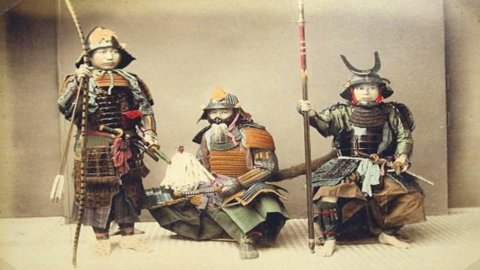
The Japanese - and not only the Japanese - are crazy about films and dramas that bring the age of the samurai to the screen. Samurai, as we know, were war professionals and there are many scenes that show them fighting in their shining armor, their heads covered by bulky helmets, brandishing fearsome swords. The art of war has a weight, and not even a light one, in fact complete equipment can weigh more than 20 kilos. All the paraphernalia - in Japanese "kacchu" - which makes any warrior a true samurai is produced by a few specialized companies, the most important of which is the Marutake Sangyo Company, which sells its items to television and film producers and to private collectors.
The company's technicians and craftsmen are capable of recreating, with meticulous care, every detail of the ancient samurai's clothing and weapons, but for some time now a series of requests have been pouring in, the lowest common denominator of which was the need to "lighten" the reinforcements. In fact, it seems that today's actors find it increasingly difficult to bear the weight of the accessories necessary to play a fully armed samurai.
So at Marutake they set about studying the problem and came up with a complete samurai outfit made with kraft paper, a special type of paper generally used to make sacks. The result was amazing: not only is the armor so light as to easily allow any evolution, but above all it has been designed with such skill as to be completely plausible. The paper "kacchu" signed by Marutake attracted the attention of the officials of the Ministry of Economy-Commerce-Industry, and the Marutake Sangyo Company received the Monozukuri Nippon award, for its ability to combine tradition and innovation.
Attachments: The Asahi Shimbun article