The question that arises in France, after the victory of François Fillon in the primaries of the right, that's what President François Hollande will do now. Will he run for a second term or will he leave the leadership of the left to the young Emmanuel Macron and Manuel Valls? And again, who will be able to counter the rise of Marine Le Pen, leader of a populist and anti-European France that is advancing relentlessly throughout the Hexagon?
France's political future is highly uncertain. There are many unknowns even if the problems are common to all: the economy that is not working, unemployment that is advancing, social security that is short of breath, immigration that creates tension, terrorism that fuels fear, a Europe that does not respond to the elementary questions of the peoples and that asks for more and more contributions.
Spring, and therefore the French presidential elections, are upon us. And in Europe the right is advancing: in Spain, in England, in Germany, in Austria… These are phenomena that ride on the discontent of the population, but also on the incapacity of politics to read the problems of daily life and to face them.
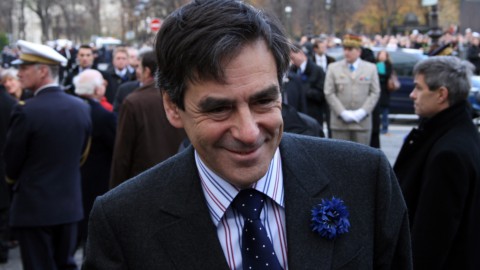
François Fillon, the new leader of the French moderate right, won the primaries beating the field from the various Sarkozy and Juppè, precisely because he interpreted the French "le sentiment", offering simple, common-sense recipes that everyone could understand. A transversal program imbued with rigor, attention to social issues and liberalism, which can be spent on the right as on the left and therefore universal. He convinced entrepreneurs, traders, but also housewives. Young people, but also the older group.
In other words it was convincing. Fillon with his good boy face is liked: he is the right age (62 years old), the right studies (law), the right social extraction (son of the good bourgeoisie of the French province), the right family (5 children) . He's sporty, he has charisma and, above all, an exemplary political trajectory, not least an experience as prime minister at Matignon, when Sarkozy sat at the Elysée. In short, he worked his way up "comme il faut" and at the same time held positions of great prestige and responsibility.
“Yes, we want to pay taxes, we are also willing to an increase - declares an entrepreneur from Neuilly to Firstonline - to make sacrifices, but on condition that we see a different management of the country, closer to our problems. No more intellectuals in power who think they think about the good of others. I think France, the so-called deep one, wants to rediscover its roots. Sink them into simple things such as paid work, the traditional family and the school that teaches and educates the new generations".
In a nutshell, Fillon embodies a necessary politics of rigor with the common sense of a traditional France. A France that supports the less favored groups, but also the inevitable social progress in terms of rights.
The candidate of the moderate right therefore seems to have an advantage over potential competitors. Manuel Valls, the current prime minister, is coming forward in the left, who is biting the brakes and would like to trip up the President, François Hollande. The tensions between the two, in the management of France, are evident and increasingly frequent. An internal struggle that could favor Emmanuel Macron, the young ex-minister of the Economy, who resigned a couple of months ago from the Hollande government, to found a new movement and run for the Elysée in 2017.
Macron is beating France far and wide by preaching a policy of renewal. A program that appeals to the moderate left and winks at the center-right. It is no coincidence that many French "patrons" are fascinated by this young man who seems to perfectly embody the spirit and values of the République, but also the redemption of a France that has lost much of its glamor both on the European scene and on the international front.
However, it is difficult to predict what role Macron will be able to play in the next presidential elections. Maybe he started a little too late in his campaign.
On the other hand, the one who will certainly be the protagonist is Marie Le Pen. In the breach for many years now, she has managed to distance herself from her father's far-right politics, while maintaining a populist strategy that relies on fear of immigrants and Islam, on the increase in terrorism, and on the rights of the French natives who must be privileged to the detriment of foreigners and of a Europe that thinks only of itself and that has taken away sovereignty from the states.
A speech, that of Le Pen, which naturally has great success and which has therefore swelled the ranks of her supporters. It is, in fact, the second political force in the country, so it is almost certain that in the presidential ballot, in the second round, she will be the force to beat.
And the moderate Fillon, with the help of the gauche, is the candidate that the French seem to favor at the moment in order to defeat the advance of Marie Le Pen's far right. It is clear that the French presidential elections are still a few months away and that anything is possible in politics. But the scenario, at least in its broad lines, now seems to have been traced.