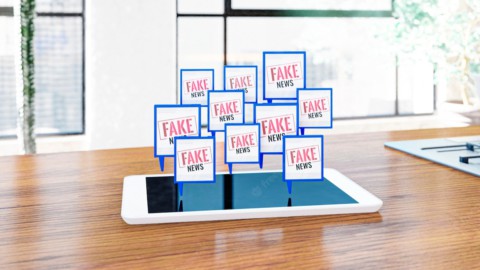
Le fake news, as seen up close also in the Italian political elections of 25 September, are the cancer of today's information and above all of online information and a clear danger for democracy itself. But they are not the only problem of information that changes and that experiences the epochal transition from paper newspapers to-promote their right to information, education and organisation to safeguard their interests' (TFEU, Article XNUMX). online. It doesn't often happen that we witness an all-out critical reflection on the great news of today's and tomorrow's information and an appreciable exception was the UPF European Francophone Press Conference which was held from 28 to 30 September in Bari on the initiative of the newborn Italian section of the International Union of the Francophone Press (UPF) founded and chaired by Alberto Toscano.
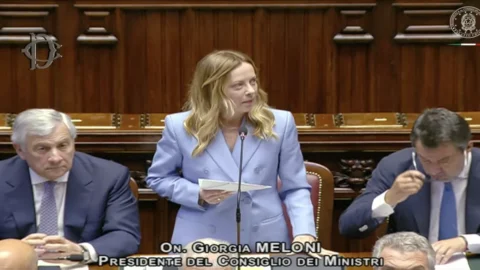
After the September 25 elections, the fascism is certainly not at the gates of our country and theItaly – as outgoing premier Mario Draghi had the opportunity to say – “he will make it” again this time, but the fact that among the winners of the elections there are sovereign and illiberal forces who do not hide their sympathy for authoritarian regimes such as Putin's Russia and Orban's Hungary, where freedom of the press - to put it mildly - is not in the best of health, is advised to keep one's guard up, as the touching words of the courageous Russian journalist recalled at the Bari Conference Zoya Svetova of New Gazeta.
As we said, the change we are experiencing under the sky of information is great and the transition from paper newspapers to web mastheads is the epochal sign.
Information: the decline of paper newspapers and the transition to online newspapers
Already in 2007 a beautiful book by Vittorio Sabadin, then deputy director of "La Stampa", not surprisingly entitled "The last copy of the New York Times", had raised the problem of the end of paper newspapers well in advance and, in that occasion, Arthur Sulzberger jr, the publisher of the New York Times, said he did not believe that the paper edition of his newspaper would still be on newsstands in 2013. Premature announcement of death announced but equally risky and a little too optimistic was the prediction of Philip Meyer, a famous scholar of American publishing, that the last hard copy of The New York Times will be purchased in 2043.
As evidence of the topicality of the prospect of the end of paper newspapers, which certainly does not equate to the end of information, in the convention of students and ex-students of Columbia University last spring, the Director of the Los Angeles Times, Kevin Merida, bluntly asked those present in how many years they thought the sunset of paper newspapers and the passage of the baton to online information would take place: one year, 3 years, 5 years? No one knows for sure but time has run out for paper newspapers and the more days go by the shorter their survival time. Just look around. The sales of paper newspapers are in free fall, the new generations have other information channels, mainly online, and they no longer read paper newspapers and the newsstands that are supposed to sell them are increasingly rare, even in crowded places such as the railway stations. We live in a new world that we didn't even imagine until about twenty years ago.
Online information: immediacy is big news, but it is also a risk
The dream cultivated for a long time in the past by every journalist worthy of the name and that is the possibility of publishing as soon as possible a piece of news that has just been collected (and hopefully verified) is today a reality on the web. Before and still now on paper newspapers you had to wait at least 24 hours. Immediacy is a crucial feature of newly written online information, even if speed often runs the risk of approximation and generates a flood of news (too much news = no knowledge) of which the hierarchy and the distinction between what is really important to know and what is much less so is often not clear. Another decisive feature of online information is the absence of time and space limits (anytime and anywhere) which allows the contents of online information to be published or read at any time of the day and to be able to read them in every corner of the world without the barriers that prevent the dissemination of paper newspapers, especially if in Italian, outside national borders. And also who does not remember the anguish of the errors and indelible typos consumed by journalists in print and consigned to the museum of horrors and which instead can be corrected on the fly on the web? And then again: how can we not appreciate the possibility of preserving and always having the collection of one's articles at hand and of being able to draw on an immense and planetary archive on the Internet. The merits and innovations of online information are many and no one can deny them, but not all that glitters is gold.
The first battle for quality online information is against fake news, but it is not the only one
Online information is preparing to take the baton from printed paper in a real epochal transition, but it still has to demonstrate that it is up to it and able to offer information that is not only fast but of quality that does not make us regret that of the newspapers paper. For this to happen, the first thing to do is that the Net is no longer a barbaric jungle but a transparent playing field in which it is possible to distinguish true news from patently false ones. This is why the first battle, open more than ever, is against fake news, whatever its origin.
But who's got to fight it? In the first place certainly to journalists and publishers, who must examine their conscience every time they write and publish news and never trade their professionalism for an extra like. As the great Indro often reminded us Montanelli, journalists have an unspoken covenant of honor with their readers that they are to humbly serve without ever being or even appearing like those who spend half their time writing about things they don't know about and the other half not writing about things they do. but who out of subjection to power dare not write.
But journalists and publishers are not enough. The main online platforms have great responsibilities. And it is also up to the institutions to enter the field strongly. Governments have a duty to make strict laws against fake news and to enforce them but above all it is up to not only the judiciary but the Authorities - from Agcom to the Antitrust and Consob (for financial information) for Italy and of course to the European Authorities – play their part with more determination than they have done so far. But from this point of view something is moving and the Digital Services Act, recently approved by the European Parliament, the Council and the European Commission together with the Digital Market Act, promises encouraging news with very severe sanctions for large online platforms that are unable to stem fake news .
The fight against fake news is therefore the first of the battles to be waged for web information worthy of the name. It would suffice to recall that according to the data provided by the Italian Digital Media Observatory - which is the Italian hub of the Observatory created by the European Commission - disinformation, fueled above all by the pandemic and the war, has increased by 500% in recent months - and can forget that in 2016 the Russian fake news factories were instrumental in bringing a billionaire nut like Donald Trump to the White House. But the fight against fake news is certainly not the only battle to be waged for quality online information which is certainly more exposed than printed paper to the danger of fake news.
Good journalism does not end in the simple religion of SEO
As Marcelle Padovani, refined columnist of Nouvel Observateur in Italy, in his introductory report to the Bari Conference, another danger that web information runs and which is overlooked too often is also that of the homogenization, standardization, trivialization, superficiality, flattening of the news that they are the other side of conformism and deterioration of quality. The SEO code has established the playing field of online information, but good journalism cannot be identified with the simple religion of SEO which is concerned only with optimizing the activity of search engines. It's a bit like in sport: to practice it you need to know and respect the rules of the game but then not everyone is a champion. Good journalism is much more than the pure application of SEO rules and is first of all independence of judgement, reliability, competence, rigor, expository clarity but also imagination, creativity and brilliance. Without these ingredients and without the passion and curiosity that must animate them we will never be able to make cool information on the web but we would have to resign ourselves to information without quality and without a soul that will make us regret and much the information in the newspapers of paper. Journalists and publishers - with their daily commitment - must be - together with the major online platforms and national and European institutions - at the head of the battle for online information up to date but to do so we need regulation - not just that
SEO technique – which offers everyone the same opportunity to compete and which implies the awareness and solution of three priority problems.
In addition to fake news, the first problem of online information is that of content indexing
It is not conceivable that the enhancement of online content is entrusted to the irrevocable discretion of private search engines which, on the basis of mysterious algorithms decide which journalistic services to reward and which not, regardless of their real quality or their originality, thus mortgaging the success or otherwise and ultimately the fate of sites around the world. Current search engines are blind and it is neither heaven nor earth for a scoop to be dealt with, from the point of view ofindexing like banal news rewritten by the latest agency. The evaluation parameters must profoundly change if we want to reward quality information.
Finally, however, if America sleeps, at least in this field Europe strikes a blow and, when it becomes operational, the Digital Services Act will oblige the big search engines to reveal their algorithms and the day when this will happen - yes you can rest assured – it will be a revolution.
The second problem of online information is that of correctly accounting for visits
The second problem, connected to the first, is that of correctly and reliably accounting for the number of visits and unique users of each online site, on which advertisements depend considerably, which are often the main source of funding for online sites. As with indexing, it is not possible for such a delicate and crucial matter to be in the hands of private search engines and not instead in the much more reliable hands of an independent public body such as Agcom or Agcom for Italy could be. , even better a European body. And it is to be hoped that on this front too the Digital Services Act, which not surprisingly has already received the appreciation of the most democratic part of America – from Barack Obama to Hillary Clinton – may, sooner or later, mark a turning point.
The third problem of online information is that of public funding which is linked to the fight against slavery by the poorest newspapers
On this level, it is time to move away from hypocrisy because quality costs money and without adequate resources, online information, like that of the printed paper, is not sustainable. It is certainly a delicate problem which, also in this case, the director of the Los Angeles Times addressed - at the Columbia convention - without shyness and without hesitation, maintaining that, if one believes that information is an essential good for democracy, it is right to finance it also with public resources and that, especially in view of the passing of the baton from printed paper to online, the time has come to study forms of public funding also for exclusively digital publications, naturally on the basis of criteria
rigorous, transparent (especially as regards editorial properties) and possibly innovative, that is, conceived with the head turned to the future and to the new generations and not with the rear-view mirror.
In conclusion, online information is experiencing an exciting epochal change and we are lucky enough to experience it firsthand, however the new information cannot and must not hide its head in the sand in the face of the challenges that await it and cannot forget who has a truly unique and unrepeatable opportunity ahead of him and that wasting it would be, to say the least, criminal.