There is not only the gigantic worldwide counterfeiting ofItalian Sounding which in 2021 caused damage of over 100 billion euros to the Made in Italy of food, as Coldiretti recently documented. There is also another market distortion, heavy, unacknowledged, and it is the one practiced for decades and decades by the multinationals which, after buying historical brands of Italian foodgo abroad to produce the specialties that have made these brands famous with ingredients, flavours, tastes, processes and methods that are no longer Italian. And with a constant lowering of the original organoleptic qualities which causes enormous damage to Italy, by selling these goods at high prices because, as their million-dollar advertising agencies yell joyfully, they are Italian products complete with the tricolor flag, but in reality it is only a fake Made in Italy.
No one to protest. And yet, thousands and thousands of jobs in Italy have been lost because the same multinationals have transferred a large part of their production abroad. Producing in Italy – say these large groups – is too complicated because our country has restrictive food legislation, which protects the quality and wholesomeness of its food products…
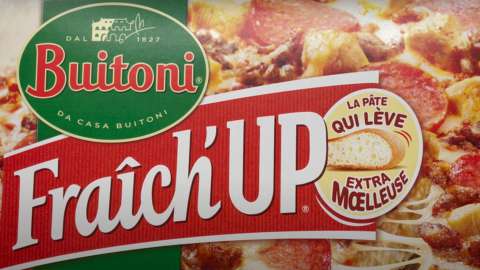
Fake Made in Italy: Buitoni pizza made in Belgium
As the French magazine LSA Alimentaire has documented in a recent in-depth research, these production “deviations” have caused and they also cause serious and even fatal intoxications. Which obviously leave indelible and negative marks on the reliability and quality of Italian food products, the real ones, because these multinationals use the Italian name for shoddy goods and sometimes at risk of salmonella, E.Coli and other serious food poisoning. The latest? The Caudry factory in northern France where Nestlé manufactures Buitoni-branded Fraîch'up pizzas has been closed since the end of March due to lack of hygiene. The French authorities have verified a resurgence of E.Coli contamination (already occurred in the past) on at least 15 families who had consumed in March Nestlé-Buitoni pizzas.
However, the European press has long talked only about "Buitoni Italian pizzas" (and not Nestlé!) with great alarmist hype. Nestlé specified - with statements to AFP by the director of the plant Pierre-Alexandre Tellié - that 75 samplings had been carried out on the production line concerned, resulting in "all negative". However, the French judicial authority has decided to start an investigation with serious crime hypotheses.
TO KNOW MORE: Présence de rongeurs, lack of hygiene… Le préfet du Nord interdit la production de pizzas dans l'usine Buitoni
Salmonella risk: Kinder Schoko-Bons eggs produced in Belgium
A second very recent case reported by LSA Alimentaire – and it is the only one from an Italian multinational – concerns the Kinder Schoko-Bons eggs by Ferrero, however produced in a Belgian factory, due to suspected presence of salmonella. The Ferrero group has withdrawn some Kinder products in England and some European countries and also in Katar where they were on sale. The Italian multinational has decided on a precautionary recall only for the Schoko-Bons lot. All other Ferrero products, however, remain on the market.
Scrolling through the list of LSA Alimentaire, in addition to Nestlé are multinationals such as Coca-Cola e Ikea to fill the chronicles from the 90s to today for cases of more or less serious intoxications. And other less known ones such as the French Spanghero who in 2012 sold 750 tons of a dish with horsemeat for the famous very Italian "lasagne". A European scandal but a significant blow to an Italian specialty with economic repercussions in Europe.
False Made in Italy: Bertolli oil made in Spain
Another sensational case is that of a multinational, the Spanish Deoleo owned by the well-known English fund CVC Capital Partners, which uses Italian brands with extraordinary "nonchalance" for "mysterious" products and always manufactured outside our country. The Anglo-Spanish company acquired Bertolli, Carapelli, Giglio Oro, Sasso and Friol. The well-known Bertolli brand has been used for example for a sort of Italian seasoning for pasta presented as Italian olive oil while containing 24 ingredients, including canola oil, bacon, wood smoke (?), corn starch, egg yolks, antioxidants, yeast extract, maltodextrin, emulsifiers, carrot juice, whey, thickeners. All 100% "Italian" was affirmed. Not even the shadow of olive oil. Products which, presented in this way, end up damaging the image of Italian olive oil because consumers read "Bertolli" and think they are buying and consuming quality Italian oil.
Also Deoleo, in 2018 paid 7 million dollars to dodge a heavy judicial procedure brought by American consumers with a class action which accused the multinational of having knowingly deceived them precisely by selling Bertolli oil imported from Italy throughout the US market. A colossal scam since the judge had ascertained that he was not from Italy at all. Being instead a kind of mixture of oily stuff which, among other things, due to its (false) origin had a very high price.
ALSO READ: Italian Sounding: what it is, how it works and why it is a danger for Italy