Power, far beyond privacy
That, after the media coverage of the Cambridge Analityca case, Facebook has a privacy problem is now public knowledge. At this point there are three questions, the last one is a consequence of the other two. How important is privacy to Facebook users? Is Facebook willing to change its economic model because of privacy? How big is Facebook's knowledge? Because knowledge is power as Bacon and Zoroastrianism before him teach us.
For the vast majority of social media users, privacy is not only not a priority, it's not even an issue. They evaluate their personal data for a few pennies so as to make a barter with the service they receive for free and to which they attribute a higher value to the data transferred. After all, what could be wrong with the act of sharing? That the spontaneous behavior of Facebook users has its own rationale is something Nicholas Negroponte is also convinced of. In a recent interview, the futurist maximo said:
The best way to understand privacy is to understand that there is no privacy, and not to worry about it. When we use an online service, not just a social network, we automatically transfer data: where we are, what interests us. Much of the scandal lies in having realized only today what has been happening for many years.
Indeed, privacy has the flavor of a meal served by the intellectual, political and media elites which are very unfashionable these days. A sign of this sentiment? When WhatsApp, part of Facebook and collector of personal data, asked its users to pay 0,99 euros a year to use the service, there was a jacquerie. That the social media world could switch to a subscription model, such as the one that is establishing itself in the territory of the cultural industry, is beyond dispute today.
He comes forward Sheryl Sandberg
Just as it is excluded that Facebook can change its economic model because of privacy. Just listen to what Sheryl Sandberg, chief operating officer of Facebook, said in the conference call with analysts during the presentation of Facebook's record accounts of the last quarter. Sheryl is not just any executive: she has all the credentials and resources to be the first female president of the United States. Here's what Sandberg told analysts:
We are proud of the model we have built. It allows people to see the advertising they need, it allows millions of businesses to grow and it allows us to provide a global service that is free for everyone. The fastest way to bridge the digital divide in the US and around the world is to offer free service to all consumers regardless of their circumstances. Advertising that finances business, as in the case of Facebook, equalizes accessibility and improves opportunities to communicate.
We think advertising is a great business model that aligns with our mission which is to build a cost-free service to connect people. So we want to offer it for free and keep it accessible… I know many are questioning this, but we here at Facebook are convinced that this is the best way to do what we do.
A clear message that however does not liquidate the challenges that the elite has launched to Facebook. And honestly, it must be recognized that Facebook's management is implementing important actions to limit the dystopian activities that take place in its territory so as to strengthen or renew the trust of its users. Sandberg again:
Publicity and the protection of personal information are not contradictory. We look after both. Targeted advertising that respects people's privacy is better advertising… Our users continually tell us about their preference for advertising that is relevant to them and their interests.
What does he really know Facebook?
At this point the third question comes into play. How much and what do you know about your Facebook users? After the Cambridge Analityca case, many reports circulated of willing users who downloaded their personal dossier and described it with accuracy and profusion of detail.
We would like to testify to one of these, choosing a source that is above suspicion of creative or vengeful canard or storytelling. Even if Trump thinks otherwise, it is the "New York Times" which published a long article by its "lead consumer technology writer", Brian X. Chen, entitled I Downloaded the Information That Facebook you on me. Yikes. Cute too video that accompanies it made by Kevin Roose, the technology columnist of the "Times". We have translated Chen's article into Italian for our readers. If you are jealous of privacy, it can scare you. Brian, who is a loose Facebook user, pulled down a 600 megabyte dossier of data. Nothing compared to what Google has about him, 8 gigabytes of information. Some relief in the end was given by LinkedIn. Enjoy the reading!
Pandora's box
When I downloaded a copy of my Facebook data last week, I wasn't expecting much. My profile was discontinuous, I had rarely published any posts and I rarely clicked on ads.
But when I opened the file, it was like opening Pandora's box.
I learned that 500 advertisers — many of whom I'd never heard of such as Bad Dad, a motorcycle parts store, and Space Jesus, an electronic music band — had my contact information including my email address, phone number and my full name. Facebook also had my entire phone book, including my intercom number. The social network also kept records of about 100 people I'd unfriended over the past 14 years, including my ex-girlfriends.
Facebook knew a lot about me — a lot more than I wanted it to know. So I decided to better understand how and why my data was collected and stored. I've also tried to find out how I can remove them.
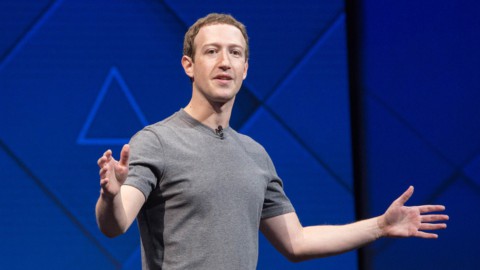
How Facebook collects and processes personal data was the central theme of the hearing of Mark Zuckerberg, the CEO of Facebook, in front of Congress. During his hearing, Zuckerberg repeatedly stated that Facebook has a tool to download personal data that "allows people to see and remove all the information collected by Facebook." Anyone who wants to download them can use this one link.
But this is an exaggeration. Most important information, such as date of birth, cannot be deleted. Even more important. The information that I find most objectionable, such as the archive of people I have unfriended, cannot be removed.
“They don't delete anything and that's the general policy,” says Gabriel Weinberg, the founder of DuckDuckGo, which offers privacy-preserving tools. He adds that the data is kept to help advertisers build targeted ads.
Beth Gautier, a spokeswoman for Facebook, explains it this way: “When someone deletes something we remove it so it is no longer visible or accessible on Facebook. One can also remove the entire account if desired. It takes up to 90 days to delete all copies of the data on our servers."
Combing through Facebook's personal data files is an exercise that I highly recommend to anyone who cares about how personal information is stored and used. Here's what I learned while doing it
The elephant's memory of Facebook
When you download a copy of your Facebook data, a folder containing subfolders and files appears. The most important is the "Index" file, which is essentially a list of unstructured items: friends, timelines and messages and much more. Each item can be clicked
A large portion of my index file was a section called Contact Info. This contained the 764 names and phone numbers of everyone in my iPhone address book. Upon closer inspection, I realized that Facebook had archived my entire address book after I authorized it to do so when setting up the messaging app, Messenger. This upset me a lot. I thought Messenger used the address book to find people who used the app so I could easily connect with them and only kept the information of contacts who were registered in Messenger. Yet Facebook kept the entire list, including the mechanic's phone numbers, the intercom number and that of a pizzeria.
This abundance did not seem necessary to me even if it is justified by the fact that Facebook keeps the phone book to synchronize contacts with the Messenger list and help track down people who subsequently sign up for the service. I decided to turn off sync and deleted all directory entries.
My data also showed Facebook's long memory. For example, in addition to recording the exact date of my joining Facebook way back in 2004, there was the record of when I deactivated Facebook in October 2010, only to reactivate it after four days — something even I barely remember.
Facebook also kept a history of the times I've opened the service over the past two years and what device or web browser I've used. It even recorded my location at some particular moments, like when I was in a hospital two years ago or when I visited Tokyo last year.
Facebook keeps a log of this data as a security measure to report suspicious logins from unknown devices or locations, similar to banks that send out a fraud alert when a credit card number is used in a suspicious situation. This practice seemed reasonable to me, so I have not attempted to purge this information.
But what bothered me the most was the data I had explicitly deleted but it showed up in plain sight. In the friends list, Facebook has recorded in “Removed Friends” the dossier of the 112 people I have removed together with the date I clicked on the “Unfriend” button. Why should Facebook remember the people I've cut out of my life?
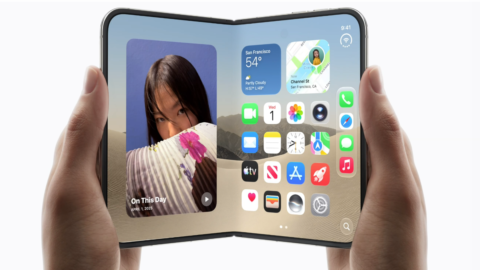
Facebook's explanation is unsatisfactory. The company said maintaining the list of unsubscribed friends is to prevent them from appearing in feed when the On This Day feature is turned on, which helps people remember what they did on a particular day in the past. I wish I could permanently delete the deleted friends list.
Advertisers have eyes everywhere
What Facebook has kept about me is nowhere near as disturbing as how many advertisers have my information in their databases.
I discovered this when I clicked on the "Ads" section of my Facebook file, which showed the history of the dozen or so ads I'd clicked while browsing the social network. Then there was a section titled “Advertisers with your contact information” which showed a list of about 500 brands with the vast majority of which I had never interacted with. Some brands sounded dark and mysterious — one was called "Microphone Check," which turned out to be a radio show. Other brands were more familiar, such as Victoria's Secret Pink, Good Eggs or AARP.
Facebook says advertisers you're not familiar with may be on the list because they obtained contact information from another source and uploaded it with a tool called "Custom Audience," which helps advertisers find like-minded profiles to serve them advertising. targeted.
In fact, advertisers can obtain this information in many different ways. Here are some:
■ Purchased from a data provider like Acxiom, which has amassed one of the world's largest commercial consumer databases. Advertisers can buy many sets of data such as the information of people who belong to a certain demographic group and use this information on Facebook to build targeted ads. Last month, Facebook announced it was restricting advertisers from targeting ads using information from third-party brokers like Acxiom.
■ Using tracking technologies such as cookies and invisible pixels that are loaded on your browser to collect information about your browsing activities. There are many trackers on the web and Facebook offers advertisers 10 different trackers to collect the information. Advertisers can upload the data they have collected with trackers with the "Custom Audience" tool for the purpose of serving targeted ads.
■ Gathering information in even simpler ways. Someone with whom you have shared information may be sharing it with another entity. For example, your credit card loyalty program might share information with a hotel chain that advertises on Facebook.
The result? Even a loose Facebook user like me, who rarely clicks on digital ads, can see his or her personal information exposed to a huge number of advertisers. This is not entirely a surprise, but seeing in my Facebook file the list of unknown brands with my contact information was a reality check. I even tried contacting some of these advertisers, like Very Important Puppets, a toy company, to ask what they did with my data. They didn't answer.
And Google?
Mind you, Facebook is the tip of the iceberg when it comes to technology companies that collect user data in exchange for the service.
Aware of this, I downloaded a copy of my data held by Google through a tool called Google Takeouts. The data set was exponentially larger than Facebook's. For my personal emails alone, the Google archive was 8 gigabytes in size, enough to hold 2 hours of music. In comparison, Facebook data was just 650 megabytes, the equivalent of about 160 hours of music.
And here comes the biggest surprise about what Google has collected about me. In a folder labeled "Ads," Google kept a history of some press articles I'd read over the years, like the story published by "Newsweek" about an Apple employee who hit a glass wall in the new headquarters Apple and a New York Times article about the editor of the Modern Love column. I never clicked on the ads contextual to these two pieces, but Google registered them because the article pages had loaded ads served from Google's servers.
In another folder, labeled "Android," Google recorded an archive of apps I'd opened on an Android phone from 2015 onwards, along with the date and time they were viewed. This struck me as an extreme level of detail.
Google did not immediately respond to a request for comment.
Consolation prize
Finally, here is a brilliant note. I have downloaded my LinkedIn data archive. The dataset was less than half a megabyte and contained exactly what I expected: tables of my contacts and information I'd added to my LinkedIn profile. At least that gave me some relief. Warning: once you see the large amount of data that has been collected about you, you will not be able to delete it.
When self-knowledge isn't liberating!