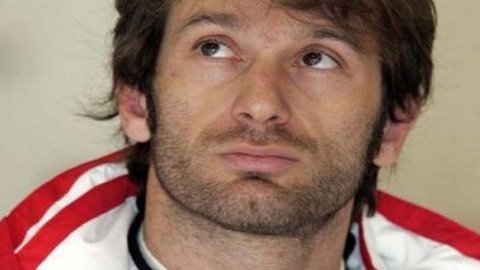
Freewheeling thoughts, to the idea of a Formula that sees Jarno Trulli on foot by the Caterham team and that in less than a month (unless revolutions are completely unpredictable today) will line up at the start of the first Grand Prix of the season without a single Italian driver on the track. It hasn't happened since 1969, and only in that season not even a GP saw one of our riders involved: in the other 5 world championships (1959, '61, '63, 67 and '70) without one of our compatriots lined up on a seasonal basis, i.e. as a continuous and therefore official rider, at least in some races someone had managed to earn a temporary steering wheel. That may not happen this year either.
It's kind of effective. Just Italy, owner of a GP in all the championship seasons from 1950 to today; home to that Monza where it has been racing since 1922, and almost always at the maximum average speed for a championship race… Yes: Italy indeed. And not by chance.
Never before has Formula 1 been dominated by the money factor. Trulli gives up the wheel of the Caterham (ex-Lotus: and this already helps to understand how much need for fresh currency there is in those parts…) in favor of Vitaly Petrov certainly not in terms of considerations, evaluations, sporting or performance comparisons. The Russian won thanks to the 12 million euro financial dowry that he carries with him. And at this moment, the economic environment of that country - even if it is discussed for certain of its currency and fiscal dynamics - is more inclined to invest large sums of money in a global and multimedia show such as the Circus.
Hence the tears over Trulli's talents and history, over the magic and myth of the many Italian drivers who have written pages and pages of F.1, tend to evaporate a bit. Jarno was a young phenomenon in the minor formulas; he made his way by winning abroad, in difficult races and championships; he arrived at the Grand Prix on tiptoe, with the never too blessed Minardi, and already after a few races he was at Prost (ex-Ligier) where he almost immediately came very close to victory in an Austrian GP sold exclusively due to the failure of the motor. We remember about fifteen full seasons of him, over 250 GPs disputed, some acute ones between pole positions and podium finishes, only one victory, the most magical: Montecarlo 2004 with Renault.
Renault, indeed. That is Flavio Briatore as his helmsman. And here we open the most important page in our opinion in this Trulli-saga, to be read also in another light. In fact, Trulli owes a great deal to the Cuneo manager. Just as he owes Giancarlo Minardi the same: owner of a team often put together with materials and means not up to the top teams; but great discoverer and enhancer of young pilots. After the Renault parenthesis, then Briatore, Trulli went to Toyota, hypnotized (also) by the massive doses of money invested in the GPs by the great Japanese manufacturer, without however ever reaching a decent maturity of the investment and abandoning the adventure with the pens more than wet. Briatore, on the other hand, continued by giving Renault 2 world titles, when the French House had been aiming for the goal, with alternating commitment, since the late 70s; and he had succeeded only as an engineer for the English Williams, in the 90s. And incidentally, again in those two seasons of 2005 and 2006, the Renault-Briatore steamroller also brought home the 2 world titles of Fernando Alonso: an immense, indisputable driver, perhaps the most complete in today's F1. But even he, since Briatore out of orbit, always very close to the maximum triumph; but never managed to make it happen. It will be a case…
All this story to underline that even in today's F.1, dominated by multinationals and almost by governments, all aimed at breaking through on emerging markets especially towards the East of the world, managers have a great weight in the project, even in the driver field . Via the Briatores (not to be sanctified: he too has his faults), via the Minardis, the Italian pilots today find themselves without a parachute, a safety net. The CSAI -Italian automotive sports commission- is doing something, and together with Ferrari. But we are at the beginning of the work: it will take years. And meanwhile, just as the Trullis are being expelled, dollar-grinding Formula 1 welcomes drivers of any other nationality. Perhaps of modest personal talents, but supported by powerful apparatuses in the field, rather than sports, commercial, marketing, or even high finance.
And after all, the crisis is also in the Grands Prix. Where apart from Ferrari and McLaren, Red Bull and Mercedes, all the other teams are on track in shaky economic situations. Their pilots are not paid, but paying. If one comes from Azerbaijan, who may not have circuits but maybe knows how to pack suitcases with currency, welcome.