

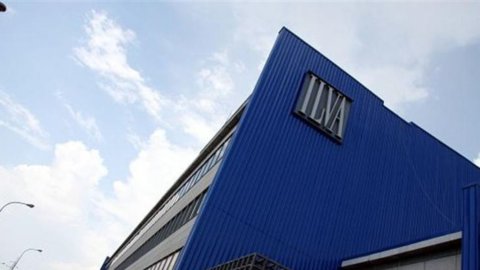
The former Ilva dispute returns to the political scene. After the week of Sanremo and tractors, the fate of the Taranto steelworks returns to the political agenda. This morning the representatives of the related companies met chained in front of the prefecture handing over the keys to their companies. Shortly before, they had removed the garrisons in front of the factory gates. In a climate of dialogue but firmness they await answers from Rome, where between announcements and indiscretions they are trying to manage the situation after the break with Arcelor Mittal. “Let's remove the garrison – he said Fabio Greco president of Aigi, the association that brings together related companies - but there is a lack of funds to pay collaborators and this is perhaps the decisive element that the members do not intend to understand". The tens of companies who have been working for the plant for years are part of the problem, but the context in which Taranto's industrial destiny is being played out goes much further.
Decarbonize so as not to close
The examination of the government's measures also resumes in the Senate this week, while tomorrow the managing director of Acciaierie d'Italia will be heard in the Industry Committee Lucia Morselli. One of the issues to be addressed will be the credits claimed by companies, which, among other things, see the choice of extraordinary administration as a penalizing element for the 3 billion in credits claimed. The president of Confindustria took their side Carlo Bonomi , according to which, in order not to close the steelworks, it must be included "in a clear vision of the country's industrial policy and competitiveness".
A good catchphrase, but it is not clear what Confindustria actually proposes. Everything converges on a simple question: why does Italy not yet have a national plan for the steel industry? The demand for steel in the world has recovered and everywhere there are plants where production has become compatible with the environment and health.
The decarbonisation plan set up for Taranto by the board of directors, without the break with ArcelorMittal, envisages the elimination of polluting emissions over a decade. No more coal or gas, but electric ovens. In Sweden, Germany, France there are steel mills that have done this. They have reconverted the plants, they work with clean energy, they haven't fired anyone and are on the market selling sustainable products.
The “vision” that isn't there
The Italian challenge is all here: in the innovation and seriousness of those who govern to free themselves from strabismus and an outdated idea of industry. Everything in the globalized world is measured by the strength to face change to support it, not to avoid it. In other words, have a “vision”. The right in government in Italy is free to applaud the anti-green positions of the contradictory tractor protest, but in this way it denies the aspiration to a society no longer a prisoner of pre-established schemes. Hit the bullet if you think of something prospective for the old steelworks.
Taranto has become the paradigm of an industrial culture bordering on defeatism which has ended up infecting even a certain left. For the survival of the plant they did not go beyond the "here and now", paralyzing any idea of modernity. It was enough to look up at those industrial companies that are changing their skin in order to remain on the market. The market also maintains the economy of steel and the more production is not innovated, the more jobs are eliminated, CO2 is sent into the atmosphere with old blast furnaces, tumors are caused and we find ourselves on the wrong side of history. It was (necessary) to bring together capable managers, non-smoking environmental experts, unions inspired by serious reformism, concrete governors and mayors. Instead, we witnessed a game of roles to the detriment of everything and everyone.
Who remembers the Bondi plan
In 2013 the extraordinary commissioner Henry Bondi presented an industrial plan based on the pre-reduced to save Taranto. The pre-reduced is a semi-finished steel product produced with gas or green hydrogen. It is required by the market and is the new frontier of the global steel industry. Paradoxically, Arcelor Mittal's managers also know this. That plan, unfortunately, was unsuccessful. Bondi was forced to leave office and Taranto continued to carry on as if nothing had happened. It was only said that gas cost too much for that innovation. A blind, counterproductive thesis with disastrous consequences endorsed by everyone even by those who do not deny the use of technologies. No one ever has mea culpa and it's about time.
In recent days we contacted Dr. Bondi, who very politely did not want to comment on the story that marked him in his career as a manager. The plant was seized by the judiciary in 2012 due to an environmental disaster. The following years – if that plan had passed – would not have marked the defeat we are dealing with. Electric, pre-reduced, the use of clean hydrogen in the steel industry are the future. There is even an Invitalia company, DRI, which has Direct Reduced Iron in its name as an innovation for the Italian industry. It was born in 2022 and what do we do with it? Is Taranto entering the energy transition or should it become industrial archaeology?
The match reopens today and the signal for the solution is expected from Rome. Commissioner or otherwise, they will have to come into force in the coming months measures under consideration in Parliament with a hopefully definitive Plan. For the former Ilva there is also news of an interest from the Ukrainian company Metinvest already present in Piombino. An escape forward? Are the relationships with ArcelorMittal definitively closed? The minister Adolfo Urso last week he said no, but the fate of the former largest steelworks in Europe must come out of the fog.
The premier Giorgia Meloni she has said little or nothing on the matter, yet it is known that she reads all the most sensitive dossiers. The former Ilva is, and you would do well to give a clear direction. At least to make Italians understand which path they want to take to avoid firing people, produce without causing deaths and environmental damage and redeem one of the strongest industrial sites in Italy.

An all-Italian disaster made up of incompetent politicians (ours) and unscrupulous (foreign) companies interested only in our tax benefits. A century ago someone perhaps would have suggested giving the company into the hands of the workers. Today this would seem to be the smartest solution