The European Union It is among the major global economies that is the one with the increased energy dependence: 58,3% of energy needs depend on imports, while the figure drops to 20% for China and it is equal to zero for the United States, which are totally self-sufficient in production with respect to energy needs. However, internal production capacity is improving, thanks to the growth of renewable, which have gone from 2000% to 15% of the total electricity generation mix from 45 to today.
The says it sixth Med & Italian Energy Report created with the support of the Compagnia di San Paolo Foundation and the result of the scientific synergy between Srm (Study Center linked to the Intesa Sanpaolo group) and the Esl@energycenter Lab of the Polytechnic of Turin, and of the collaboration with the Matching Energies Foundation which was presented today at the European Parliament.
The report points out that a high level of energy dependence exposes individual countries to greater price volatility of energy commodities on international markets and the impacts of geopolitical tensions, affecting their competitiveness compared to more self-sufficient countries.
Drastic drop in coal use. Renewables take off
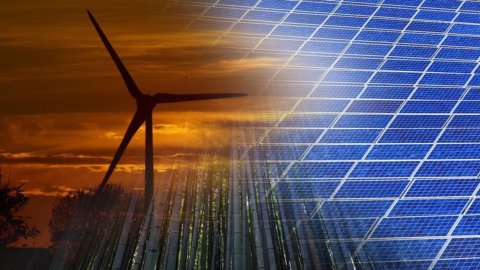
The report revealed a growth in the weight of renewables in the European Union and a Mix variation energy. Looking specifically at the electricity generation, a major change in the European generation mix has been underway for over twenty years. The use of carbon has decreased dramatically from 32% in 2000 to around 12% (latest available data) while the share of gas natural from 12% to 17%. Today the dominant renewable energy, which went from 15% in 2000 to 45% and is expected to grow at a rate of expansion of electricity from renewables more than double by 2030.
On this element, more than in the past, the game will be played out global competitiveness. The importance of continuing the energy dialogue between Europe and North Africa also emerged for the production of renewables and green hydrogen. It has been calculated that, considering the generation of electricity from photovoltaics, less than 1 percent of the surface area of the southern coastal countries would be enough to generate enough electricity not only to meet their future demand for electricity, but also to produce excess electricity that could be exported to the other two shores.
Among the main European countries: the Spain presents a more balanced mix with the highest weight of renewables which reach 51% of the total in 2023. The Germany is the country with the highest use of coal (26% of the total), even if in sharp decline. In France the energy mix is dominated by nuclear (64% of the total).
Italy's dependence on Russian gas dropped to 4,2% in 2023
In terms of the geopolitical situation, the Red Sea disturbances have affected gas energy supplies by lengthening supply chains. The average journey time of methane tankers from Qatar has increased from 18,5 days in 2023 to 39,7 days in April 2024. The truce signed between Israel and Hamas finally opens up the possibility of a gradual resumption of traffic through the Red Sea. The war between Russia and Ukraine has led to an increase in intra-Mediterranean trade in fossil raw materials, with Algeria which gradually replaced Russian gas flows, quickly becoming the main gas supplier of Italy. Gas imports from Algeria via the Transmed pipeline increased from 29,5 percent of the total in 2021 to 38 percent in 2023. The incidence of Russian supplies has decreased from 39,4 percent in 2021 to just 4,2 percent in 2023.
Within the European landscape Italy is the country with the highest level of energy dependence equal to 74,8%, well above the European average. This value is however down by almost three percentage points compared to the 2019 figure pre-Covid when addiction was equal to 77,5%. The France It is the country with the lowest level of dependence equal to 44,8% thanks to the use of nuclear power.
At the beginning of the collection season (November 1, 2024), Italy reached a filling level of gas storages design equal to 98,5% above the European average, ensuring a margin of coverage against any risks associated with gas supplies for the 2024/25 winter season.
According to the report, the increase in Renewable production is the path to follow to free Italy from dependence on gas imports. The latest data from Terna for 2024 show that 42,5% of the electricity demand was met by production from non-renewable energy sources, 41,2% by renewable energy sources (the highest ever) and the remaining share (16,3%) by the foreign balance. The gap with the intermediate objectives of 2025 (48%) and 2030 (65%) envisaged by the Pniec (National Integrated Energy and Climate Plan) requires a strong commitment.
Among the various sources, the trend is very positive PV: +19,3% on 2023. A production record that allowed to satisfy 11,5% of the demand for 2024. Overall, the increase in photovoltaic and Aeolian is equal to +8,4% on 2023. Together they covered 18,6% of the national electricity requirement.
Gilli (Compagnia San Paolo): Give Europe Investments and Conditions to Be Competitive
“On February 18, we will present the multi-year programming document, our strategic plan, which is based on some pillars and presents four fundamental transversality, which are close to the approach of this report”. This was stated Marco Gilli, president of the Compagnia di San Paolo Foundation, during the presentation of the report to the press. “The first is that of partnership, and this report brings together different institutions that have cooperated for this platform,” he explained. “The second is that of learning, because we want to be a foundation that learns from the projects it does and makes decisions based on evidence. The third element is that of advocacy, trying – based on our experience – to go and give support to policymakers. The fourth is internalization: we are a foundation that certainly has a localization in the territory and our goal has always been to fight inequalities and poverty – not with the approach of charity that others do well – but by promoting the growth of the territories, which must be done with national and international policies, where Europe and the world are points of reference.”
“The issues of energy security and transition are important and will have a huge impact on our territories,” Gilli said. “This makes us consider this approach strategic and crucial.” “The relationship between Europe and the Mediterranean becomes fundamental to accelerate the energy transition and to strengthen that development bridge between Europe and Africa,” noted the president of the Compagnia di San Paolo Foundation. “We have seen how the new Chinese chatbot has created a stir on the stock markets, how there is tech competition, with Europe trying to become a protagonist, so it is even more important to give Europe the investments and conditions to be competitive,” he underlined. “In particular, on a topic in which Europe is a leader, such as the transition.”
The Impacts of Trump's Return to Fossil
Trump's energy policy and his return to fossil fuels, if implemented, will have "significant impacts" on the energy geography and geopolitical balances linked to the trade of energy commodities, says the report, which points out that the expansion of American hydrocarbon production is a way to reduce energy costs and gain competitiveness, especially with China.
According to the report, the new US presidency in its strategies will have the impact of reshaping supply chains and global trade dynamics, thus also impacting the trade of energy products.
Trump will increase the push to sell more US oil and gas to Europe, which has already increased its LNG imports from the United States in recent years. If in 2021 they accounted for 27%, the share grew to 41% the following year, reaching 48% of the total LNG imported by Europe in the first months of 2024.
Ports, one of the key points of the green revolution
"Ports, through the generation of greater renewable energy, will represent an important piece of the green revolution, but not the only one. For example, the entire petrochemical industry is located near ports and is starting a reconversion towards green chemistry, and therefore there is the role of ports as spaces but also as infrastructure that favors import-export by ship". This was stated Massimo Deandreis, Srm general manager, during the press presentation of the sixth Med & Italian Energy Report. “Then there is the support for the energy industry shipping, which is at the heart of the decarbonisation issue, having to achieve important objectives, and this is only possible if accompanied by the ports – he pointed out – If the ports are not able to supply alternative fuels it is a problem”.
“There is therefore a broader role that is not just production, which is important anyway – he added – They do it in Northern Europe with off-shore wind power, in Italy it can be done with solar on land or floating, not everywhere because some ports are in particularly valuable areas, but I believe that in a few years we will see important projects in this sense”.
Estimates from the European Sea Port Organization (Espo) cited in the report showed that sustainability will be the strategic driver of investments in European ports in the next 10 years; a survey conducted on 173 port authorities in 85 countries showed that over 90% of ports have investment plans in infrastructure and sustainability. Furthermore, about a third of the ports analyzed will allocate space to renewable energy production, while 13% will expand existing energy production plants.