After the roaring years of double-digit growth, the globalConsumer electronics he got stuck. And it began there war between the big names: primarily among the Korean and Chinese giants and then also involving the Japanese zaibatsu. All with the complicity of the Americans, obviously with an anti-China function. A war that went somewhat unnoticed but only in Europe because the scene is occupied entirely by the real ones. But this one of consumer electronics, involving a market worth billions and billions of dollars, is one threat to global recovery, coinciding with a set of very serious unknowns that can create explosive consequences in all economies.
A simple one summary of the global supply chain explains this: Chips are designed in America and Europe, manufactured in Taiwan, Korea, and China, with lithium mined in Russia, then inserted into products designed in Asia, America, and Europe, and distributed by transnational logistics.
Consumer electronics declining in 2023
The year, according to all the survey companies, should close at -5-6 percent, with double-digit drops for some segments. In the first six months of 2023, purchases of smartphones, TVs, IT and video games fell in value by 12 percent (-8 percent in volumes), with the negative record of IT at -13,9, followed by mobile TVs. -10,7 and from audio - video at -0,1. As for smartphones, sales have been constantly falling for 27 months with a slight rebound in October due exclusively to emerging countries. And the Black Friday for the first time and in many countries it is turned out to be a fiasco.
Samsung accuses the Chinese of patent theft
But it is what is happening in the TV sector that has triggered the war we wrote about at the beginning.
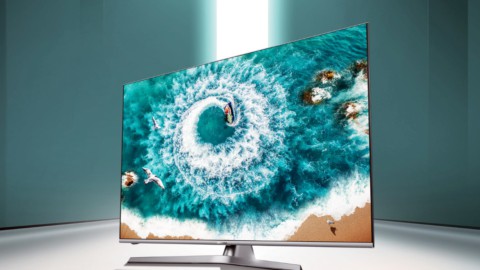
The data regarding volumes and values are conflicting according to the survey sources but they all agree on the fact that the more than ten-year hegemony on TV of the Korean duo Samsung and LG is ending under the blows of Chinese brands. As Hisense the rising star in all segments including majap and TCL have respectively replaced LG and Sony at the top of the global TV sales ranking for the first time (Source: Trend Force). That is: Samsung holds a share of the world TV market of 18,5 percent (-9,8 percent by 2022), followed by Hisense with 13,7 (+12,4 percent) and by TCL with 13,3 percent (+16,3). No, these are not results due to counterfeits and low prices. Hisense, for example, is the first and only one to have presented a 100 inch screen thanks to extraordinary technologies. But at the beginning of December the echo of these changes had not yet died down, which Samsung Display presented a complaint to the United States International Trade Commission for counterfeiting and patent theft against Chinese BOE Technology, former Beijing Economics which had at the time acquired the Korean Toptec, one of the Korean branches of Samsung Display, making it, in Korea, a secret instrument for stealing managers and secrets from Samsung Display. And the ITC immediately confirmed the opening of an investigation.
Displays, the hi-tech future of armaments
All industry experts consider this action by Samsung to be strategic for the entire sector of current and future video technologies, of which those of TV displays, smartphones, PCs, tablets and video games are only a part. And in fact the display technology it has an importance - unknown but truly enormous - for the developments of future technologies and above all for the economic security and resilience of the supply chain. The era, which has already begun, of autonomous vehicles and above all of the entire sector of robot armaments and virtual and augmented reality, as well as the security of sensitive sites and healthcare, depends precisely on the developments of cutting-edge visualization technology, i.e. come on display components. Furthermore, very alarmed comments have been filtered out from the Pentagon and the world war centers on the fact that this supply chain, so vital for all new generation military systems, is actuallyincreasingly under Chinese control. How was this possible?
“He who wounds by the sword perishes by the sword”
From an in-depth analysis by the Financial Times it turns out that this technology theft operation dates back to 2003 when the BOE had acquired Hyunday Display Technology, a subsidiary of the Korean chaebol SK Group. Which is basically made to fail so the Chinese big company implements a "technological escape” to China of several highly confidential patents and technologies, without Seoul objecting.
The damage is now emerging in all its gravity since not only Boe but also other related Chinese companies have illegally sold and are selling - according to the accusation - Oled displays and components in the USA based precisely on this long theft of secret patents. Someone has observed that the great innovations of the Korean chaebol in many sectors, from cars to electronics, from chips to ships, were initially and for a long time "fuelled" by other innovations, European and American ones. It was a skilful transmigration with numerous dumping actions tolerated by Western countries and especially by the United States which for a long time entrusted the role of OEM to Korean companies. How can we fail to notice that what Samsung accuses China Inc. of today was implemented several years ago in Korea by those chaebols who dominate - but less and less - the global hi-tech scene? And that is: “He who wounds by the sword perishes by the sword”.