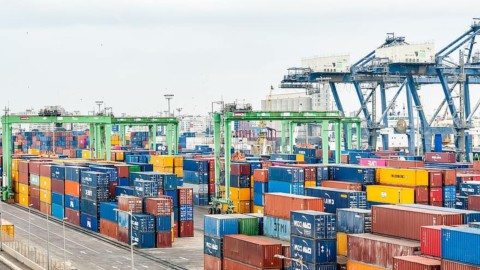
Apple, but not only. The news that, faced with the shortage of chips, Apple will reduce iPhone 10 production by 13 percent for Christmas is just the tip of the iceberg of the crisis that threatens to completely haywire the global logistics chain with truly devastating effects for the recovery. In a nutshell, the world is experiencing unprecedented imbalances that have compromised the chain ofwork organization: on the one hand, Covid -19 has forced the closure of production plants in Asia in recent months, from Malaysia to Vietnam, which have practically been stopped for four months; on the other, Europe and America, having passed the ceiling of the epidemic, have resumed consuming. But with growing inconvenience due to the absence of consumer goods or, worse, of indispensable components for a vast series of products, from cars to pharmaceuticals but also for clothing and food. The result? A sharp increase in traffic on the seas, of containers, which has resulted blockages and bottlenecks at all latitudes. It's a bit as if all the lorries in the world poured onto the highways on August XNUMXth.
It is explained in this way the intervention of the White House which just today announces that it has convinced WalMart, Ups and FedEx to extend, with the consent of the unions, working hours to seven days a week, including nights, with the aim of getting the goods on the shelves in time for the Christmas, A decision that follows three weeks after the choice of the ports of Long Beach and Los Angeles to work 24 hours a day for the whole week in an attempt to get rid of the endless queue at anchor, waiting to unload the goods. A move that is struggling to produce its effects. According to Kuhne & Nagel, the global logistics giant, from Rotterdam to Los Angeles, there are at least 659 ships standing by to unload the goods embarked mostly in the ports of the East, which in turn have been in extreme difficulty for months. The difficulties that are looming, due to the green pass, in the Italian airports, I'm just an episode of a global crisis which also manifests itself where the dockers, enticed by more robust wages, do not spare their efforts. As in Rotterdam where, however, despite everything, the times for unloading goods have increased by a good 15%. The reasons? The crowding at the landing points, but also the greater loads of the ships. And then, to complicate the journey of goods, there are difficulties on the ground: iroad transport it is one step away from collapse in the United Kingdom, hit by the flight of truck drivers, but it is under stress almost everywhere, from the States to old Europe.
In short, logistics is the pebble (or rather, the boulder) that has slowed down the recovery which, just a few months ago, now seemed about to take off, in China as in the West. On the contrary, Beijing's economy has been dealing for months with a series of dysfunctions that have put the world's factory in crisis: infrastructure nodes must be added to the slowdown in electricity generation aggravated by the shortage of coal, due to floods and other scourges which have forced the shutdown of 60 mines. According to Goldman Sachs, the drop in electricity production is costing China almost half a point of GDP, also because it is combined with the halt to purchases of coal from Australia, given the tug-of-war between the two countries. And it is not possible to compensate the gap with supplies from Mongolia or Indonesia, given the situation of maritime traffic. And then, given the price reached by coal, who feels like producing at costs doped by the increase in raw materials that could prove to be a boomerang tomorrow?
The logistics crisis, in fact, is already today a powerful factor in the growth of inflation, growing exponentially for raw materials (see aluminum) or key components (semiconductors) for industry. But the alarm also sounds for drugs or, in general, for everything that concerns electronics. And the "famine", given the time (from 12 to 18 months at least) to build a chip factory or strengthen the port infrastructure, seems destined to last at least until the middle of next year. With significant effects on inflation that the central banks persist in defining as a "transitional phenomenon".