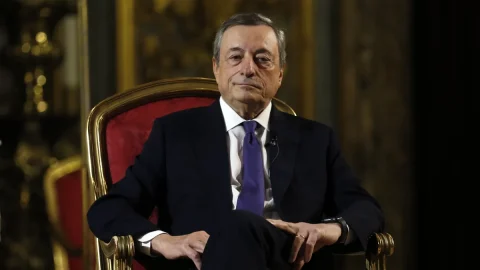
Other than Trump's tariff effect. Between anemic growth e US tariff threats “The last few weeks have provided a stark reminder of Europe's vulnerability" considering "the dependence on foreign demand“. Thus begins the commentary of the former Italian Prime Minister and President of the ECB Mario Draghi published today on Financial Times entitled “Europe has successfully placed the duties on itself".
“The Eurozone – writes Draghi – is barely grown at the end of last year, highlighting the fragility of internal shot. He United States they started to impose rates on their main trading partners, with the EU soon in their sights. This prospect casts further uncertainty on European growth given the economy's dependence on foreign demand".
In the European Union, he warned yesterday the governor of the Bank of Italy Fabio Panetta, duties will be felt especially in Italy and Germany. But Europe must do mea culpa, says Draghi
A radical change is needed
The former Italian Prime Minister claims that just a radical change can lead the EU out of this difficult situation where she got herself into essentially for two reasons: “The first is the long-standing inability of the EU to address its supply constraints, in particular its high internal barriers and regulatory obstaclesThe IMF estimates that Europe's internal barriers are equivalent to a 45% tariff for production and 110% for services”.
Draghi, and this is the second factor, complains about how the regulations EU have "hindered the growth of technological companies European countries, preventing the economy from releasing large productivity benefits”. An example is “the costs of complying with the Gdpr which are estimated to have reduced the profits of small technological companies European up to 12%” wrote Draghi referring to the General Data Protection Regulation, the main European regulation on the protection of personal data.
“A more proactive use of fiscal policy, in the form of greater productive investments, would contribute to reduce trade surpluses and would send a strong signal to companies that invest more in research and development”, Draghi says, urging “a fundamental change of mentality”: “So far, Europe has focused on individual or national objectives without calculating their collective cost.”
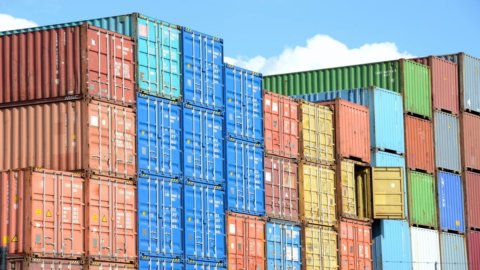
The “inability to reduce internal barriers has led to “a Europe's dependence on trade which today in terms of GDP weighs 55% in the Eurozone, while in China it is 37% and in the United States only 25%.
Internal barriers are now obsolete and do not bring advantages
“The preservation of public money has supported the goal of the debt sustainability. The spread of regulation was designed “to protect citizens from the risks of new technologies. The internal barriers are a legacy of times when the nation state was the natural framework for action. But now it's clear than to act in this way he didn't bring nor well-being for Europeans, nor healthy public finances, nor even national autonomy, which is threatened by pressure from abroad. This is why a radical change".