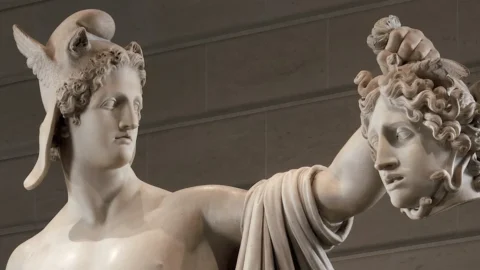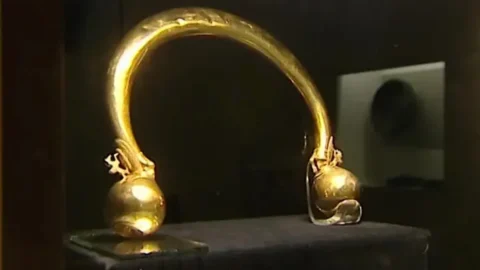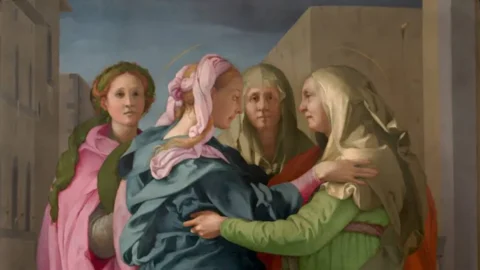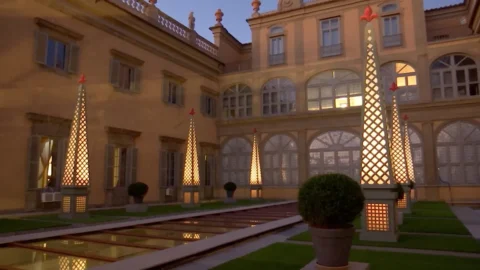
A journey through the history of art between the Middle Ages and the contemporary age, with about three hundred selected masterpieces from the thirteenth to the twentieth century: from Giotto, Filippino Lippi, Lorenzo Lotto, Michelangelo, Tintoretto, up to Boccioni, Casorati and many other masters of the last century . With “Dante. The Vision of Art exhibition organized in Forlì, in the San Domenico Museums, and scheduled from 1 April to 11 July, the Cassa dei Risparmi di Forlì Foundation and the Uffizi Galleries, as part of the celebrations promoted by the Mibact, will tell the figure at 360 degrees of the Great Poet, on the 7th centenary of his death.
The result of a robust partnership between the two entities, the exhibition is not only an opportunity to give substance to Dante's anniversary: in the difficult moment that the whole world is experiencing, it also intends to represent a symbol of redemption and rebirth not only of our country , but of the world of art and the spirit of culture and civilization that it represents.
The project was born from an idea of Eike Schmidt, Director of the Uffizi Galleries, And Gianfranco Brunelli, Director of the major exhibitions of the Cassa dei Risparmi di Forlì Foundation. Curators of the exhibition are the Professor Antonio Paulucci and Professor Fernando Mazzocca, assisted by a prestigious scientific committee.
The choice of Forlì as the setting for the exhibition is part of a strategy to enhance a place and a territory that is not just a natural bridge between Tuscany and Emilia-Romagna. Forlì is Dante's city. In Forlì Dante found refuge, after leaving Arezzo, in the autumn of 1302, with the Ordelaffi, Ghibelline lords of the city. He occasionally returned to Forlì, even later.
The exhibition deals with a time span that goes from the thirteenth to the twentieth century. For the first time, the intimate relationship between Dante and art is entirely analyzed and reconstructed, presenting the artists who have taken on the great challenge of rendering Dante's visionary power, his works and in particular his Divine Comedy, or have dealt with themes similar to those of Dante, or still have taken episodes or single characters from him, releasing them from the whole story and making them live in themselves.
Around fifty, including paintings, sculptures and drawings, the works that the Uffizi Galleries, co-organizers of the great exhibition event, have made available to “Dante. The vision of art". Among these, a corpus of themed drawings by Michelangelo and Zuccari. The famous portraits of the Poet by Andrea del Castagno and Cristofano dell'Altissimo. And then the nineteenth century with Nicola Monti, Pio Fedi, Giuseppe Sabatelli, Raffaello Sorbi and the masterpiece of Vogel von Volgestein, Episodes from the Divine Comedy. Not only the Uffizi, however, have opened their 'Dante treasure chests' for the exhibition: loans will come from the Hermitage in St. Petersburg, the Walker Art Gallery in Liverpool, the National Gallery in Sofia, the Staatliche Kunstsammlungen in Dresden, the Museum of Art of Toledo, Musée des Beaux-Art of Nancy, of Tours, of Anger; and then by the National Gallery of Modern and Contemporary Art in Rome, the Borghese Gallery, the Vatican Museums, the Capodimonte Museum and countless Italian and foreign museums.
With a magniloquent and anthological style, the exhibition will lead the visitor to discover the growing legend of Dante through the centuries. Therefirst critical success del Poeta will be shown through the first editions of Comedyand some of the most important illuminated manuscripts of the XNUMXth and XNUMXth centuries. Specific sections will be dedicated to his fame during the Renaissance, to the neoclassical and pre-romantic rediscovery of his genius, to the romantic and twentieth-century interpretations of his work and legacy;separate chapters will be devoted to the large and fortunate portraiture dedicated to Alighieri in the history of art, to the theme of relationship between Dante and classical culture, to the figure of Beatrice, which the Poet raises as an emblem of the renewal of art and of his own positive passions.
The protagonists of the exhibition will also be the multiple representations that some of the greatest artists have offered throughout the history of Dante's narration of the Last Judgment, of theInferno, from the Purgatorioand XNUMX. Paradiso. The itinerary will end with masterpieces inspired, in their composition, by the XXXIII canto of paradiso.