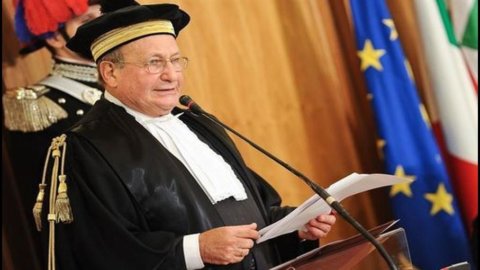
The two-year arrangement with creditors, envisaged by the tax reform, risks "transforming itself, concretely, into a sort of mere preventive amnesty". This is the opinion of the president of the Court of Auditors, Luigi Giampaolino, heard in the Finance Committee of the Chamber on the delegation to the Government for the tax reform. On the amnesty the confrontation is tight: between the majority and the opposition but also between unions, companies and banks. The accounting judiciary wanted to warn: the will be great differences that would arise among workers with a VAT number (to whom the agreement is intended) and the other workers, such as employees (who will not be able to benefit from the 'discounted' tax).
In particular Giampaolino remarked i possible effects of “discrimination, constitutionally relevant, that this particular tax regime could cause towards the remaining categories of taxpayers who will continue to be subjected instead to analytical taxation”.
The theme of the amnesty will be at the center of the hearings that begin this afternoon in the Senate in the Finance Committee. The object: a fact-finding survey on the tax reform. But in the meantime the Court of Auditors, highlighting the limits of the law delegating to the government, poses the problem of new sources of revenuerather than pardons. Giampaolino says: "We need to ask ourselves whether the uncertainties affecting the coverage of the tax and welfare delegation make it necessary to explore new sources of revenue, in the direction of personal or real taxable bases that do not insist on work and businesses".
Already. Because Giampaolino does not hide that the tax reform, envisaged by the enabling law, would present coverage problems e it would also be against the weaker social classes. In practice, the president explained, the savings from a reorganization of social spending could "be largely offset by the resources that will need to be put in place to ensure adequate services for a foreseeable surge in the phenomenon of non-self-sufficiency". Furthermore, Giampaolino recalled that in many cases with social spending "we are dealing with monetary disbursements that are part of a 'hidden policy' to combat poverty".
Finally, according to the President of the Court of Auditors, the tax delegation would have “uncertain, limited and sometimes outdated means of coverage by events”, also in consideration of the fact that many tools have already been used in the last manoeuvres.