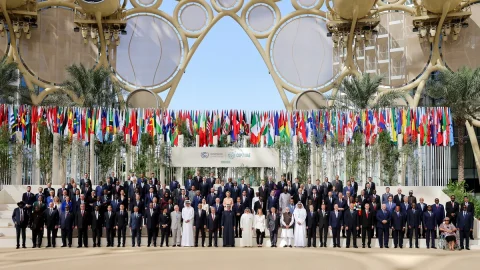
All Cop28 in Dubai a was achieved agreement “historical”. The first brick to build a world away from fossil fuels by 2050 it is based on two words: “transition away”. It is the first time that a final declaration of the UN climate conference commits the parties to abandoning fossil fuels (oil, gas and coal), albeit with a softer expression - "move away" - rather than "phase out". gradual”) which represented a clearer and more decisive message. An important step, it is true, but there is a risk that the movement to abandon fossil fuels could be too slow, given that it leaves a certain margin for interpretation. But he managed to get the 198 countries to agree at the UN climate conference in Dubai, after pressure from oil exporting countries, who wanted to blow up any too stringent agreement, Saudi Arabia first and foremost.
However, there are two problems: time and money. Because if it is true that a clear direction emerges from Cop28, there remains one regarding methods and times certain ambiguity. The goal is 2050, but it is not clear whether by that date countries will have completely abandoned their dependence on fossil energy. And above all it is not clear who should finance this transition. But let's see what the newly approved agreement contains and who is satisfied or not.
What does the agreement say?
The agreement reached at COP28 in Dubai appears to be a significant step towards the energy transition, introducing the key word "transition" into official texts for the first time. While some see the compromise as a timid step, it could mark the beginning of the end of the fossil fuel era, with the goal of reaching net-zero emissions by 2050.
The main focus, highlighted in Article 28, is on the “out” transition from fossil fuels in energy systems, underlining the importance of an orderly and equitable approach. The text encourages the acceleration of climate action in this critical decade, seeking to achieve the carbon neutrality by 2050, in accordance with scientific standards. The reference to science, in particular to the UN IPCC, and the commitment to limit the increase in temperatures to 1,5 degrees compared to the pre-industrial era, reflect adherence to the key objectives of the 2015 Paris Agreement.
Furthermore, the text maintains the reference to the need to triple the renewables and double theenergy efficiency by 2030, accelerate efforts towards phasing out energy produced by coalunabated, i.e. without capture and storage technology. It is then called for to "accelerate global efforts towards net-zero emissions energy systems, use zero and low carbon fuels well before or around the middle of the century". Some critics note the lack of a differentiated approach to the energy transition, which is a fundamental demand of countries in the Global South. However, the text seems to seek a balance between divergent needs, while also aiming to involve oil-exporting countries.
Additionally, the agreement addresses challenges related to methane, albeit weakly, outlining the need to reduce emissions by the end of the decade. The mention of nuclear,hydrogen and capture of carbon in the final text it indicates a growing recognition of alternative solutions to address the most problematic sectors in terms of greenhouse emissions. These solutions, however, are still in their infancy and very expensive.
In summary, the agreement at Cop28 represents a first step towards energy transition, with a keen eye on reducing emissions and adopting sustainable technologies, although some crucial issues and specific details would require further investigation.
Cop28 agreement: who is satisfied?
“No one believed it, we are proud of our work”. Said the Emirati president Al Jaber opening the plenary session without even giving time and voice to a possible reply. This is a “historic agreement. For the first time ever "in the history of COP" we have written fossil fuels in the text, "he added. “We are what we do, not what we say, so the actions we take are important.”
Also for the US climate envoy John Kerry “It's an extraordinary achievement.” “It was complicated to put together” all the requests and “obtain consensus”.
The European Union, which led the group of the most ambitious, was also satisfied: "The world adopted a historic decision at Cop28 to set in motion an irreversible and accelerated transition away from fossil fuels", said the commissioner Woepke Hoekstra. “Today's agreement marks the beginning of the post-fossil era,” the commission president wrote in X Ursula von der Leyen.
Who isn't?
The Secretary General of the United Nations is less enthusiastic, Antonio Guterres: “Whether you like it or not, the elimination of fossil fuels is inevitable. Let's hope it doesn't arrive too late."
Happy but not too happy environmental organizations, according to which the agreement marks an “improvement” over previous drafts, but “it is not yet the decision the world needs”. These are the words of the head of the Greenpeace International delegation, Kaisa Kosonen, which requires greater ambition to address a “transformation”.
However, the comment from the negotiator of the islands was very harsh Samoa, who leads the Small Islands Alliance, who highlighted the lack of specificity on some issues and the presence of “loopholes.” “The language chosen is certainly a step forward, it talks about transitioning away from fossil fuels in a way that the process has never done before. But we should note that the text does not specifically talk about phasing out fossil fuels in a way that actually constitutes the necessary step change. We do not see any commitment or even an invitation for the Parties to reach peak emissions by 2025. Reference is made to science but then the actions necessary to achieve the objective that science indicates are not listed".
Despite some criticism, the agreement is welcomed by many as a crucial step forward in reducing greenhouse gas emissions and tackling climate change. But it will be enough? To understand it we will have to wait for evidence of the facts and everything will depend on the way in which some passages of the text are interpreted.