we receive e we publish the following Press release spread by Intesa Sanpaolo.
The initiative Obiettivo Italia 2025, promoted by IMI Corporate & Investment Banking Division di Intesa Sanpaolo, Led by Mauro Micillo, stopped in Turin on June 9, continuing its path of dialogue with the main Italian companies.
The meeting was attended by about 60 company representatives active in the regions of Piedmont, Liguria and Valle d'Aosta, in addition to the over 160 of the stages of Vicenza, Florence and Lonato del Garda. The Piedmontese capital has therefore confirmed itself as a point of reference for the comparison between the business world and the bank.
The Italian Network of the IMI Corporate & Investment Banking Division is active in the North West Region through the corporate centers of Turin and Genoa, where 36 professionals operate. Followed by approximately 1.000 companies, attributable to 240 groups, with average cash employment in 2024 equal to 9 billion euros, the 11 % of the total national volumes.
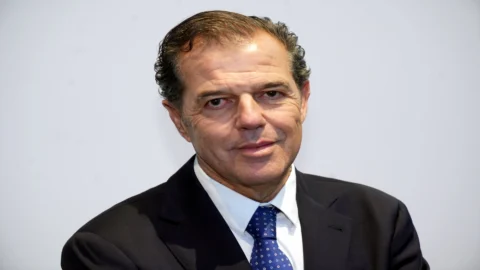
"The North West is one of the economic engines of the country, with a solid, diversified, innovative and highly internationalized industrial fabric. With Obiettivo Italia we want to strengthen our proximity to Italian companies, offering – in addition to traditional financial support for growth – listening, strategic consultancy and concrete tools for managing risks that are increasing in the current geopolitical context and in a constantly evolving market” said Michele Sorrentino, Head of IMI CIB Italian Network of Intesa Sanpaolo. "Our Division has always been committed to supporting the competitiveness of companies and accompanying them in transformation and development processes, also through the offer of innovative and digital solutions and services in the transaction banking sector”.
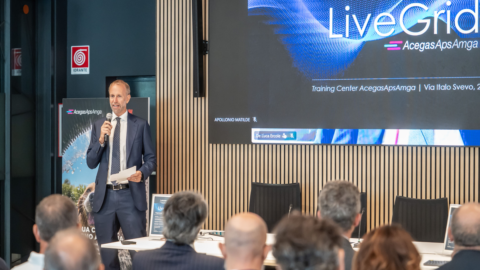
The event saw the contribution of John Foresti, Regional Research Manager di Intesa Sanpaolo, who illustrated the new macroeconomic scenario to the companies present, examining the economic prospects for Italy. The program then continued with a speech dedicated to risk management, with a focus on the role of enhanced intelligence, and then delved into the evolution of Intesa Sanpaolo's digital and treasury services.
In the coming months, Obiettivo Italia 2025 will also stop in Naples, Milan, Bologna and Rome, confirming the role of the IMI CIB Division as a reference partner for the support, growth and transformation of Italian companies.
The new macroeconomic scenario and economic prospects for Italy and Piedmont
According to the analyses of the Research Department of Intesa Sanpaolo, the impact of tariffs on the Italian manufacturing system could be mitigated by the sharp drop in energy costs and by companies' diversification strategies regarding Italian export outlet markets.
Thanks to an internal survey conducted with colleagues from Intesa Sanpaolo structures dealing with internationalization, it was possible to identify the reactions of companies to American duties. A strong reactivity of Italian and Piedmontese companies who, faced with the threat of new duties from the United States, are looking for new customers in other markets. At the same time, there is emerging interest from Italian operators in opening new commercial and production branches in the United States.
The survey then offers indications on the markets where it is possible to diversify sales. In first place is the Middle East, which is considered the market with the greatest potential for Italian exports, thanks to good growth prospects and high-spending consumers. India follows, which stands out above all for expected demand dynamics and market extension. North Africa is then relevant (highlighted for growth prospects and low competition) which precedes South America and Western Europe.
Piedmontese companies have the potential to seize these opportunities. We are talking about territories with one of the highest propensities to export in Italy. In Piedmont the incidence of exports of the total added value was equal to 44,5% in 2024 (over ten percentage points more than the Italian average). In particular, the following stand out: Vercelli 68%, Asti 62%, Alessandria 58%, Novara 55% and Cuneo 53%. Biella and Turin also rank above the Italian average (respectively 36% and 34%).
The Piedmontese industry can leverage a good Productive diversification: in addition to Mechanics and Automotive, which are the top two sectors for export and together account for 37% of the region's foreign sales, Piedmont is also specialized in Agri-food (15,1% - of which 4,2% wines) and in the Fashion system (8%). Chemicals, Rubber/Plastics, Metal products, Goldsmithing, Electrical engineering, Metallurgy, Electronics and Aerospace also stand out for their presence abroad. Twelve industrial districts are active in the region, which in 2024 recorded a slight increase in exports equal to +0,7%, in line with the Italian average figure
Furthermore, the Piedmontese economy has already shown in the recent past that it is able to seize the opportunities offered by new markets. Between 2019 and 2024, the top fifteen markets for growth in export value include China (+103 million euros, +188%), Poland (+43 million euros, +73%), the United Arab Emirates (+39 million; +216%), South Korea (+27 million euros, +61%) and Saudi Arabia (+25 million euros, +197%).
In 2025, the growth of the Piedmont economy will be supported by consumption, which will benefit from the recovery of household purchasing power. Lower interest rates will allow investments to grow again, especially among the most innovative and young-led companies. A boost to investments could then come from the implementation of the PNRR funds, which will accelerate in the current two-year period.