
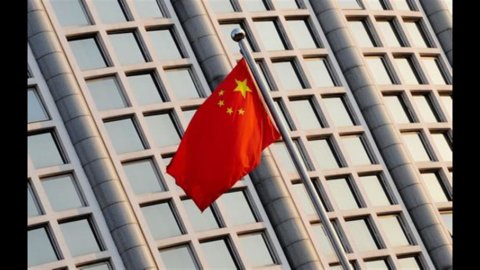
The World Bank and the International Monetary Fund's Top Ten of the global economy update the measures and outline new economic scenarios: China surpasses the USA in first place while Italy, sadly, slips out of the ranking, supplanted by the growth of the countries emerging countries, now five of the top ten world economies.

GDP ranking: China surpasses USA, Italy out of the Top-10
According to data on GDP at purchasing power parity released by the World Bank and the IMF, China has overtaken the US at the top of the rankings – Five of the top ten world economies are emerging, while Italy slips out of the rankings.

FIRSTonline editorial team
FIRSTonline is an independent web journal of economics, finance and stock exchange published by AL Iniziative Editoriali Srl with registered office in Rome, founded and controlled by Ernesto Auci e Franco Locatelli and owned by two minority shareholders (Alessandro Pavesi and Laura Rovizzi). The portal and its applications are created in daily life by two agile editorial offices, one in Milan and one in Milan Rome, and by an innovative and effective team of innovation and web managers.
You might also be interested ...
-

September 11, 2001, 25 years since the terrorist attack on the Twin Towers that changed the world
-
Trump makes new promises: $5 per voter if the Republicans win the midterm elections. Costs and US debt skyrocket.
-

Zelensky's drone alert on his flight from Moldova. Kiev plays down the possibility of an attack.
-

AfD, Trump, and Putin: All together in the siege of Europe. Professor Federico Fabbrini of Dublin University raises the alarm.
There are many surprises in the standings, with the new economic world increasingly dominating the old world: India takes third place overtaking Japan and Germany, while Russia and Brazil (now sixth and seventh) put the arrow and overtake France. Even at the bottom of the standings there is an overtaking: Indonesia conquers ninth place and overtakes England, which closes the Top Ten. Italy, as mentioned, remains out.
An unprecedented and perhaps unexpected picture, even if the measurement of economies through GDP alone, even if adjusted for purchasing power, cannot do justice to the economic diversity within individual countries, often characterized by serious internal imbalances, such as China and India.
What makes an impression, as mentioned, in addition to overtaking China in the lead, is the presence of five emerging economies in the ranking, a fact that was unthinkable even just ten years ago. The push of the BRICS, however, is slowing down: Brazil is heading towards zero growth, for example, while China, while remaining the driving force, is slowing down dramatically. This, and the crisis in the Eurozone, explains a global economic situation which, with the due exceptions, is still unsteady, without being able to find a convincing growth path.