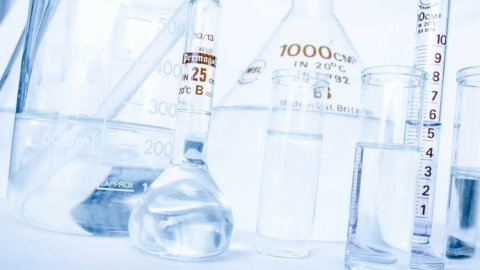
The chemical industry it is among the sectors of the Italian economy that have best known how to resist and reinvent themselves after the 2008 crisis, in many cases even emerging strengthened by international competition. SACE, in fact, underlines how our country is the third largest European chemical producer after Germany and France, while the sector confirms itself the third export sector after mechanics and means of transport and the fourth for the increase in the sectoral share of the added value of Italian industry (+0,6 percentage points between 2007 and 2015).
The domestic industry has been holding on for several years now on SMEs, where the average number of employees per firm is 2.415. The approach of business networksdespite its small size, it is competitive in the face of international challenges: the Italian sector of large contractors relies on technological avant-garde positions and highly specialized production quality. Hence, the two-year period 2018-19 is seen with optimism, especially on foreign markets: the Middle East, Asia and Sub-Saharan Africa are the areas where confidence in growth is most felt.
atradius he adds that in 2017 the production of the Italian chemical sector increased by 3,5%, reaching 55 billion euros. Exports, which represent 55% of total revenues, grew by 9%, while domestic demand increased and expanded in all customer segments, with the exception of consumer goods, especially durables.
Overall, the prospects for 2018 which has just ended remain positive for the moment, despite a slowdown recorded at the beginning of last year, when in the first quarter Italian chemical production grew by only 1,5% below the average European (+1,9%). Analysts attribute this slowdown to the increase in domestic and international political uncertainty: despite this, the level of payment delays and insolvencies are low and this should remain generally unchanged in the second half of 2018.
The forecasts offered by analysts speak of interesting opportunities for new investments in the USA and Canada, thanks to the low cost of feedstock (shale gas and derivatives), in many countries of the Middle East, Russia and CIS markets, North Africa (Egypt and Algeria) and Asia (India, Thailand, Malaysia, Indonesia and Vietnam), thanks to the tow of demographic development. Without forgetting European partners such as Belgium, France and Poland. Awareness is spreading more and more among companies in the sector that the business networks approach is successful in the face of international competition, especially from the Far East. In this scenario, it becomes essential to invest in innovation to keep competitiveness high and pay attention to environmental issues.
At the same time it is expected an increase in insolvencies in the segment of oil and fuel wholesalers, due to low profitability and heavy taxation: VAT is equal to 22% and, together with other excise duties on fuels, the tax burden amounts to 64% of the total sale price. Tax crimes of importing fuel from illegal markets to avoid taxation are on the rise. Hence, compared to manufacturers, wholesalers of chemical and pharmaceutical products generally have lower solvency and higher debt risks to finance their working capital needs: moreover, given the strong link with public health expenditure, they risk suffering both the long wait for payment by public bodies and the low profit margins.