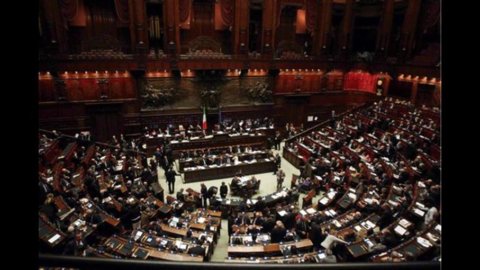
Eight measures that "the government should evaluate" in order to "ensure positive effects on the real economy". These are the suggestions of the Budget Committee of the Chamber, which concluded the examination of the analysis of the European Commission on growth in 2012, drawing up and approving a document. The importance of the text had led the Commission to carry out an in-depth investigation with the intention of bringing the theme of growth to the center of the parliamentary debate: "The risk - reads the approved document - is that it will be excluded, without adequate reflection, the possibility of adopting active economic policies with the instruments of monetary, fiscal and budgetary policies”.
Here are the measures that “the government should evaluate”:
1) the facilitation of new investments, especially by small and medium-sized enterprises and in disadvantaged areas, with particular regard to research costs, as well as a further tax and social security relief for companies that increase the number of their permanent employees;
2) measures aimed at increasing the consumption spending capacity of low-income families (who have a higher propensity to consume);
3) measures to support the construction sector, or, in any case, the sectors in which small-sized enterprises that employ a lot of manpower prevail;
4) support the internationalization of small and medium-sized enterprises, enhancing the skills of structures specialized in export support;
5) favor the rapid payment of supply debts contracted by public administrations, with priority for small and medium-sized enterprises that use the related proceeds to finance new investments;
6) measures aimed at favoring the evolution of the production system towards green economy, starting with the revival of incentives for energy saving;
7) reform of the Internal Stability Pact which facilitates the financing by local authorities, in line with the implementation of fiscal federalism, of certain capital expenditure that cannot be postponed, primarily for infrastructure;
8) the adoption of initiatives, to be agreed with the banking system, aimed at avoiding the risk of a contraction in the volume of loans disbursed to businesses, possibly increasing the resources available for instruments such as the central guarantee fund for small and medium-sized businesses.