Investors no longer know who to believe. Yesterday, after a historic collapse on Wall Street, Trump wanted to play the game again.on paper of a referral. But the markets are now much more distrustful recovering only a part of the enormous lossesMany believe that by extending the deadline twice, he is simply postponing the problem, which in itself suggests that the war, started four weeks ago, it won't end soonOil, which had jumped 6% overnight, fell this morning but remained above $108. But a new warning came this morning from Qatar and Saudi Arabia.
Trump: First the threats of escalation, then the new 10-day delay
President Donald Trump announced in a post on Truth Social to have postponed for another 10 days planned attacks on Iranian power plants at Tehran's request, adding that the talks with Iran they were going “very well”, although an Iranian official rejected a US proposal to end nearly four weeks of fighting as "unilateral and unfair." Before the announcement, Trump had threatened, during a White House cabinet meeting, that he would increase pressure on Iran if he had not reached an agreement.
“As requested by the Iranian government… I am suspending the destruction period of the power plant for 10 days, until Monday, April 6, 2026, at 20:00 PM Eastern Time” (01:00 AM the following day in Italy, considering the change to daylight saving time, ed), Trump said in the post.
“Talks are underway and, despite false claims to the contrary spread by the media spreading fake news and others, they are progressing very well,” he said.
The war has severely impacted shipping, causing crude oil prices to skyrocket by nearly 40% and a nearly 67% surge in liquefied natural gas shipments to Asia. The prices of nitrogen fertilizers, essential for food production, have increased by nearly 50%.
Despite Trump's optimistic assessment, theIran continued to respond to US and Israeli attacks hitting Israel and US bases; it also hit the Gulf states and effectively blocked fuel exports from the Middle East through the Strait of Hormuz.
During the White House meeting, Trump said that the United States would become the Islamic Republic's "worst nightmare" if the latter did not comply with US demands, including the opening of the Straits and the end of Tehran's nuclear program. He added that taking control of Iranian oil was an option, but did not provide further details.
An Iranian official said in Reuters That a 15-point U.S. proposal, transmitted to Tehran by Pakistan, was examined in detail on Wednesday by senior Iranian officials and the representative of Iran's Supreme Leader. While believing it served only the interests of the United States and Israel, the official said that the diplomatic process has not concluded.
Adding to the tensions were reports that other 10.000 US soldiers could be sent to the Middle East, fueling fears of a impending land conflictThere is a real risk that the mission will expand to the point of dragging the United States into a full-scale war, but there is no certainty that the Strait of Hormuz will be reopened anytime soon.
According to the Citi analysts, quoted by Reuters, this year the worsening conflict in the Middle East could reduce global growth below 2%, bring theinflation above 4% and increase the chances of recession“Asia, particularly Korea, Japan, and India, faces the most intense challenges due to heavy dependence on energy imports and direct exposure to disruptions in the Strait of Hormuz,” they wrote in a note to clients.
Wall Street collapsed yesterday with the Nasdaq down 2%. After the close, Trump postponed the session.
Yesterday the Nasdaq fell by more than 2%, while the S&P 500 and the Dow Jones They lost more than 1% as investors fretted over an escalation in the U.S.-Israeli war against Iran, which sent oil prices soaring and heightened inflation concerns. The Nasdaq and S&P 500
recorded their biggest daily decline since January 20. The Nasdaq, a technology-heavy index, thus recorded a loss of 10,7% from its all-time high reached on October 29, confirming that it is in a technical correction phase.
Investors rushed to sell after President Donald Trump said Iran must reach an agreement with the United States or face a continued offensive, while also warning that taking control of Iranian oil is an option. After the close of official trading, futures shareholders have slightly reduced losses following Trump's announcement of a 10-day suspension, until April 6.
The actions of Meta closed down nearly 8%, while A lost more than 3% after the two companies were found liable in the first two trials arising from allegations of harming minors on social media. In the technology sector, Nvidia closed down more than 4%.
I Wall Street futures bounced 0,4%, but that pales in comparison to Tuesday's rally, when Trump initially pushed the 48-hour deadline to five days.
In Asia, stock markets rebound after Trump's extension
Asian stock markets, after a sharp decline in the wake of Wall Street, stabilized following Trump's announcement that he was postponing his ultimatum against Iran, but remain uncertain. In Japan, the index Nikkei it settled around parity. In ChinaThe Shanghai Shenzhen CSI 300 and Shanghai Composite indices rose 0,7% each, but remained down 1,7% and 1,5% respectively on the week. The Hang Seng Index Hong Kong salt of 0,7%.
Il Kospi of South Korea It fell 0,4%, narrowing its initial loss of -3%. Seoul is nevertheless on track to close the week with a -6% decline, ranking as the worst performing stock market in Asia. The stock market is weighed down by chipmakers; Samsung Electronics and SK Hynix are expected to end the week with losses of between 7% and 10%. A has introduced a new compression algorithm called TurboQuant, which could significantly reduce the operating memory requirements for artificial intelligence programs. Analysts say this trend could hurt demand for memory chips in the long run.
A Taiwan, the Taiex falls by 0,7% L'Australian ASX 200 lost 0,1%, but could end the week slightly higher thanks to energy stocks, driven by rising oil prices. The Straits Times Index Singapore rose 0,7%. In India, the Nifty 50 fell 1,4%.
Il budget of the week The MSCI broad index of Asia-Pacific stocks is down 2,4%, more than 11% from its late-February peak. Japan's Nikkei is down 10% from its February peak. South Korea's Kospi is down 1,5%, bringing its weekly loss to a sharp 7%.
Oil prices reverse their peaks, but gas remains under pressure as Qatar and Saudi Arabia raise the alarm.
The lack of clear signs of progress had caused oil prices to soar. Petroleum, with US crude oil futures having seen a rise of up to 6% before retreating slightly following the announcement. Brent crude oil futures this morning show a level around $108 and WTI above $104. gas Power prices soared to 56 euros per megawatt hour in Europe (+4,6%) following the early morning warning from Qatar and Saudi Arabia. Qatar declared the threat level high, urging residents to stay indoors for safety reasons.
Meanwhile, Saudi Arabia has activated its alert system in the city of Al Kharj, according to Al Ekhbariya broadcaster. Riyadh also urged its citizens in Lebanon to leave the country immediately, according to the same source.
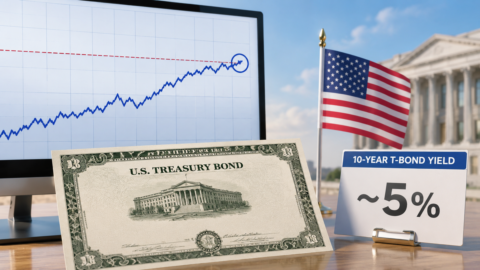
Rising oil prices have fueled the fears of inflation, increasing the likelihood that monetary policy makers will maintain their interest rates high or even further exacerbate them. This is reflected in the government bondsU.S. 10-year government bonds are now yielding 4,42%, up about 48 basis points from their close on February 27. The yield on 30-year Japanese government bonds rose 14 basis points to 3,66% due to war-related uncertainty.
On the currency market the dollar defends its positions after recent increases. yen strengthened slightly against the dollar after Finance Minister Satsuki Katayama said the authorities may take measures against currency fluctuations, including decisive actions. Bitcoin It traded below $69.000.
European stock markets opened little changed. At the Milan Stock Exchange, eyes were on Banco BPM, Eni, and Intesa Sanpaolo.
European markets are expected to open little changed, with the Euro Stoxx 50 index up 0,4%.
Bpm bank – Goldman Sachs lowered its recommendation from Buy to Neutral.
Eni Mediobanca has raised its rating to Outperform from Neutral, moving its target price to €28 from €15,5.
Intesa Sanpaolo – Goldman Sachs raised its recommendation from Neutral to Buy.
Inwit - Second Milan Finance, The company is reportedly evaluating a complaint to Consob and a precautionary request to suspend the resolution of the MSA.
nexi According to some media reports, CDP is considering strengthening its stake with a new Italian investor to stabilize its shareholder base. Sources also suggest a possible new strategic plan following the appointment of a new CEO.
Poste Italiane – Signed a strategic logistics partnership with AliExpress to manage inbound flows and returns of local sellers, thus strengthening its role in e-commerce logistics
Recordati The CVC fund is reportedly preparing an €11 billion takeover bid for the pharmaceutical company. The goal is said to be delisting.
Saipem – Mediobanca has lowered its rating from Outperform to Neutral.
stm – Jefferies raised its target price to 35 euros, from 29 euros previously, with a Buy rating confirmed.
Webuild – Fisia Italimpianti has been awarded a joint venture contract with Acciona worth €111 million (Fisia 40%) to improve water quality in the Gulf of Naples.