The start of 2026 has been a bumpy one for financial markets in Europe and the United States, but on the other hand, it has seen some stock markets stand out in other parts of the world. We've already talked about the situation on FIRSTonline.South Korean exploits, with Seoul's Kospi index has gained more than 30% since the beginning of the year And, remaining in Asia, Tokyo's Nikkei started the year off on the right foot. But there's another index that's doing wonders, and this time we move to South America, to Brazil, the region's leading economy and which, just months before the presidential elections in which incumbent President Lula will seek a fourth term, is experiencing an expansionary phase. The Portuguese-speaking country, in fact, grew by 2,5% in 2025 (according to preliminary data, the official ones come out in March) and GDP is expected to grow by another 1,8% this year, with inflation absolutely under control.
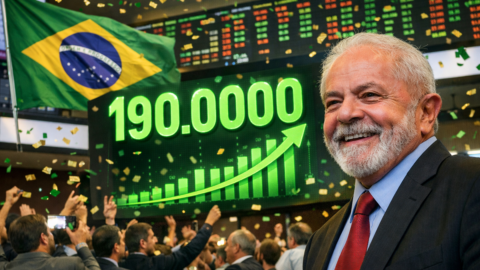
In this scenario the index Ibovespa of San Paolo it hit in the week before Carnivalthe all-time record at 190.000 points, recording an 18% growth since the beginning of the yearThe historic milestone was reached on Wednesday, February 11, but the maximum threshold was again approached this past Friday. Furthermore, in recent weeks, the weakening of the US dollar has benefited the Brazilian real, which has returned to the May 2024 exchange rate. Driving this performance of the Brazilian stock market is the renewed interest of foreign investors in a country that is (or at least appears to be) relatively stable from a political standpoint, and which is a reservoir of strategic raw materials for investments in the energy and, above all, technological transition. Therefore, since the beginning of the year, foreign funds have injected into the São Paulo stock market. a total of 30,5 billion reais, approximately 5 billion euros, 20% more than in the whole of 2025.
Distrust in Donald Trump's government and the resulting search for high-yielding stocks in other regions are also shifting traders' interest towards South America. Among emerging markets, Brazil has proven to be one of the favorite destinations"International investors," writes the newspaper Globo, "are trying to reduce their investments in the United States and, albeit to a lesser extent, are starting to allocate part of their capital to funds that replicate stock indices of emerging countries like Brazil. This is causing the historic highs we have seen in recent months on the Ibovespa." less liquidity than the American market (The American share of the investment fund sector represents 70% of global capital, while all emerging countries combined represent nearly 6%), the outflow of investment from the US, however small, is fueling a surge in capitalization in emerging market stock indices.
There are several factors of skepticism hanging over the US: from the politicization of the Federal Reserve to the duties, up to the fears of a speculative bubble in Artificial Intelligence which, in fact, are affecting Americans themselves. "There are doubts," Globo continues, questioning several analysts, "about how investments in artificial intelligence will perform in terms of returns, about how much it has already been priced into the US stock market, and about who will win this race. It's a disruptive situation. One company is a leader at a certain point, and then another emerges and dethrones it. Having recognized this mechanism, investors have sought diversification. And emerging markets are back on their radar."
But the shift of global capital away from US assets isn't just benefiting Brazil: South Africa, Colombia, Chile, and South Korea have also started 2026 well, thanks largely to their strong exposure to raw materials, which are essential to the global economy. In Brazil, after all, Petrobras and Vale saw their shares rise 25% in 2026. According to experts, this trend will continue at least until the end of the first half of this year, also supported by the cut in benchmark interest rates, which in Brazil are still very high (the Selic tax is as high as 15%). However, a reduction is more than in the air; it's taken for granted. There is room for growth.