The news had been in the air for some time: for the historic, famous, highly rated, Made in Italy brand, the Bialetti mocha, more precisely Industrie Bialetti, with around a thousand employees, it is now time to liquidation unless an offer arrives, within the next November 28, which can relaunch it after decades of growing crises, industrial, strategic, financial. But above all after a clear loss of what should have continued to be its characteristic: lasting quality. In crollo for years due to wrong or even useless delocalizations, with heavy defect rates. Ultimately, there is also the risk that the brand will take the road to other countries and above all for the China, eg.
Bialetti, unaudited balance sheets
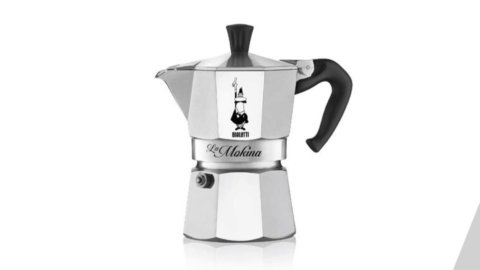
For the Bialetti, which was sold in 1983 by the founder's son, Renato Bialetti, to the Brescia-based cookware group, La Rondine of the Ranzoni family, and later became Industrie Bialetti, the auditing company cpmg in fact, he declared that he questioned the company's going concern as he was unable to express an opinion on the condensed consolidated half-year financial statements as of June 30, 2024. In less subtle words: it closes. A situation that has had other precedents with a failure to certify previous balance sheets - a very serious fact for a listed company - and which Kpmg translates into clearly negative data. First of all a period loss of 3,8 million euros, a negative net worth of 24,1 million, and a negative net financial position of 116,5 million. In the face of this very difficult picture, the half-year balance sheet still recorded an increase in revenues of 6,2 percent, with a positive gross operating margin of 8,6 million and a recovery in margins. At the origin, as we have underlined, the progressive loss of value: the first moka pots cost around several thousand lire (at the time of inflation) and now they can be found in large-scale distribution (Gd) for a few euros. While a vintage moka pot costs more than 800-1000 euros and works very well.
Bialetti, where is the president?
What do the group's top management say in the face of such a worrying situation? Nothing, because the president Francesco Ranzoni is not available, having apparently flown to the Caribbean. But what is most worrying is that the uncertainties that are compromising the continuity of the company have precedents dating back to 2007, the year in which the Ranzoni family placed Bialetti on the stock exchange at a price/earnings ratio of the share – as it turned out – four times higher than the real company situation. A non-transparent characteristic of the Ranzoni management.
Bialetti, here's what could happen on November 28th
According to Kpmg, no potential buyers appear to have come forward. Strange, because in reality, some offers are known to be coming. And this despite the fact that the accounts are decidedly disastrous and despite the fact that the Industrie Bialetti group is also burdened by the group The swallow. First of all, the French influence of the giant of small household appliances and professional products, the Groupe Seb which he had acquired in his time Lagostina, which is part of the historic Piedmontese household goods district of Verbania-Cusio-Ossola, on Lake Orta. It is precisely in this district that very famous brands were born such as Alessi and Bialetti. The French giant has been acquiring European companies in the professional sector, Italian espresso brands and specialists in high-end professional equipment for several years. Its direct rival is the group De 'Longhi, back to running with excellent results despite the difficulties of the markets.
In reality, the gossip of the Piedmontese housewares area indicates that the small Mokavit, founded by the dynamic Gianni Vettoni – one of the first specialists in the sector – the suitor that would have more odds first of all because it is the only one with the necessary industrial skills. Until two years ago, in fact, it manufactured, in the district, over three million Bialetti moka pots while the bulk of the low-quality Bialetti pots of the Ranzoni family were produced in a site in Romania, over 70 years of activity. Plus a myriad of millions of counterfeits made in China, uncontrollable. Mokavit – which also operates as a logistics hub between Lagostina and Seb – has started, thanks to industrial skills that are unique at an international level (working metals with stringent Italian regulations and performances is extremely difficult) its own production and online and offline sale of specially made moka pots, with particularly refined performances and aesthetics, while maintaining the artisanal tradition that has always distinguished the workmanship of this extraordinary district. And it also supplies very important chains, world sporting events and soon also the Vatican with special series for the Jubilee. And it also manufactures induction moka pots, but those that actually work since the electromagnetic induction base is a sophisticated technology and difficult to control well.
Bialetti, how much does the relaunch cost?
First of all it should be a zero cost transfer due to the evident heaviness of the accounts with debts of 100 million with the funds, and around 15-20 with the Italian State in addition to the resources to be allocated immediately for the restart.financial commitment overall, according to industry experts, it should be around approximately 150-200 million euros, of which 50 for the restart of production in Italy, an absolute necessity to return to the original value of the brand. The real heart of the Bialetti affair is in fact that, due to the senseless policy of delocalization conducted by the Ranzonis to compete with the Chinese on price, it is to return to the content of values of the territory of origin. That is, materials, finishes, innovation and services truly made in Italy. Most of the machines that are found around the large-scale retail trade all over the world are in fact built in China and often sent to Italian "cellars" of all kinds to be assembled in order to be able to boast the made in Italy brand. Those who do not know the reality of world markets are not aware that, for example, those in China, due to wealth, availability and culture, buy made in Italy want to be sure that the Italian production site with telephone number and address is written on the product, otherwise "it is made here in China, it is a made in Italy assembled with a few screws".