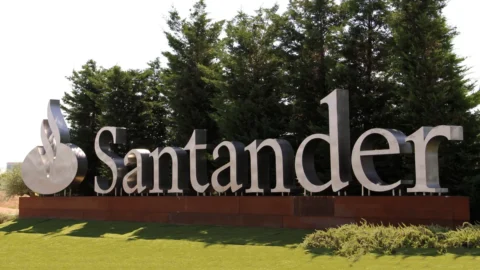
Banco Santander strengthens its growth strategy in the United States with the acquisition of regional bank Webster Financial in an operation from 12,2 billion dollars This will make the Spanish group one of the top ten commercial and retail institutions in the country by size. The combination will create a platform with approximately $327 billion in assets, $185 billion in loans, and $172 billion in deposits, significantly increasing its operational scale overseas.
The move is part of a phase of consolidation of European credit and comes after the failure of the second public purchase offer of bbva on Banco Sabadell and after the stop the sale di New Bank at CaixaBank.
Santander-Webster: the offer to shareholders and the valuation
- shareholders by Webster will receive $48,75 in cash and 2,0548 shares Santander will receive American Depositary Shares for each share held, for a total consideration of $75 per share. The transaction includes a 65% cash component and a 35% share component, with a prize of approximately 16% compared to the average price of the last ten days. The valuation implies approximately ten times earnings, twice tangible book value and over 11 times expected 2026 earnings. The completion of the transaction is expected in second half of the 2026. After the announcement, the title New York-listed Santander closed down 6,4%, while Madrid lost more than 3,5% in today's session. Some analysts, including Rbc City’s e Jefferies, they revised their rating on Webster, but the stock jumped 9% yesterday to Wall Street.
A long-term strategy for growth in the US
Unlike many European competitors who have reduced their overseas exposure, Santander has chosen to strengthen its position in the United States, where it has been present since 2005 with the acquisition of Sovereign BankThe institution has developed a leading position in consumer credit and auto financing, and the acquisition of Webster accelerates an already established strategy, making the American market a key driver of growth and revenue diversification for the group. The integration of the Connecticut Institute, founded in 1935 in Stamford, should not weigh on the capital, with a CET1 ratio expected between 12,8% and 13% post-closure and over 13% by 2027.
Synergies and profitability: €800 million in savings and an 18% ROTE
From an industrial perspective, the two banks' businesses are considered complementary. Santander brings strength in consumer credit, while Webster contributes a deep-rooted commercial network and solid deposit collection. The combination aims to improve the balance between lending and funding, reducing the cost of funding and increasing efficiency.
The group estimates cost synergies of approximately 800 million of dollars, equal to nearly 20% of the combined cost base. benefits expected to push the return on tangible equity to 18% by 2028 and bring the efficiency ratio below 40%, placing the new bank among the most profitable in the American system.
Santander: 2025 accounts and buyback program
The operation comes at a time of results solid. Santander is now the second largest European bank by market capitalization, behind HSBC, and recently surpassed UBS in market value. In 2025, the group closed with a record net profit of 14,1 billion of euros, up 12% compared to the previous year, supported by revenues of 62,4 billion and a global customer base that grew to 180 million. In the fourth quarter, net profit reached €3,76 billion, up 15% compared to the same period in 2024, exceeding analysts' estimates, while total revenue rose to €16,11 billion, thanks to resilient interest income and increased fee income. Barclays reiterates the positive opinion on the title.
At the same time, the group confirmed the remuneration policy to shareholders, with a plan of repurchase of sharesof 5,03 billion euros (with purchases starting immediately and continuing until 21 July 2026) and the commitment to distribute at least 10 billion between dividends and buyback on 2025-2026 results, maintaining a payout by 50%. Management has indicated that no further significant acquisitions are planned over the next three years, focusing on the integration of Webster.
Santander UK closes 2025 with pre-tax profit up 14%
Santander UK Group Holdings ended 2025 with a pre-tax profit of 1,51 billion of pounds, up 14% from 1,33 billion in 2024, thanks to higher revenues, lower operating expenses, and reduced provisions. Net interest margin rose to 2,23%, while operating expenses fell 3%, with over 2.700 fewer employees. Gross mortgage lending increased to 25,3 billion pounds, deposits to 190,2 billion, and CET1 ratio strengthened to 15,7%. The bank maintains provisions of £461m on car finance and expects regulatory approval for the acquisition of TSB in the first half of 2026, making it the third largest UK bank for personal current accounts.
Governance of the new Santander bank in the US
On the organizational level, Christiana Riley will remain at the helm of Santander Us e Santander Holdings Usa. Webster's current CEO, John Ciulla, will become CEO of Santander Bank NA, the bank into which the activities will be transferred, while the president and chief operating officer Luis Massiani will be responsible for leading operational integration.
"This transaction creates a stronger bank for our customers and communities. Webster is among the most efficient and profitable institutions and expands our commercial and technological capabilities," said Ana Botín, CEO of Santander. "The acquisition generates value for shareholders, with an estimated increase in earnings of between 7% and 8% and a return on invested capital of around 15%.
For John Ciulla, “the combination will allow for greater economies of scale and new growth opportunities, while maintaining the focus on customer service.”