Le automotive companies they already know the effect well “bottleneck"On supplies. And what they fear now is that the rare earth supply will become the third such phenomenon in five years. China he has the knife, or you could say, the magnet in the driving seat in his negotiations with Donald Trump who wanted to unleash the duty war. Perhaps the US administration had not informed the president of the extent of the Chinese commercial “bomb”, while the leaders of the car companies and Component suppliers they are well aware of this and for this very reason they are now exasperated and desperately seeking, so far without any effective success, alternative sources of magnets, the availability of which is scarce due to Chinese export restrictions. In the meantime, they have once again been forced to appeal to their stocks.
Frank Eckard, CEO of a German magnet maker, has received a flood of phone calls in recent weeks, Reuters reports. Some have told him that their Factories could close by mid-July without spare magnet stockpiles. “The entire auto industry is in a panic,” said Eckard, CEO of Magnosphere, based in Troisdorf, Germany. “They’re willing to pay any price.”
The meeting in London to mend the post-Geneva rifts
Today could be a crucial day. Representatives from the United States and China will meet in London and try to revive a preliminary trade deal reached in Geneva last month to at least temporarily reduce tariffs that had risen to more than 100%. But since then, both sides have accused each other of reneging on the deal and subsequent talks have quickly stalled.
The United States has complained about declining shipments of rare-earth magnets, essential to American electric vehicles and defense systems. China has bristled at U.S. restrictions on Huawei Technologies' artificial intelligence chips, chip-design software, jet engines, as well as visas for more than 280.000 Chinese students.
Over the weekend it emerged that the China It is going to grant export licenses temporary (about 6 months) cuts to rare earth suppliers of the three major U.S. automakers, a move that should get supply chains moving again.
Meanwhile, the Chinese government has informed that in the talks held last week in Paris between Chinese Trade Minister Wang Wentao and European Trade Commissioner Maros Sefcovic, Beijing expressed its intention to create a “preferred channel” intended to “speed up the approval process” for exporting certain minerals towards Europe.
The past does not teach: it is fear supply chain
Industry fears rare earth situation could change in the third huge shock of supply chain in five years. Between 2021 and 2023, the semiconductor shortage had wiped millions of cars from automakers’ production plans. Before that, the 2020 coronavirus pandemic had forced factories to close for weeks.
These crises have pushed the sector to Strengthen supply chain strategiesExecutives have prioritized reserve stocks for key components and reexamined the use of just-in-time inventories, which save money but can leave companies without inventory in a crisis.
Judging by Eckard's incoming phone calls, however, "no one has learned from the past," he said.
This time, with the rare earth bottleneck narrowing, theindustry has few viable options, given the Chinese rule on the market.
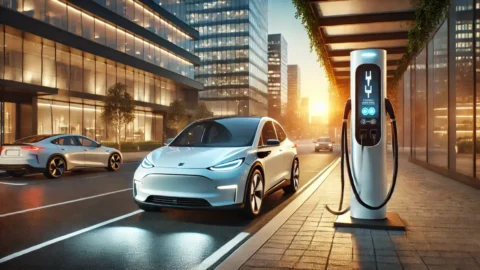
Today's cars use engines based on rare earths in dozens of components: side mirrors, stereo speakers, oil pumps, windshield wipers, fuel leak sensors and brake sensors.
China controls up to 70% of global rare earth mining, 85% of refining capacity and about 90% of production of rare earth metal alloys and magnets, said consultancy AlixPartners. The average electric vehicle uses about 0,5 kg (just over 1 pound) of rare earths, while a fossil-fuel car uses only half that amount, according to the International Energy Agency.
The frantic search for alternative routes is bearing little fruit so far
China has taken tough measures in the past, such as in the 2010 dispute with Japan, during which it restricted rare earth exports. Tokyo then had to find alternative suppliers, and by 2018, China accounted for only 58% of its rare earth imports. “China has had the rare earth card to play whenever it wants,” said Mark Smith, CEO of the mining company. NioCorp, which is developing a rare earth project in Nebraska that should begin production within three years. Across the industry, automakers have been trying to wean themselves off of China for rare earth magnets, or even develop magnets that don't require them. But most efforts she's far light years away from reaching the necessary scale. Some car manufacturers including General Motors e BMW and important suppliers such as ZF and BorgWarner they are working on engines with a very low or even zero rare earth content, but few have managed to scale up production enough to reduce costs. David Bender, co-head of the German company's magnet recycling business Heraeus, which specializes in metals, said the company is operating at just 1% of its capacity and will have to close next year if sales do not increase. Niron, based in Minneapolis, has developed rare earth-free magnets and has raised more than $250 million from investors including GM, Stellantis and the car supplier Magna. The English Warwick Acoustics has developed rare-earth-free speakers, which are expected to debut in a luxury car later this year. Chief Executive Mike Grant said the company is in talks with a dozen other automakers, although the speakers aren’t expected to be available in flagship models for about five years.
Analysts say such constraints could force automakers to produce cars without certain parts and hold them in inventory until they become available, as GM and others did during the semiconductor crisis.